


00018 Ferrule For SAE 100 R7 Hose
Cat:Ferrules
Description Of Products:1. Raw Material: Carbon Steel & Stainless Steel available2. Standard Plating: Trivalent Zinc Plating ( Cr3 / Chrome Free )...
See DetailsContent
Choosing the right industrial hose fitting depends on seven practical factors: material and corrosion resistance, pressure rating, size and thread standard, connection style and sealing method, temperature range, manufacturing quality, and supplier capability. Matching these seven factors to the actual working environment is the most direct way to reduce leaks, premature wear, and unplanned downtime in hydraulic and fluid transfer systems. The sections below walk through each factor with reference charts and comparison data covering standard hose fitting, industrial hose fitting, and industrial standard hose fitting options.
The base material of an industrial hose fitting largely determines how it will behave once installed. Carbon steel fittings are common in general hydraulic circuits where cost efficiency and mechanical strength are the main concerns, while a stainless steel hose fitting is generally preferred in chemical, marine, food, or pharmaceutical settings where corrosion resistance and cleanliness matter more than raw strength. Brass fittings, often used as a brass hose connector, tend to appear in lower pressure air and water lines because brass resists mild corrosion while remaining easy to machine into precise thread forms.
Surface treatment plays a supporting role alongside base material. Zinc or zinc-nickel plating on carbon and alloy steel fittings adds a protective barrier against surface oxidation, while stainless steel fittings rely on their inherent chromium content rather than an applied coating. Selecting between these material families should start with the fluid being transported, since certain chemicals and hydraulic oils accelerate corrosion on unsuitable metals far faster than in general purpose applications.
| Material | Corrosion Resistance | Typical Applications | Common Surface Treatment |
|---|---|---|---|
| Carbon Steel | Moderate | General hydraulic systems, machinery | Zinc or phosphate plating |
| Stainless Steel | High | Chemical, food, marine, pharmaceutical | Passivated finish |
| Brass | Moderate to High | Low pressure air and water lines | Nickel plating optional |
| Alloy Steel | High with plating | High pressure hydraulic circuits | Zinc-nickel plating |
For corrosive or hygienic environments, working with a stainless steel industrial hose fittings manufacturer that can advise on passivation and finish quality often makes the material selection process considerably simpler for engineering teams evaluating multiple fluid types.
Every industrial hose fitting is designed around a working pressure range rather than a single number, and this range should sit comfortably above the actual operating pressure of the system with room for pressure spikes. Confusing working pressure with burst pressure is a common mistake: working pressure describes the pressure the fitting is intended to operate at continuously, while burst pressure describes the point of mechanical failure under test conditions, and the two figures are not interchangeable when planning a hydraulic or pneumatic circuit.
General reference pressure ranges by fitting material, actual ratings vary by size and design
Systems that run at higher continuous pressure benefit from working with a high pressure hose fitting manufacturer that documents the working pressure range for each product series, which helps maintenance teams plan replacement schedules around real operating conditions rather than assumptions carried over from unrelated equipment.
Correct sizing starts with matching the fitting bore to the hose inner diameter, then confirming that the thread form matches the mating port on the pump, valve, or cylinder. An industrial standard hose fitting is built to recognized dimensional conventions such as NPT, BSP, JIC, ORFS, and metric threads, which allows components from different production batches to interchange predictably. To read a hose fitting size chart correctly, check the outer diameter of the thread, count the threads per inch or thread pitch, and compare both figures against the reference chart before ordering a replacement part.
| Thread Type | Common Region | Typical Size Range | Sealing Method |
|---|---|---|---|
| NPT | North America | 1/8 inch to 2 inch | Tapered thread seal |
| BSP | Europe, Asia | 1/8 inch to 2 inch | Parallel thread with washer or tapered seal |
| JIC | Global hydraulic | Dash size 4 to 32 | 37 degree flare seal |
| ORFS | Global hydraulic | Dash size 4 to 32 | O-ring face seal |
| Metric | Europe, Asia | M10 to M42 | O-ring or bonded washer seal |
General reference distribution of thread standards seen across industrial hose fitting specifications
The physical layout of a fitting affects both installation and long term reliability. Choosing the correct configuration among straight fittings, elbow fittings, tee fittings, adapters, and couplings helps reduce hose strain and simplifies routing in tight equipment spaces.
Sealing method matters as much as the connection shape. O-ring seals, tapered thread seals, flare seals, and gasket seals each respond differently to vibration, thermal cycling, and repeated assembly. In circuits with frequent movement or vibration, a face seal design tends to hold up better over repeated tightening cycles than a tapered thread seal that relies on thread deformation for sealing.
Temperature affects both the fitting material and the seal material inside it. Hydraulic oil circuits, compressed air lines, and chemical transfer systems each present different combinations of ambient temperature and internal media temperature, and the seal material selected for the fitting should be compatible with both extremes the application is likely to encounter over its service life.
| Seal Material | Typical Low Temperature | Typical High Temperature | Common Use |
|---|---|---|---|
| Nitrile | -40 F | 250 F | General hydraulic oil and water based fluids |
| Fluorocarbon | -15 F | 400 F | Higher temperature and chemical resistant applications |
| PTFE | -100 F | 500 F | Wide chemical resistance and broad temperature range use |
Media compatibility goes beyond temperature alone. Some hydraulic fluids and cleaning chemicals interact with certain elastomers over time, causing the seal to swell, harden, or lose elasticity well before the fitting body itself shows any sign of wear, which is why the seal material deserves the same attention as the fitting material during specification.
Manufacturing method influences how consistently a fitting performs under repeated pressure cycling. Forged fittings generally offer a denser internal grain structure than cast fittings, which supports more even stress distribution around the thread and sealing surfaces. Surface finish quality, including consistent plating thickness and smooth sealing faces, also affects how well a fitting resists corrosion and maintains a tight seal across many assembly and disassembly cycles.
General service life reference by material type, actual results depend on operating conditions and maintenance
Hose fitting service life is not a fixed number. It reflects the combined effect of material, pressure cycling frequency, media compatibility, and how consistently the system is inspected. Fittings that are correctly matched to their working environment and checked periodically tend to remain in service considerably longer than fittings selected without regard to these factors.
Even a well specified fitting depends on consistent production quality to perform as expected. Working with an established industrial hose fitting manufacturer that maintains stable dimensional tolerances across production batches reduces the risk of fit issues when components from different orders are installed together. This matters most in larger facilities where equipment is sourced and maintained over many years, and where replacement fittings need to interchange with parts installed long ago.
Custom requirements are common in industrial settings, particularly where equipment uses non-standard port sizes or unusual routing geometry. An OEM hose fitting manufacturer or custom hose fittings supplier that can adjust bend angles, thread combinations, or overall length gives engineering teams more flexibility than working exclusively with fixed catalog sizes. For hydraulic-specific applications, a hydraulic hose fitting supplier with in-house design support can often shorten the time needed to finalize a fitting configuration for a new piece of equipment.
When evaluating an OEM industrial hose fitting supplier or a custom industrial hose fitting manufacturer, it helps to look at production consistency, responsiveness to technical questions, and willingness to document material and dimensional specifications clearly, since these factors tend to matter more over the life of a project than any single transaction.
These three terms describe related but distinct categories. A standard hose fitting generally refers to a basic, widely available configuration intended for general purpose use. An industrial hose fitting is built with heavier duty construction intended for demanding operating environments such as manufacturing plants or construction equipment. An industrial standard hose fitting combines both ideas, meeting recognized dimensional and thread standards while also being constructed for industrial duty conditions, which supports both interchangeability and durability at the same time.
Standard Hose FittingIndustrial Hose FittingIndustrial Standard Hose Fitting
The chart above reflects a general positioning across five practical dimensions rather than exact measured values. In practice, a standard hose fitting works well for general purpose, low complexity tasks, while an industrial standard hose fitting tends to suit applications that require both dimensional compatibility with existing equipment and construction suited to sustained industrial duty.
OPK FITTING Hydraulic Equipment Factory operates as a China based industrial hose fitting supplier and standard hose fitting manufacturer with a production background centered on hydraulic pipes and fittings. The factory works across a range of materials and pressure levels, along with flexible hydraulic hoses in various size specifications, hose fittings, and adaptors, supplying components used in hydraulic and fluid conveyance systems across machinery, metallurgy, petroleum, construction, shipbuilding, aerospace, agriculture, pharmaceutical, and food processing equipment.
For engineering teams comparing an industrial hose fitting manufacturer for an upcoming project, OPK Fitting works from a domestic factory base to support both standard catalog configurations and custom fitting requests across the industries described above.
The following questions reflect common topics raised by engineers and buyers when evaluating industrial hose fitting and standard hose fitting options for new or existing equipment.
Industrial hose fittings are used for fluid transfer, hydraulic systems, compressed air lines, and chemical transportation across manufacturing, construction, and processing equipment.
Common types include straight fittings, elbow fittings, tee fittings, adapters, and couplings, each suited to different routing, flow splitting, or quick connect requirements.
Measuring a hose fitting typically involves checking the outer diameter of the thread and the thread pitch, then comparing both figures against a hose fitting size chart to confirm thread type and dash size.
Industrial hose fittings commonly use NPT, BSP, JIC, ORFS, and metric threads, and understanding these hose fitting thread types helps prevent cross threading and leak points during installation.
Fittings are commonly produced from carbon steel, alloy steel, and brass, with a stainless steel hose fitting or brass hose connector often selected for corrosive, hygienic, or lower pressure applications.
Pressure capacity varies by material, size, and design, and a high pressure hose fitting is generally rated for a working pressure range specified by its manufacturer rather than a single fixed number.
Hose fitting service life depends on material, operating conditions, and maintenance frequency, with properly matched and well maintained fittings generally lasting longer than fittings mismatched to their working environment.
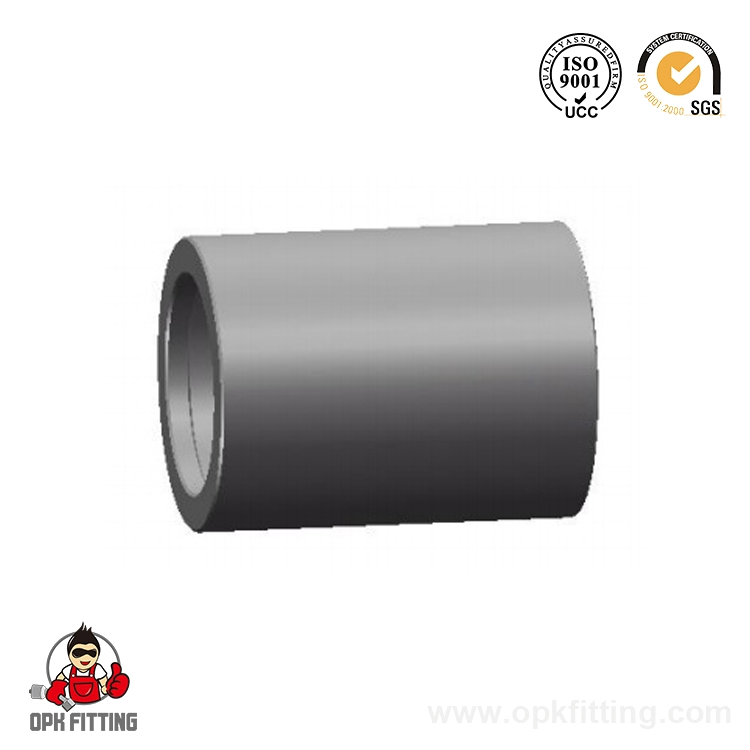
Description Of Products:1. Raw Material: Carbon Steel & Stainless Steel available2. Standard Plating: Trivalent Zinc Plating ( Cr3 / Chrome Free )...
See Details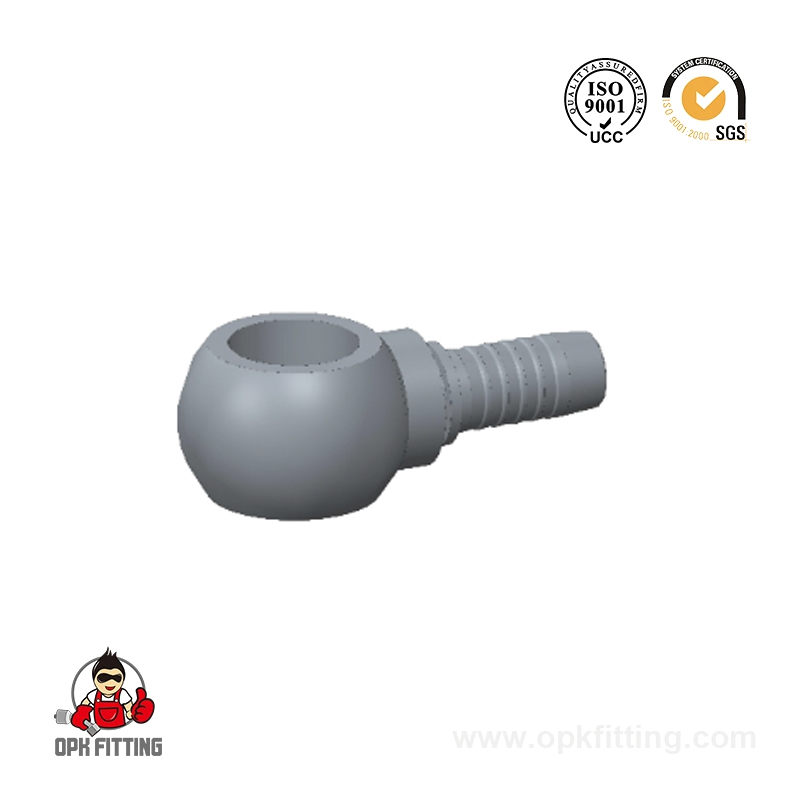
1. Raw Material: Carbon Steel & Stainless Steel available2. Standard Plating: Trivalent Zinc Plating ( Cr3 / Chrome Free ), Silver & Yellow3. ...
See Details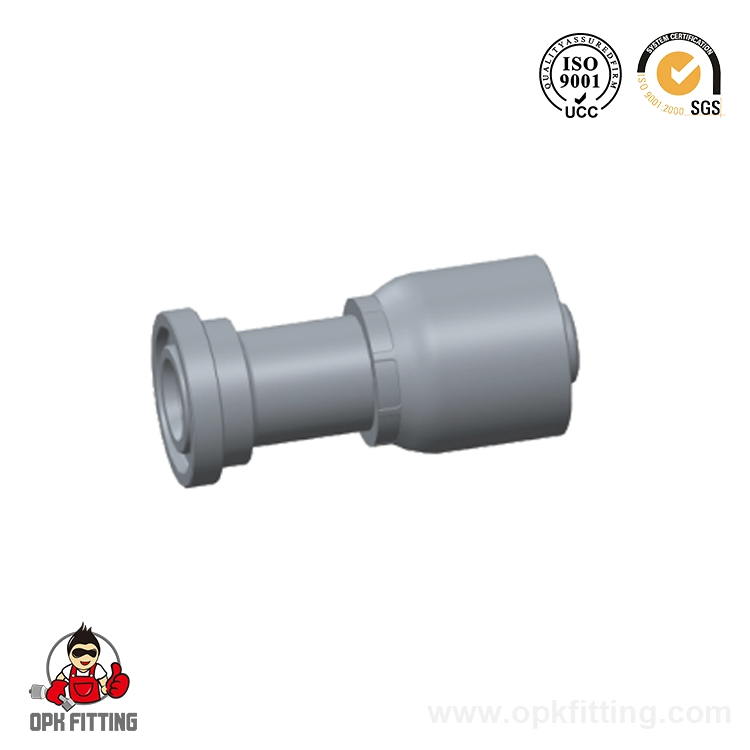
1. Raw Material: Carbon Steel & Stainless Steel available2. Standard Plating: Trivalent Zinc Plating ( Cr3 / Chrome Free ), Silver & Yellow3. ...
See Details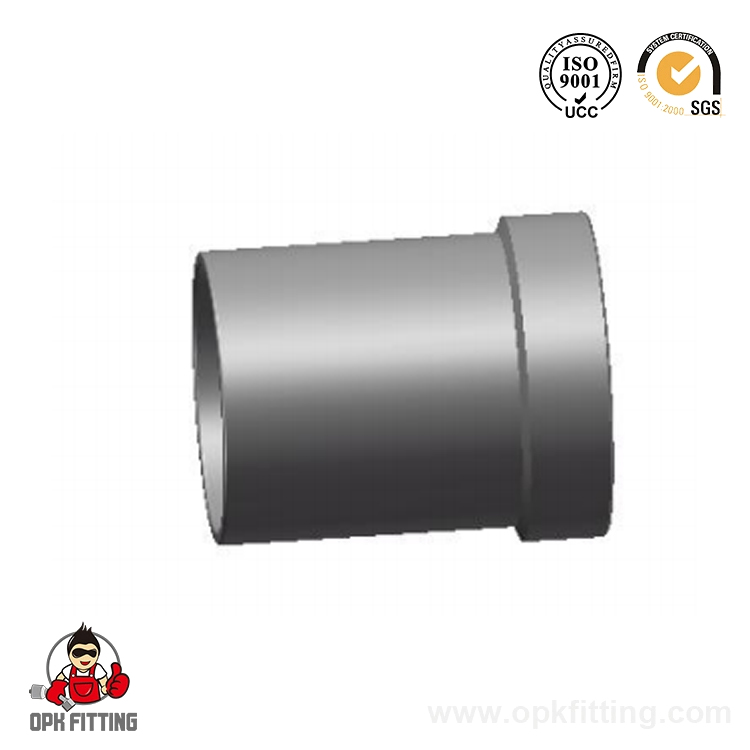
Description Of Products:1. Raw Material: Carbon Steel & Stainless Steel available2. Standard Plating: Trivalent Zinc Plating ( Cr3 / Chrome Free )...
See Details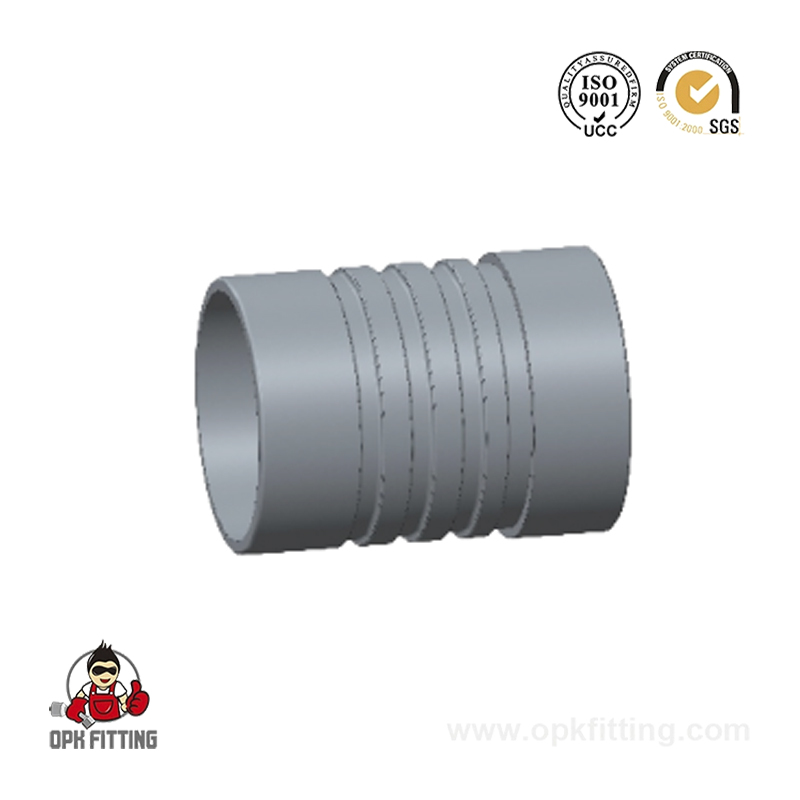
Description Of Products:1. Raw Material: Carbon Steel & Stainless Steel available2. Standard Plating: Trivalent Zinc Plating ( Cr3 / Chrome Free )...
See Details
1. Raw Material: Carbon Steel & Stainless Steel available2. Standard Plating: Trivalent Zinc Plating ( Cr3 / Chrome Free ), Silver & Yellow3. ...
See Details

+86-18868902802


No. 298, Chenghai Road, Binhai New District, Fenghua Economic Development Zone, Fenghua District, Ningbo City, Zhejiang Province, China
Copyright @ Ningbo Opk Fitting Co., Ltd. Hydraulic Hose Fittings Manufacturers OEM & Custom Adaptors Company
