A maintenance crew replaces a three-quarter-inch hose by matching the part number on the old layline. Same pressure rating, same fittings, same length. Ten weeks later the tube is blistered, the oil has gone dark, and the press is down for two shifts. Nothing about the pressure rating was wrong. The material was.
Hydraulic hose material decisions fail quietly. Burst pressure is printed boldly on the jacket; the tube compound, the reinforcement construction and the cover polymer usually hide inside a part-number suffix or a datasheet nobody opens until something leaks. This guide covers what each material layer actually does, how the choice is encoded in common hose standards, and which checks catch a mismatch before it reaches the machine.
The Short Answer: Material Sets the Limits, the Pressure Rating Only Reports Them
A hydraulic hose is four material decisions, not one. Each layer has a separate job, and a mismatch in any of them can take an assembly out of service even when the pressure rating looks perfectly adequate.
Tube compound, which touches the fluid and decides chemical compatibility.
Reinforcement, which carries the pressure and dictates the ferrule type.
Cover polymer, which resists abrasion, ozone and weather.
Coupling and ferrule metal, which holds the whole assembly together at the crimp.
Before comparing burst pressures, confirm four things: the fluid that will contact the tube, the full temperature range including cold starts, the external environment the cover will face, and the hose construction the ferrule was engineered for. If any one of those is unknown, the pressure rating on the layline is not yet a meaningful number.
The Four Material Layers Inside a Hydraulic Hose
Two hoses with identical bore and identical burst pressure can behave completely differently on the same machine, because the layers underneath the jacket are not the same.
Tube (Inner Core)
The tube is the only layer that touches the fluid. Nitrile (NBR) is the default for petroleum-based hydraulic oil and covers most SAE 100R1 and 100R2 hose. EPDM is specified for phosphate ester, water-glycol and hot-water duty, because nitrile swells in those media. PTFE handles aggressive chemicals, steam and very high temperatures. Thermoplastic polyester and nylon appear in SAE 100R7 and 100R8 hose, where a tight bend radius matters more than a high temperature ceiling.
Reinforcement
Reinforcement carries the pressure and determines which fitting the hose can accept. Textile braid sits inside lower-pressure hose such as SAE 100R5. One or two steel wire braids cover most general hydraulic work. Four or six spiral wire layers appear in SAE 100R12, 100R13 and EN 856 4SP and 4SH hose, where impulse life under high pressure is the design driver. The reinforcement choice also fixes the ferrule type, which is where most field mismatches originate.
Cover
The cover protects the reinforcement from abrasion, ozone, UV and oil spillage. Polychloroprene (CR) is the general-purpose choice. CSM and EPDM covers are selected for weather resistance, while thermoplastic covers are used where abrasion is severe. A failing cover does not leak immediately, so it is often ignored until the wire braid underneath starts to corrode.
Coupling and Ferrule Metal
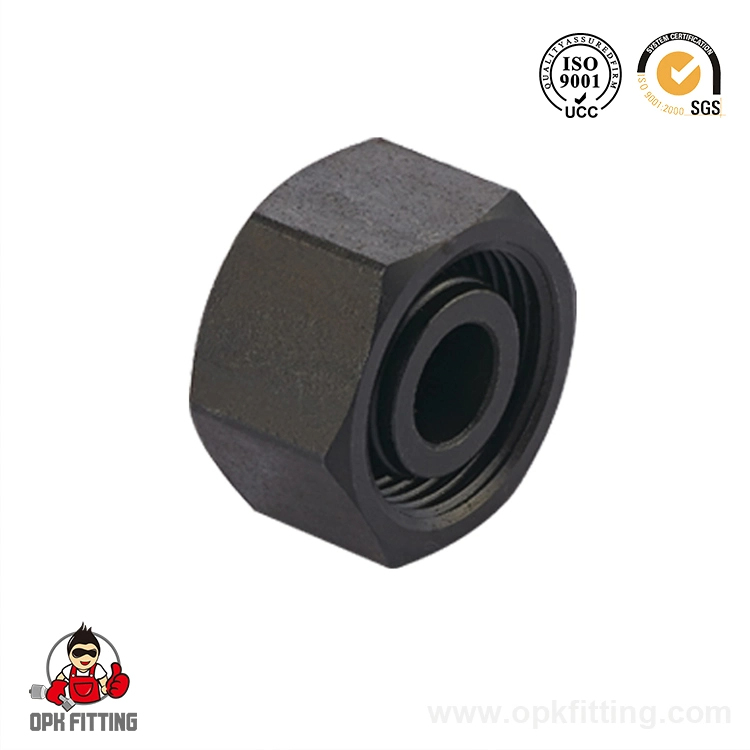
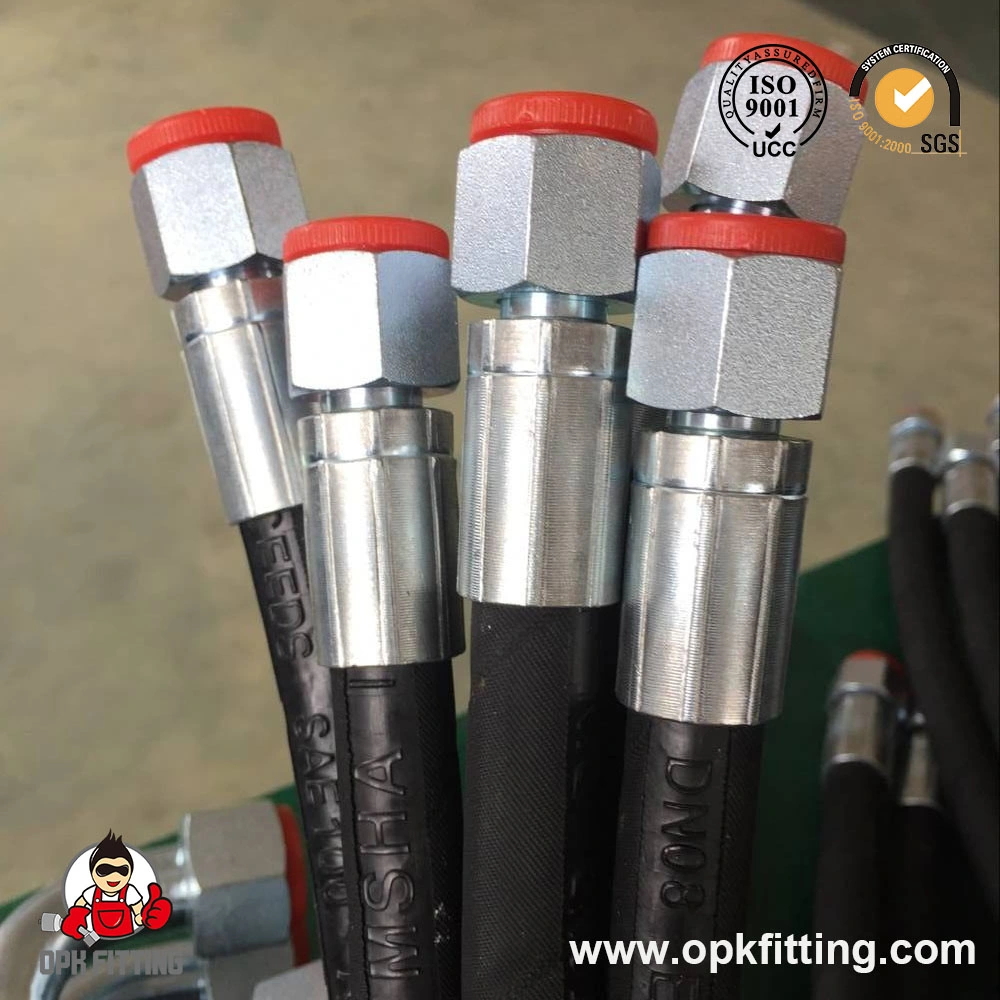
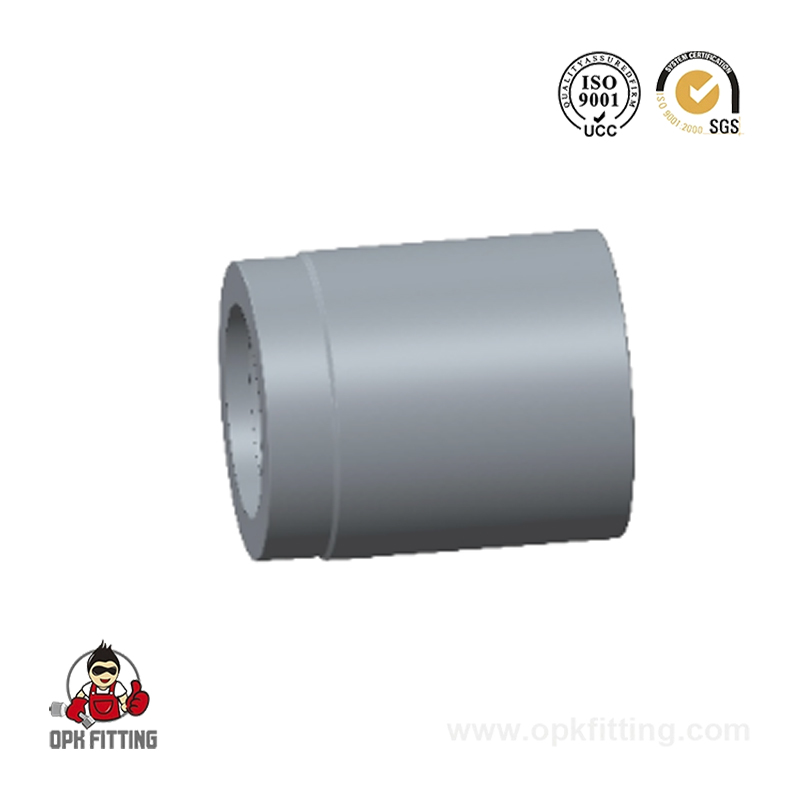
The final material decision is metal. Standard couplings and ferrules are carbon steel with zinc or trivalent chromium plating; stainless steel 304 or 316 is specified for marine, offshore, food, pharmaceutical and chemical duty. A braided hose needs a braid ferrule, while a spiral 4SH hose needs an interlock ferrule that grips mechanically rather than by compression alone.
Layer materials in a hydraulic hose assembly, and what each one actually controls.
Layer
Common materials
Primary job
Typical reference
Tube
NBR, HNBR, EPDM, PTFE, thermoplastic polyester
Fluid and temperature compatibility
SAE 100R1/R2, R7/R8, R14
Reinforcement
Textile braid, one or two wire braids, four or six spiral wire layers
Pressure containment and impulse life
SAE 100R5, R2AT, R12, R13
Cover
CR, CSM, EPDM, polyurethane
Abrasion, ozone and weather protection
SAE J517, EN 853
Coupling and ferrule
Carbon steel with zinc plating, stainless 304/316
Leak-tight attachment to the hose
SAE J516, DIN 20022
How Hose Material Is Encoded in Common Standards
The fastest way to confirm a hose material is to read the standard behind the part number. In SAE J517, the letter after the number identifies the construction, and the construction largely identifies the material.
SAE 100R1AT and 100R2AT (EN 853 1SN and 2SN): nitrile tube, one or two wire braids, synthetic rubber cover for general hydraulic oil.
SAE 100R5: textile braid over a nitrile tube, common in air brake, power steering and general low-pressure lines.
SAE 100R7 and 100R8: thermoplastic tube with fibre or wire reinforcement, chosen for tight bend radius on mobile equipment.
SAE 100R12, 100R13, EN 856 4SP and 4SH: four or six spiral wire layers for high impulse life and heavy-duty pressure.
SAE 100R14: PTFE tube with stainless steel braid for steam, aggressive chemicals and wide temperature swings.
A one-wire braid construction is a good illustration: the single-wire or textile build keeps weight and bend force low, but the nitrile tube still limits the hose to petroleum-based fluid at moderate temperature. If the application sits at the edge of a published range, the material grade is usually the constraint rather than the pressure rating.
Fluid Compatibility: Where Material Choices Usually Fail
Most hydraulic hose material failures are not pressure failures. They are compatibility failures that appear as a swollen, hardened, cracked or blistered tube, often weeks or months after installation.
The pattern is predictable. Nitrile rubber handles mineral oil and water-glycol well, but it absorbs phosphate ester fluids and swells, which reduces the flow area and eventually blocks a return line. For phosphate ester, fire-resistant fluids and hot water, specify EPDM; PTFE is the fallback when nothing else survives the chemistry.
Fitting metal follows the same logic. Standard zinc-plated steel is fine with mineral oil, while aggressive media need stainless steel or a compatible plating. The practical checks for matching fluid to metal are set out in our note on hydraulic pipe fitting materials, which covers how to verify compatibility before a hose is crimped.
Matching Ferrules and Fittings to the Hose Material
The coupling end of an assembly is a material system in its own right, and it is where a correctly chosen hose can still be ruined. A ferrule is selected against the reinforcement, not the bore size: a ferrule built for two-wire braid will not grip a four-spiral 4SH hose, which needs an interlock ferrule instead.
The insert stem has to match the tube as well. The stem compresses the tube against the ferrule, so a stem designed for a textile braid hose can cut through a thin PTFE core. On the thread side, JIC 74 degree cone fittings seal metal-to-metal at the cone and need a clean, undamaged seat, while ORFS flat seat fittings seal on an elastomeric O-ring and tolerate more reassembly.
BSP 60 degree cone, metric 24 degree cone and SAE flange connections each seal differently again, so the seal method should be confirmed before the assembly is ordered rather than after it leaks.
Six Checks Before You Approve a Hose Material
Identify the fluid by its full specification, not by the colour in the reservoir. Mineral oil, phosphate ester, water-glycol and biodegradable esters need different tubes.
Record the maximum and minimum temperature the hose will see, including cold starts and radiant heat from nearby equipment.
Confirm the external environment. A line rubbing against a chassis edge needs a high-abrasion cover or a protective sleeve.
Check the standard behind the part number and confirm the ferrule matches that construction.
Verify coupling metal and plating against the fluid and the washdown or outdoor environment.
Ask for the tube compound in writing before the order, not after a failure.
Frequently Asked Questions About Hydraulic Hose Material
Q1. What material is a hydraulic hose made of?
Most hydraulic hoses combine a nitrile rubber tube, a textile or steel wire reinforcement, and a synthetic rubber cover such as CR or EPDM. Thermoplastic hose uses a polyester or nylon tube, and PTFE hose uses a PTFE tube with stainless steel braid.
Q2. What is the difference between SAE 100R1AT and 100R2AT material?
Both use a nitrile tube and a synthetic rubber cover. The difference is the reinforcement: 100R1AT has one wire braid, 100R2AT has two, roughly doubling the working pressure at the same bore.
Q3. Can an NBR hose handle phosphate ester fluid?
No. Nitrile rubber swells in phosphate ester and in many fire-resistant fluids. Specify EPDM, or a PTFE hose where temperatures are extreme.
Q4. What temperature can hydraulic hose material handle?
Standard rubber hydraulic hose is typically rated from about -40 °C to +100 °C in continuous service. Thermoplastic hose reaches about +93 °C, and PTFE hose spans roughly -54 °C to +204 °C.
Q5. Why does my hydraulic hose tube swell or blister?
Almost always a fluid compatibility problem: the tube compound is absorbing the fluid, or the fluid has been contaminated. Check the fluid specification against the tube material before replacing the hose.
Q6. Does ferrule material matter, or only the hose?
Both matter. The ferrule must match the reinforcement construction, and the metal must suit the environment. Stainless 304 or 316 is used for marine, food and chemical duty.
Hydraulic hose material is a system rather than a single specification. The tube decides which fluid you can run, the reinforcement decides how much pressure you can hold, the cover decides how long the hose lasts outside, and the coupling metal decides whether the assembly survives its environment. Align those four and the pressure rating on the layline becomes a confirmation instead of a guess.
If you are sourcing hose, ferrules and fittings for a specific fluid, standard or working pressure, send us the details and we will confirm the tube compound, ferrule type and coupling material for your build. You can reach the factory through our contact page.
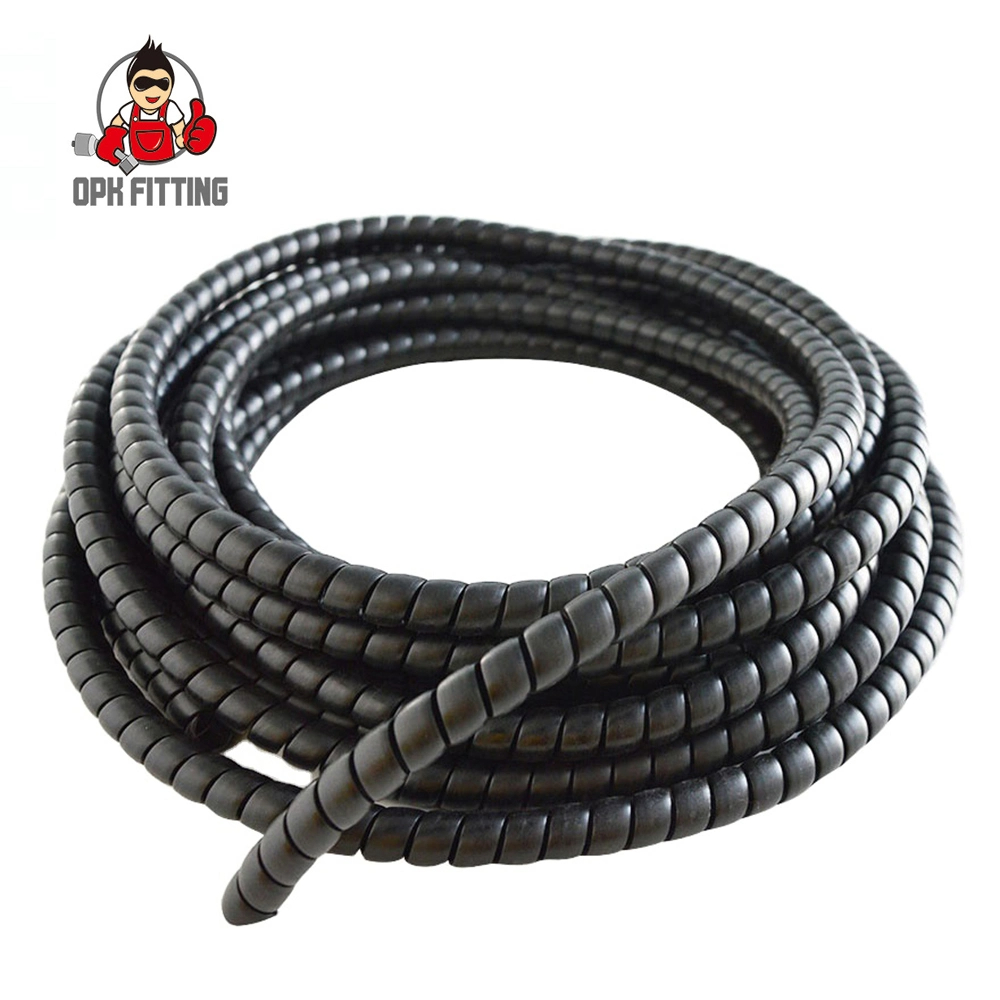
PRODUCT NAME: Spiral Protective Sleeve PP plastic hose guard for hydraulic hoseRecommended For: The use of Spiral Guard Wrap is an economical and conv...



.jpg)