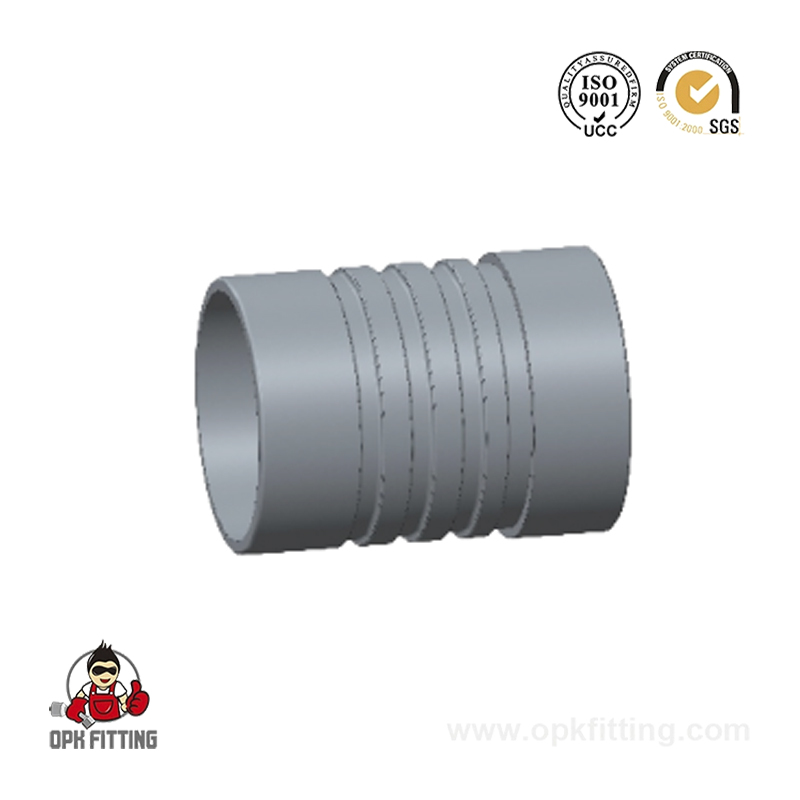
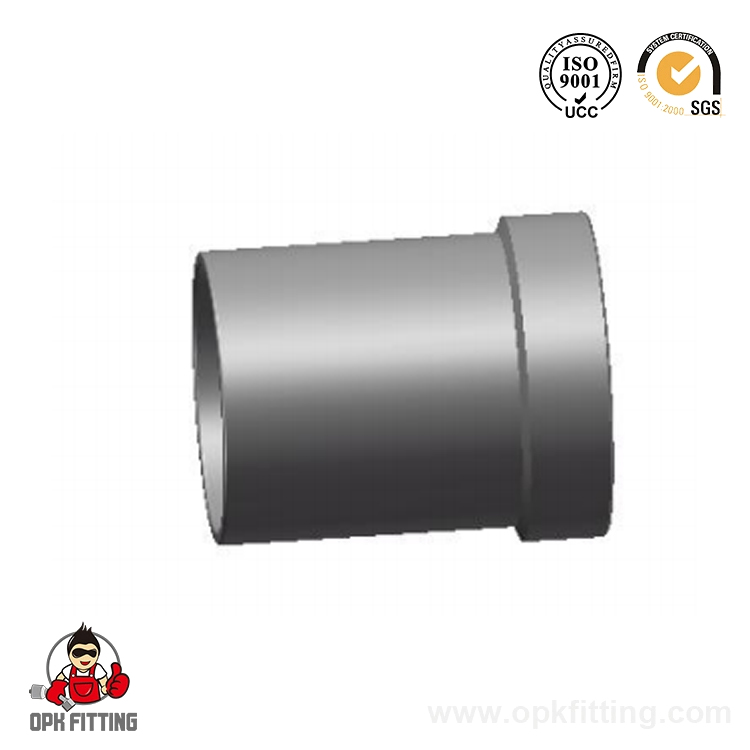
A machine stop on the production floor showed the cost of guessing a hose size. The replacement assembly looked correct from the outside, but the fitting would not seal because the inside diameter did not match the intended dash code. That happens when technicians treat hydraulic hose size as an outside diameter measurement. Hydraulic hose sizes are defined by inside diameter, and the dash code carries more information than a number. This guide covers how size is specified, why it matters, and how to match it with ferrules and fittings so assemblies survive real working conditions.
What Does Hydraulic Hose Size Actually Mean?
Size refers to the nominal inner diameter of the inner tube. It determines the flow path and is also the reference size for all standard fittings and ferrules. The outer diameter is a separate value that depends on the tube thickness, reinforcement, and cover. You need both measurements, but the ID is the starting point.
Hoses are identified by a dash size in most markets. The dash size equals the numerator of a fraction with a denominator of 16 in inches. A -6 hose, for example, has a nominal ID of 6/16 inch, or 3/8 inch. The table below lists the dash sizes, inch values, and nearest millimeter equivalents.
Typical nominal IDs for common hydraulic hose dash sizes.
Dash size
Nominal ID (in)
ID (mm)
Common term
-4
1/4
6.3
1/4 in. hose
-6
3/8
9.5
3/8 in. hose
-8
1/2
12.7
1/2 in. hose
-10
5/8
15.9
5/8 in. hose
-12
3/4
19.0
3/4 in. hose
-16
1
25.4
1 in. hose
-20
1-1/4
31.8
1-1/4 in. hose
-24
1-1/2
38.1
1-1/2 in. hose
-32
2
50.8
2 in. hose
Always confirm the tolerance and actual nominal ID from the manufacturer's data sheet before cutting and crimping.
How Dash Sizes Work
The dash sizing rule is simple: divide the dash number by 16 to get the nominal ID in inches. So -4 = 4/16 = 1/4 in., -8 = 8/16 = 1/2 in., and -16 = 16/16 = 1 in. The same rule appears across SAE, DIN, JIS, and ISO naming conventions, although European catalogs often list the metric diameter instead.
The isometric sketch below shows where these dimensions sit inside a braided hose. The inner tube carries the fluid; the reinforcement layer carries pressure; the outer cover protects the reinforcement. The ID and OD are the two dimensions you will reference most when choosing a hose, ferrule, or fitting.
Common Standards and Size Ranges
Hose size is inseparable from construction standard. The same dash size in SAE 100R1AT and SAE 100R2AT will have different pressure ratings and bend radii, though the nominal ID remains the same. Construction standards also affect ferrule compatibility, because the reinforcement and cover thickness change the outside diameter.
The table gives an overview of common designations and their typical applications. Always use the manufacturer's data sheet for the exact dash range and ODs.
Common hydraulic hose designations and their typical uses.
Designation
Reinforcement
Typical use
SAE 100R1AT / DIN 20022 1SN
One wire braid
Medium-pressure hydraulic lines
SAE 100R2AT / EN 853 2SN
Two wire braids
High-pressure hydraulic lines
SAE 100R5
One wire braid and textile
Hydraulic suction, return, and air brake lines
4SP / 4SH
Spiraled steel wires
Very high-pressure systems
SAE 100R7
Thermoplastic
Compact flexible control lines
GB/T 10544 R13
Multiple spiral plies
Large-bore high-pressure applications
PTFE hose
PTFE inner tube
Chemical compatibility and high temperature
When you order a hose assembly, the dash size should appear in the part number along with the construction standard, so the warehouse and the crimper know exactly what to prepare. If your circuit uses a SAE 100R5 hose, the ferrule and the fitting must both be designed for that construction.
An undersized hose raises fluid velocity. Higher velocity increases pressure drop, creates heat, and can eventually erode the inner tube or accelerate pump cavitation. An oversized hose costs more, weighs more, and may be too stiff to route. It also adds oil volume to the circuit, which can slow the response of a closed-loop system. The right size balances flow capacity, working pressure, and bending requirements.
The linear scale below shows how the nominal ID in millimeters grows with each common dash size. Keep in mind that flow area grows with the square of the diameter, so the area difference between adjacent sizes is larger than the line suggests.
Measuring and Matching Hoses, Ferrules, and Fittings
Start with the ID of the hose when you cannot read the dash code. Use an inside caliper or a pin gauge for that measurement. Then measure the OD of the hose cover, because that is the dimension a ferrule grips. The ferrule must be made for the same hose standard; a ferrule intended for SAE 100R2AT will not produce a secure crimp on a SAE 100R1AT hose, even if both have the same nominal ID.
Quick measuring checklist
Check the printed line on the hose cover for a dash code; if visible, it gives the nominal ID directly.
Measure the ID with an inside caliper on the hose end.
Measure the OD with a standard caliper on the undamaged section.
Match the ferrule part number to the hose standard and dash size.
For replacements, keeping a sample of the old hose and ferrule helps avoid guesswork. But never assume two hoses with the same nominal ID have the same OD; reinforcement and cover differences change the match.
When designing or replacing a line, use the system requirement before touching a hose. Determine the required flow rate and working pressure. Convert the circuit port size to a dash size, then choose a hose construction whose pressure rating and bend radius satisfy the line layout. Finally choose a fitting and ferrule from the same standard.
Calculate or look up the recommended minimum ID.
Select the dash size that matches the ports, adapters, and hose ends.
Verify the hose's maximum working pressure at the selected size.
Check the minimum bend radius in the routing.
Confirm that the ferrule and fitting are listed for that hose standard.
Thread size and hose ID are linked through the dash notation. For a JIC male connector, the dash size refers to the tube outer diameter that fits the seat, so read the fitting description carefully. If you are working with an existing machine, record the hose part number from the bill of materials or the printed line before removing it.
Most sizing errors happen before crimping. They can be prevented with a few checks.
Measuring the outside diameter of an old hose and treating it as the size. The ID controls flow and fitting selection.
Ignoring the printed dash code on the cover. It is the fastest reference because it directly names the nominal size.
Using a ferrule from a different standard even when the ID matches. Cover thickness and reinforcement change the OD.
Mixing metric and inch threads without converting. A -6 hose is not automatically compatible with an M14 thread.
Some of these mistakes are described in our guide to why hydraulic hoses fail, where early corrosion and fitting fatigue often trace back to an incorrect size or poor match.
If you are preparing a replacement list and want to verify sizes before ordering, we can help through the contact page.
Frequently Asked Questions
What are the most common hydraulic hose sizes?
The most common dash sizes are -4 (1/4 in.), -6 (3/8 in.), -8 (1/2 in.), -12 (3/4 in.), -16 (1 in.), and -24 (1-1/2 in.).
How do I measure hydraulic hose size?
Measure the inside diameter with an ID caliper or pin gauge, or read the dash code printed on the hose cover.
What does -6 hydraulic hose mean?
-6 means 6/16 inch, which is 3/8 inch nominal ID, approximately 9.5 mm.
How do I choose the right hydraulic hose size?
Match the hose ID to the port size and flow requirement, then verify the pressure rating and select a ferrule and fitting for the same dash size.
What is the difference between SAE 100R1 and SAE 100R2?
SAE 100R1 has one wire braid, while SAE 100R2 has two wire braids and a higher working pressure. Both are offered in similar dash sizes.
Can I use a metric hose with an inch fitting?
Only if the thread type and sealing angle match. Convert dash size to millimeters, then confirm the thread standard such as JIC, ISO, or JIS.
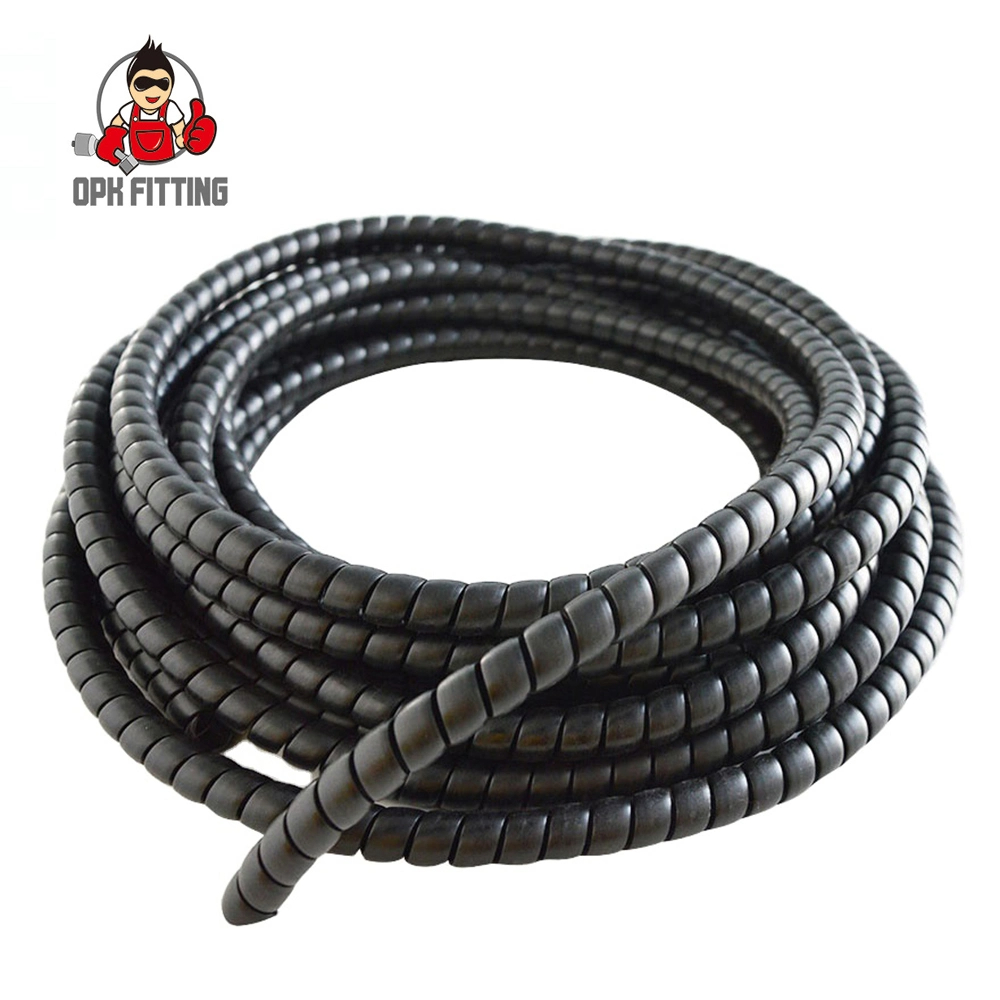
PRODUCT NAME: Spiral Protective Sleeve PP plastic hose guard for hydraulic hoseRecommended For: The use of Spiral Guard Wrap is an economical and conv...



.jpg)