


14211 ORFS Male O-Ring Seal
Cat:American Standard Fitting
Product DescriptionProduct name: 14211 Orfs Hydraulic Fitting1. Raw Material: Carbon Steel & Stainless Steel available2. Standard Plating: Trivale...
See DetailsContent
A 250 bar return line on a 12-tonne excavator starts weeping at the pump port. The hose is sound, the clamps are tight, and the leak is at the joint where a straight-thread stud meets the port. In most cases like this, the joint is one of four O-ring fitting families, and the whole repair depends on knowing which one is in your hand.
The short answer: O-ring sealing in hydraulics comes in four families — SAE ORFS flat-face hose ends, SAE ORB straight-thread ports, metric and BSPP flat-seat studs with a captive sealing ring, and SAE four-bolt flanges. They all rely on an elastomer ring trapped in a machined groove or recess, and none of them is interchangeable with the others, because the thread, the seat geometry and the tightening torque are all different.
Get the family right and the rest — compound, torque, cleanliness — is routine. Get it wrong and you will chase a drip for a week, because a joint that threads together smoothly can still be a guaranteed leak.
Before the detail, it helps to see where the seal actually sits in each family. That single fact decides what you can swap and what you cannot.
| Family | Main standard | Where the O-ring sits | Where you meet it |
|---|---|---|---|
| SAE ORFS | SAE J1453 / ISO 12151-1 | In a groove around the flat nose of the male fitting | Hose ends on mobile and industrial equipment |
| SAE ORB | SAE J1926 / ISO 11926 | On the chamfered boss at the bottom of the port | Pump bodies, valve blocks and manifolds |
| Metric flat-seat stud | ISO 1179-2 / DIN 3852-2 | In a recess under the hex, sealing against the port face | European and metric machinery |
| BSPP flat-seat stud | ISO 1179-2 / JIS B 2351 | In a recess under the hex, on a parallel Whitworth thread | British and Japanese machinery |
| Four-bolt flange | SAE J518 / ISO 6162 | In a groove on the flange head face | High-flow, high-pressure lines |
All four families work on the same idea: a soft ring is squeezed into a machined space until it fills the gap and stops fluid from passing. Where that space is machined — on the fitting, in the port, or in a flange head — is what separates them.
In an ORFS (O-ring face seal) joint the ring sits in a groove machined around the flat nose of the male fitting. The nose presses against a flat face inside the female, and the ring is squeezed axially. Because the seal is elastomer against metal rather than metal against metal, the tightening torque is well below that of a 37-degree flare of the same size — and applying a flare torque table to a flat-face stud is a reliable way to split the ring.
Watch the thread trap. A -4 ORFS fitting and a -4 JIC fitting share a 7/16-20 UNF thread. They screw together, they feel right, and the joint weeps.
.jpg) 14211 ORFS Male O-Ring Seal Hydraulic Hose FittingORFS male O-ring seal hose fitting for hydraulic hose connections, available in carbon or stainless steel with trivalent zinc plating and sizes up to DN40.View Product →
14211 ORFS Male O-Ring Seal Hydraulic Hose FittingORFS male O-ring seal hose fitting for hydraulic hose connections, available in carbon or stainless steel with trivalent zinc plating and sizes up to DN40.View Product →
An ORB (O-ring boss) joint uses a straight-thread stud that traps an O-ring against a chamfered boss at the base of the port. You meet it on pump bodies, valve blocks and manifolds rather than at the free end of a hose. Two details cause most problems: stud length, because an over-long stud bottoms out on the boss and crushes the ring before the shoulder seats, and orientation, since a 45 or 90 degree elbow has to point the right way before the locknut is tightened.
On metric ports to ISO 1179-2 or DIN 3852-2 the seal is not in the nose of the fitting but in a recess under the hex, so the ring is squeezed against a machined face on the port. The stud itself carries a plain parallel thread, which is why a flat-seat joint can often be re-used after a hose change as long as the ring is replaced. The 24-degree and 60-degree cone studs that look similar use metal-to-metal sealing and have no ring at all — matching them by eye is a common mistake.
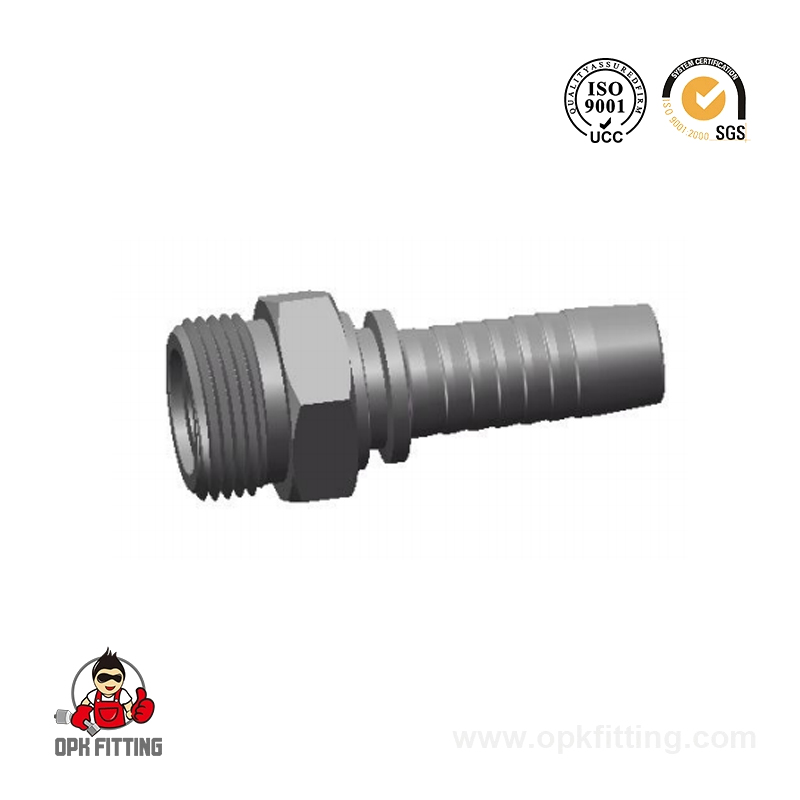 10311 Metric Male Flat Seal O-Ring Hydraulic Hose FittingMetric male flat-seat hose fitting for ISO 1179-2/DIN ports, in carbon or stainless steel with Cr3 plating and metric threads from M12 to M64.View Product →
British parallel ports follow the same flat-seat logic with a Whitworth thread, again to ISO 1179-2 or its JIS equivalent. The thread form is what tells them apart: BSPP is parallel and seals on a ring or bonded washer, while BSPT is tapered and seals on the threads themselves. A BSPP stud started into a BSPT port will sit at the wrong depth and leak.
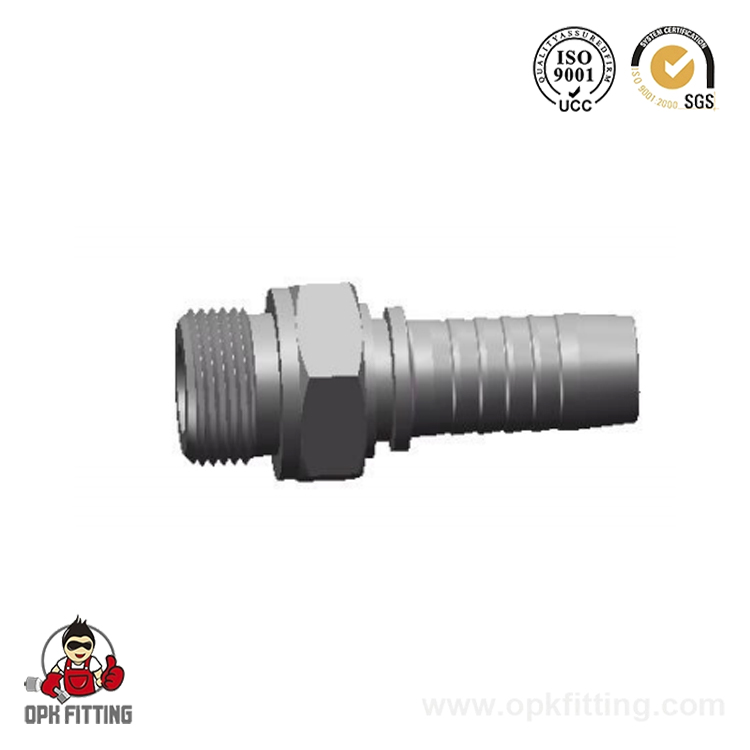 12211 BSP Male O-Ring Seal Hydraulic Hose FittingBritish Standard parallel BSP male O-ring seal hose fitting for hydraulic lines, covering G1/4 to G1.1/4 threads and DN6 to DN32 hose bores.View Product →
On high-flow lines the ring is set into a groove on the face of a flange head and clamped by four bolts. SAE J518 and ISO 6162 split the family into code 61 (3000 psi) and code 62 (6000 psi); head thickness and bolt spacing differ, so the two are not interchangeable even when the port size matches.
Once the family is right, the ring itself decides how long the joint lives. Five compounds cover almost everything in mobile and industrial hydraulics, and the differences are mostly about temperature and fluid compatibility rather than price.
Nitrile (NBR) is the default for mineral hydraulic oil and stays the cheapest option, roughly −40 to +100 °C. Fluorocarbon (FKM) lifts the ceiling substantially and handles more aggressive fluids. EPDM is excellent with water, glycol and many brake fluids but swells badly in mineral oil — an EPDM ring in a standard hydraulic system is a failure waiting for the first warm-up. Silicone covers a very wide temperature band yet performs poorly against petroleum fluids, and PTFE is normally chosen for chemical resistance and extreme temperature rather than for elasticity.
Two further numbers are usually left off the drawing: hardness, typically 70 to 90 Shore A, and the actual compound, since two NBR rings from different suppliers can behave differently at 110 °C. Published temperature ranges vary between manufacturers, so the compound datasheet, not a catalogue table, is the final word.
Most O-ring joint failures come down to a short list that has very little to do with the quality of the fitting itself.
If you are tracing a repeat failure rather than a single repair, our notes on why hydraulic hoses fail cover the field-side half of the same problem.
Six items decide whether the part on the bench will fit the machine. Checking them takes five minutes and saves a returned shipment.
OPK Fitting produces standard hose ends, adapters, ferrules and flanges in American, British, metric and JIS series at its Ningbo plant, with ferrules matched to hose types such as SAE 100R1AT, 100R2AT and 4SP/4SH. If a joint keeps failing on the same machine, send the port dimensions and the assembly details together — that combination answers more questions than a photograph of the leak.
It is a fitting that seals with an elastomer ring trapped in a machined groove or recess, rather than by metal-to-metal contact. Common examples are ORFS hose ends, ORB port studs, metric flat-seat studs and four-bolt flanges.
Both use a UNF thread and a 37-degree or flat sealing surface. ORFS seals on a flat face with an O-ring; JIC seals on a 37-degree metal cone. The threads interchange, the seals do not.
ORB is a straight-thread stud sealing on an O-ring at the bottom of a port, mostly on pumps and valves. ORFS is a hose-end fitting sealing on a flat face. Only ORFS is used at the end of a hose.
NBR is standard for mineral oil up to about 100 °C. Choose FKM for higher temperatures or aggressive fluids, EPDM for water and glycol systems, and PTFE where chemical resistance outweighs elasticity.
The usual causes are a thread that matched while the seat did not, flare-level torque applied to a flat-face joint, a re-used or nicked ring, or contamination left in the groove before assembly.
No. A JIC port has a 37-degree cone and no sealing face for the ring, so an ORFS or flat-seat stud will thread in and leak. Match the seat, then the thread.
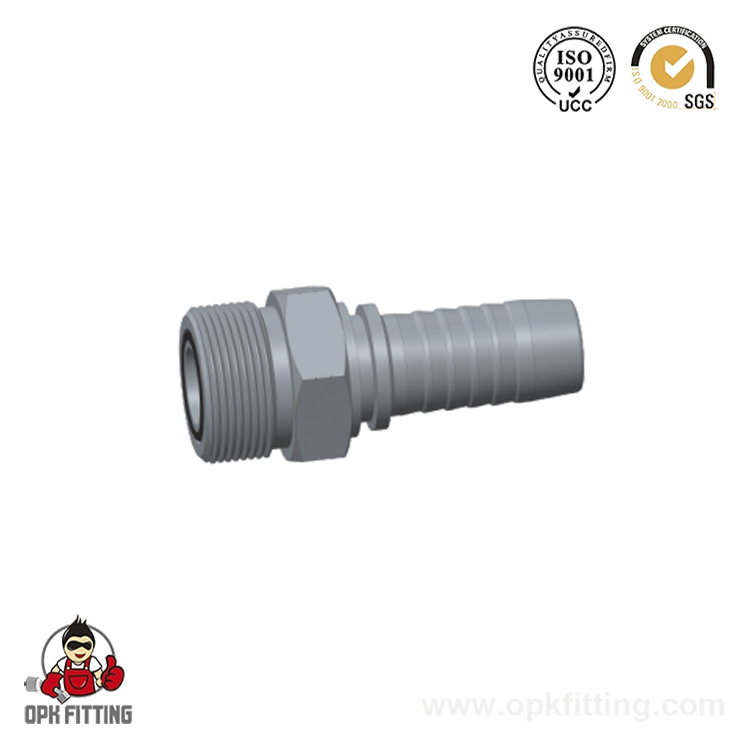
Product DescriptionProduct name: 14211 Orfs Hydraulic Fitting1. Raw Material: Carbon Steel & Stainless Steel available2. Standard Plating: Trivale...
See Details-1.jpg "Metric Male 74 Degree Cone Fitting/Sea O-Ring Boss L-Series ISO 11926-3 (1QO, 1QO-RN)")
Product Descriptionhydraulic adaptor metric male O-Ring flat sealing pipe fittings Material: Carbon Steel, Stainless SteelSurface Treatment: White...
See Details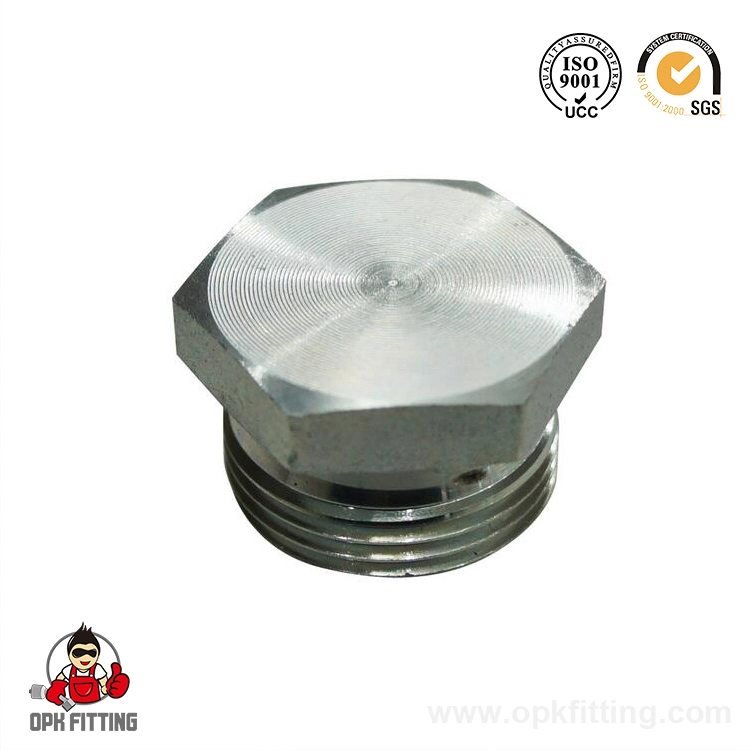
Product Descriptionhydraulic adaptor metric male O-Ring flat sealing pipe fittings Material: Carbon Steel, Stainless SteelSurface Treatment: White...
See Details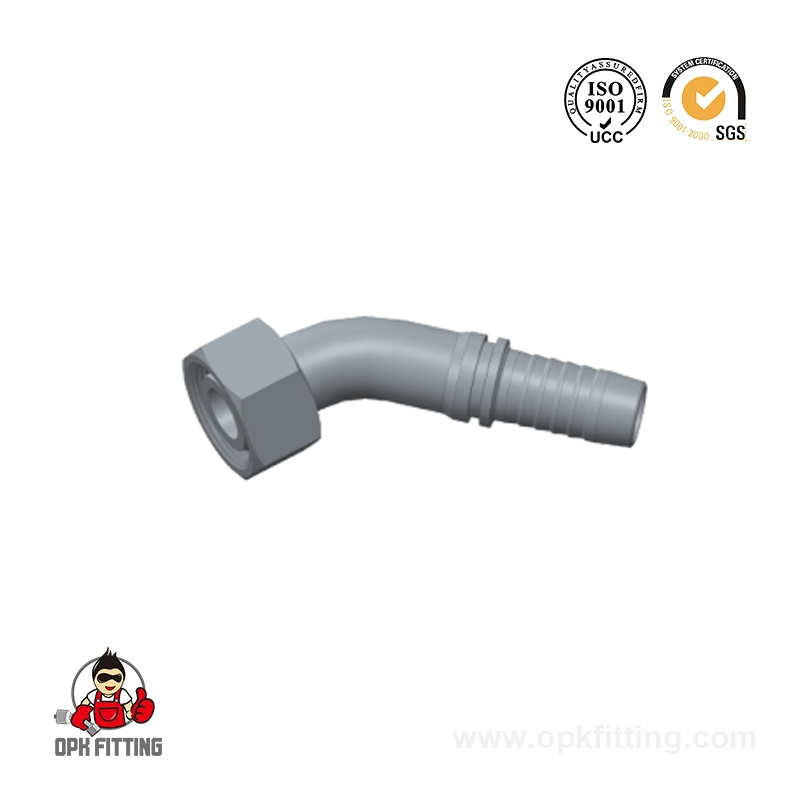
1. Raw Material: Carbon Steel & Stainless Steel available2. Standard Plating: Trivalent Zinc Plating ( Cr3 / Chrome Free ), Silver & Yellow3. ...
See Details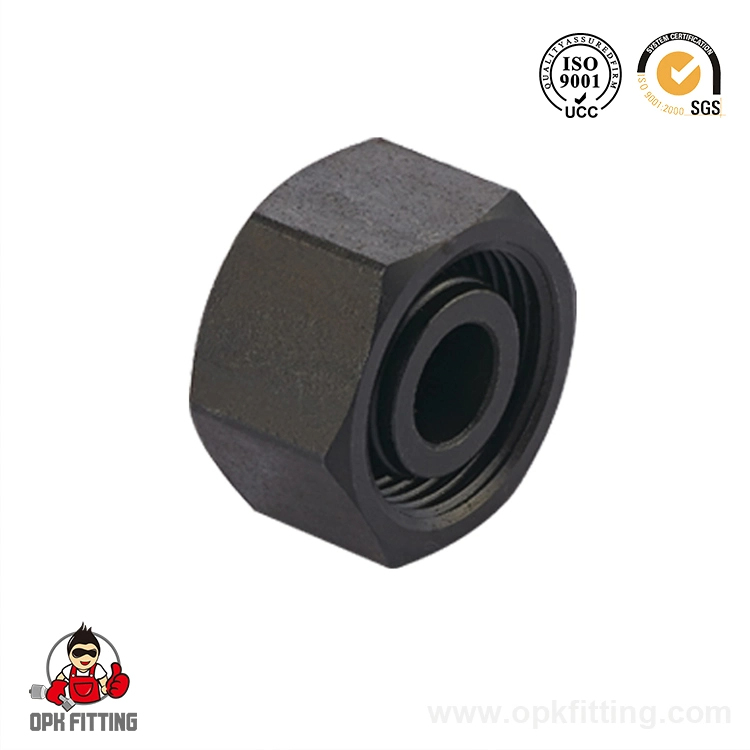
Product Descriptionhydraulic adaptor metric male O-Ring flat sealing pipe fittings Material: Carbon Steel, Stainless SteelSurface Treatment: White...
See Details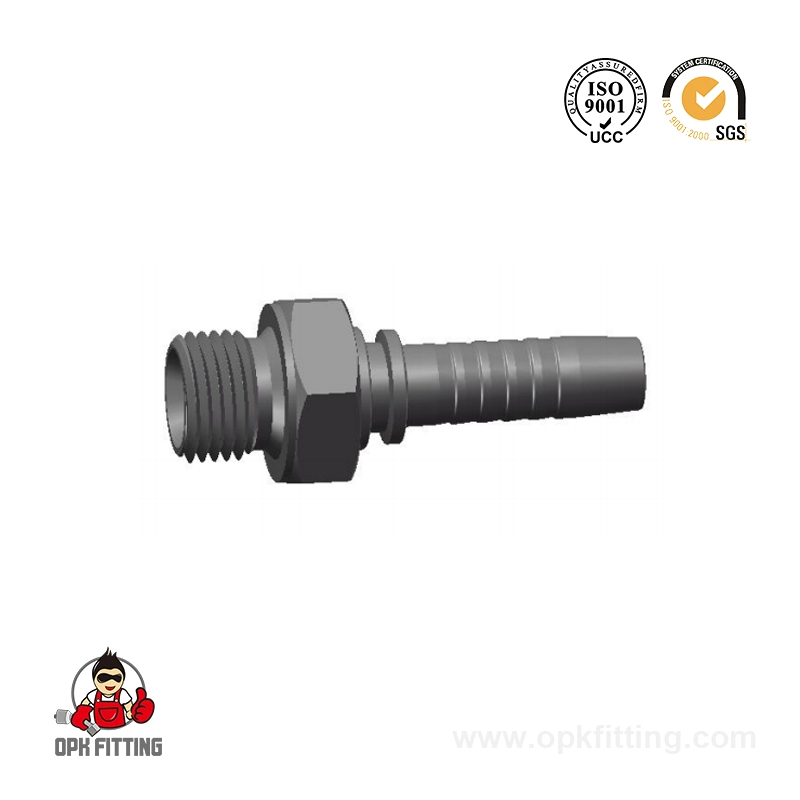
1. Raw Material: Carbon Steel & Stainless Steel available2. Standard Plating: Trivalent Zinc Plating ( Cr3 / Chrome Free ), Silver & Yellow3. ...
See Details

+86-18868902802


No. 298, Chenghai Road, Binhai New District, Fenghua Economic Development Zone, Fenghua District, Ningbo City, Zhejiang Province, China
Copyright @ Ningbo Opk Fitting Co., Ltd. Hydraulic Hose Fittings Manufacturers OEM & Custom Adaptors Company
