A hydraulic hose can survive years of service, but the connection is often the weak point. Think about a 3/8-inch JIC male connector that starts to weep because the 74° sealing seat is scored. The maintenance supervisor replaces the hose, only to discover the port on the manifold is ORFS. Two different sealing concepts, two different fitting families, and the same leak returns within minutes. The takeaway is simple: selecting a hydraulic hose connection means knowing the thread standard, the sealing mechanism, and the nominal size at the same time. Miss one, and the assembly will leak, loosen, or fail unexpectedly. This guide explains the main fitting families, how to identify them, and the practical steps to choose a reliable connection.
The Main Families of Hydraulic Hose Connections
Almost every hydraulic hose connection falls into one of five families. The fitting name tells you which thread and seat geometry it uses, so it is worth memorizing the differences.
NPT/NPTF. National Pipe Thread has a 60° tapered thread. NPTF adds a dry-seal design, but in practice many assemblies still use sealant or tape. NPT is common in low-pressure industrial circuits and is not recommended for high-vibration hydraulic lines.
BSPP and BSPT. British Standard Pipe Parallel and Tapered are widely used in Europe and Asia. BSPP has a 55° parallel thread that seals with an O-ring or a bonded washer; BSPT is the tapered version and depends on thread deformation. Both are easy to confuse with NPT because the pitch is different.
JIC / SAE J514. The JIC connection uses a UNF thread and a 74° male cone mated to a 37° female flare. The metal-to-metal seat handles moderate pressure and vibration, but can be damaged by over-torquing.
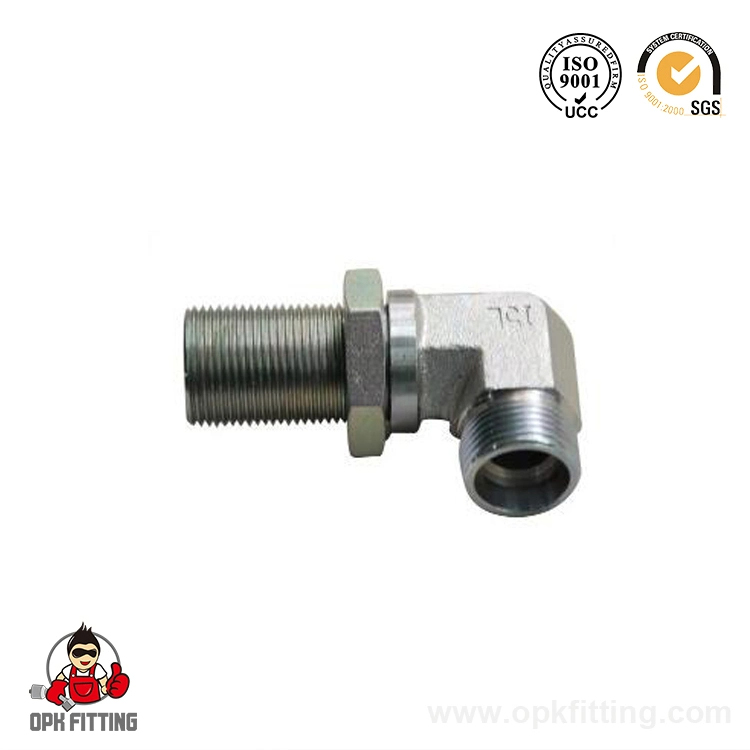
ORFS / SAE J1453. O-Ring Face Seal connectors have a flat face with an O-ring gland. They are preferred for high-pressure and vibration-prone equipment because the O-ring absorbs surface imperfections.
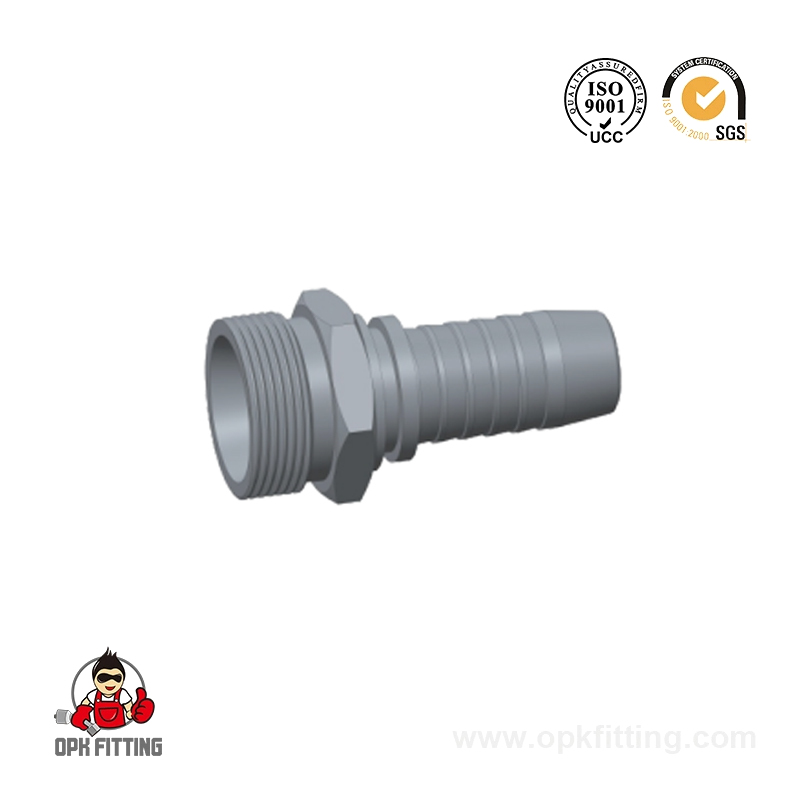
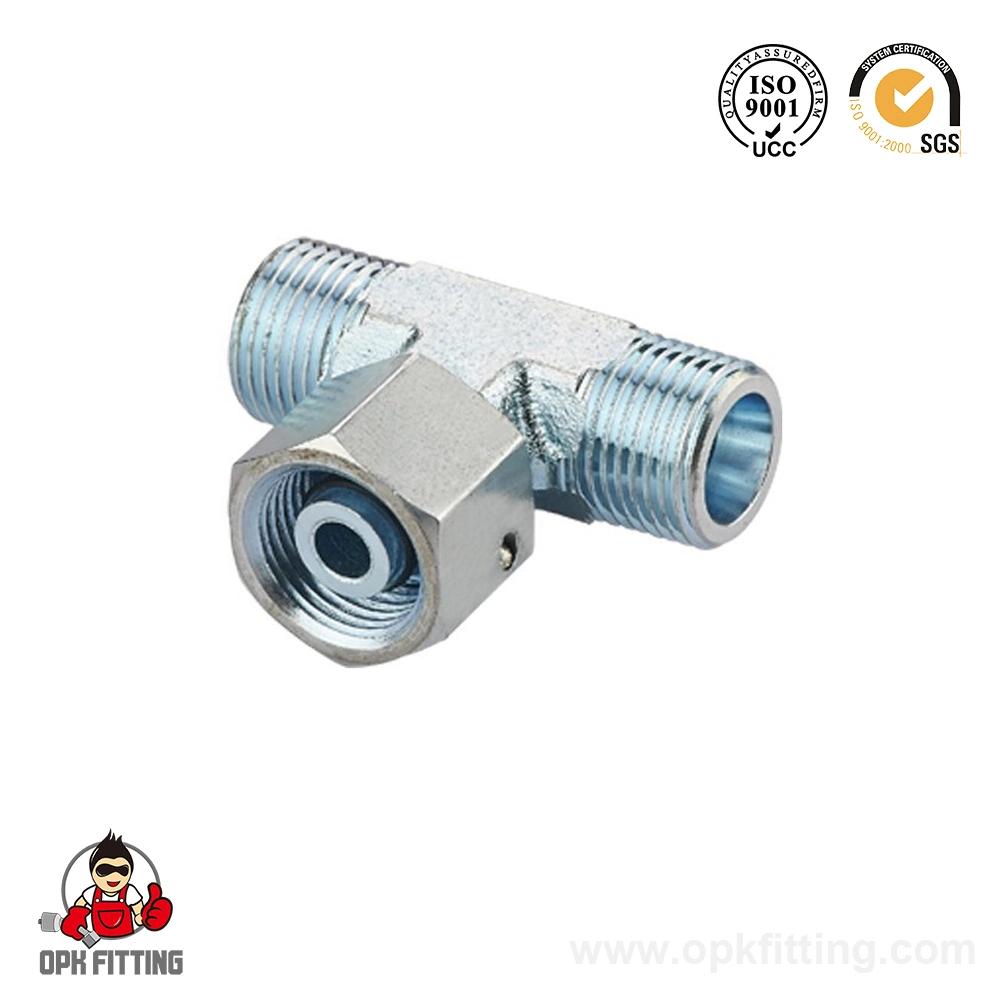
Metric 24° cone (DIN 2353). This European standard uses a metric thread and a 24° cone, with light (L) and heavy (S) series. It gives a strong, compact connection and is common on excavators and farm machinery.
Manufacturers such as OPK Fitting organize their catalog by these families, which makes it easier to locate the right fitting once you know the port standard. For example, an ORFS male fitting is clearly listed under the American standard group.
If you are comparing materials across these families, we have an overview of hydraulic pipe fitting materials that explains how steel, stainless steel, and plated carbon steel affect corrosion resistance.
Common hydraulic hose connection families and their sealing concepts.
Family
Thread standard
Main sealing method
Typical use
NPT/NPTF
ANSI B1.20.1
Tapered thread
Industrial, low-pressure circuits
BSPP/BSPT
ISO 228 / ISO 7
Parallel thread + O-ring, or taper
European and Asian equipment
JIC (SAE J514)
UNF
74° male cone / 37° female flare
Mobile hydraulic systems
ORFS (SAE J1453)
UNF flat face
O-ring face seal
High pressure and vibration
DIN 2353 (24° cone)
Metric
24° cone seat
Heavy machinery, European machines
Sealing Mechanisms and Why They Matter
The sealing mechanism is the part that actually stops the leak. Tapered-thread connections create a seal by interference: the flanks of the male and female threads wedge together. This works at low cost, but it is sensitive to thread damage and requires controlled torque.
Mated-angle connections, such as JIC and 24° cone, use an accurately formed metal cone or flare to contact a matching surface. They tolerate vibration well, but any nick on the sealing surface is a direct leak path. Over-torquing can also deform the seat permanently.
O-ring face seals eliminate the metal-on-metal contact. The O-ring is compressed between two flat faces, so alignment is easier and the connection can be re-tightened without scoring the seat. That is why ORFS connectors are popular on pumps, motors, and valve blocks.
Torque is the key variable for every sealing mechanism. Too little torque lets the seal relax; too much torque deforms the seat or O-ring. The safe torque window is wider for O-ring seals than for mated-angle seals, as the chart below illustrates.
Assembly torque vs. leak risk (illustrative)
A 24° cone fitting is a good example of a mated-angle design: the light (L) and heavy (S) series use the same 24° cone but different thread dimensions. For heavy-duty lines, a metric male 24° cone connector is often the right choice.
Because the seal relies on the cone, torque specifications matter more than they do for a compression or O-ring type. If you need to review how these fittings are manufactured and controlled, the about page on the OPK site gives a picture of the factory process.
How to Identify a Hydraulic Hose Connection in Five Steps
Identifying a hose connection does not require a lab. With a caliper, a thread pitch gauge, and a bright light, you can classify most connections in a few minutes. The five steps are the same ones hydraulics shops use every day.
Define the fitting family. Look at the body shape. A flat-faced fitting with an O-ring groove is likely ORFS. A cone-shaped nose is often JIC or metric. A tapered thread with no visible seat is NPT or BSPT.
Match the port. Confirm male/female orientation and note whether the port has a straight or tapered thread. A straight-thread port needs a seal, while a tapered thread often seals by itself.
Identify the sealing type. Inspect the face: is there a groove for an O-ring? A 74° cone? A 24° cone? A flared surface? Sealing type is the single most important clue.
Measure the thread. For inch threads, measure the diameter and count threads per inch. For metric threads, measure the outer diameter and pitch in millimeters. A pitch gauge avoids guesswork.
Test-fit with a new connector. The new fitting should spin freely by hand for at least two turns, then tighten smoothly. If it is tight from the start or leaks, stop and recheck.
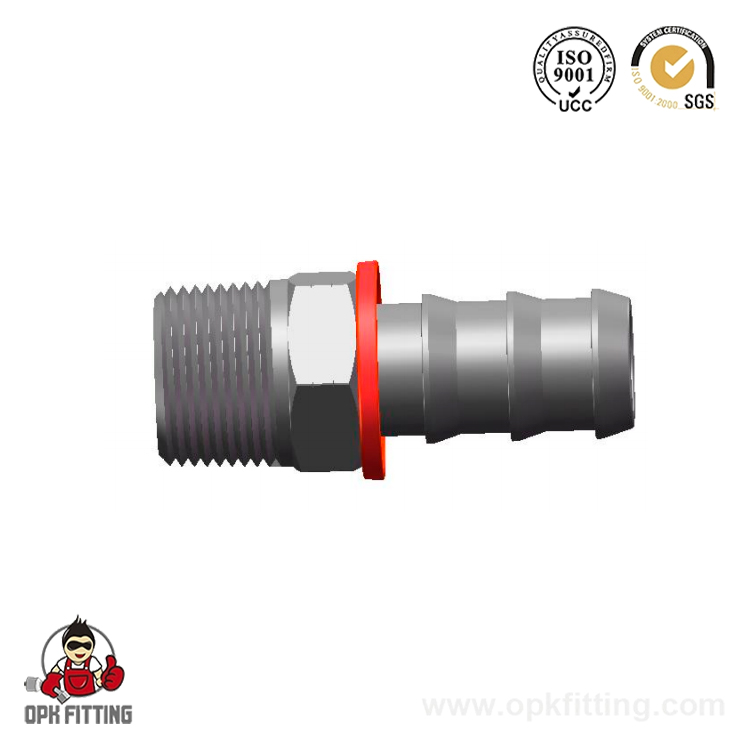
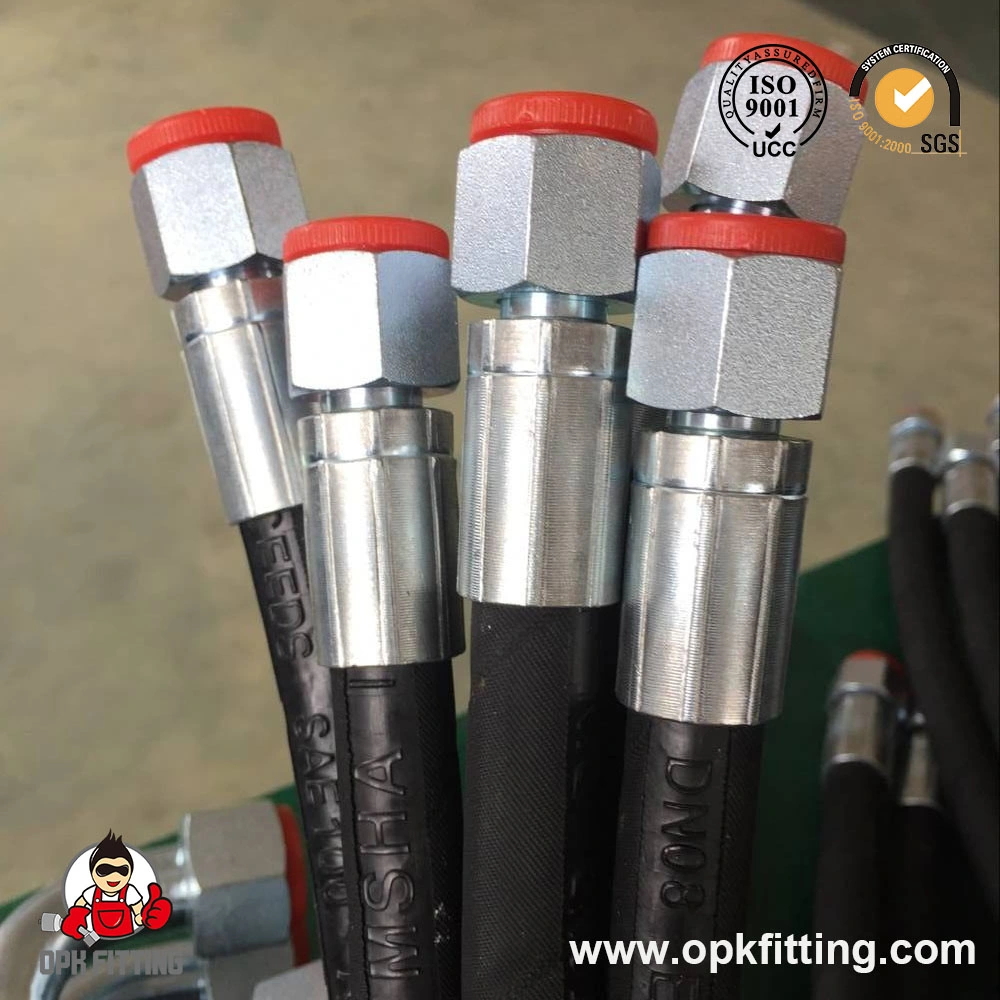
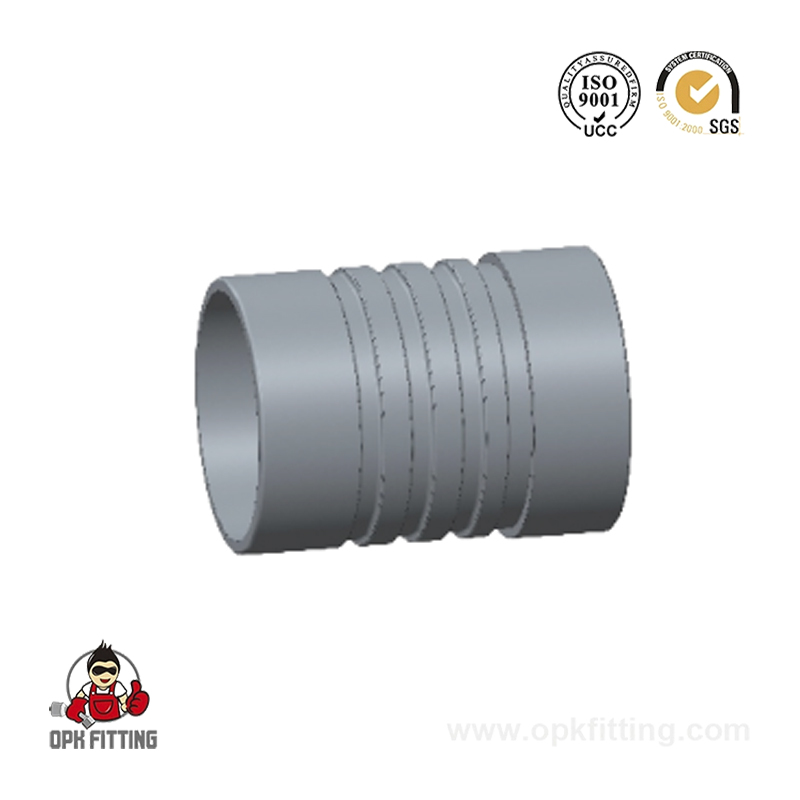
The same process works for both male and female connections. If you are working in the field, remember that socketless fittings can be pushed onto the hose and tightened without a crimping machine, which makes a temporary repair much faster.
Common Mistakes and How to Avoid Them
Even experienced technicians make mistakes when hose connections look similar. The list below covers the most common causes of leaks and fitting failures.
Mixing NPT and BSPT: both are tapered, but NPT has a 60° thread angle and BSPT has 55°. The two look almost identical in photos, but a thread gauge tells them apart.
Assuming JIC and ORFS interchange: many ORFS and JIC fittings share the same nominal size and UNF thread, but the sealing face is different. An ORFS male cannot seal in a JIC female.
Over-torquing a cone seat: a 74° or 24° cone can be crushed or deformed by excessive torque, creating a permanent leak path.
Applying sealant to O-ring grooves: sealant can contaminate the hydraulic fluid and prevent the O-ring from seating properly.
Reusing a damaged fitting: a scratch or burr on a sealing surface cannot be polished away reliably. Replace the fitting before it leaks.
The best prevention is to measure every connection before choosing a fitting. A documented bench procedure—measuring diameter, pitch, and seating angle—reduces errors to almost zero. For quick field repairs, a socketless hose fitting avoids the need for a crimper and can be installed in minutes, as long as the system pressure is within its rating.
These are the questions buyers and maintenance teams ask most often when selecting hydraulic hose connections.
Q1: What is the difference between JIC and ORFS fittings?
JIC uses a 74° male cone against a 37° female flare, while ORFS uses a flat face with an O-ring. ORFS is more tolerant of vibration and repeated assembly.
Q2: What does BSP stand for in hydraulic fittings?
BSP stands for British Standard Pipe. It has parallel (BSPP) and taper (BSPT) forms, with a 55° thread angle.
Q3: Are NPT and BSPT interchangeable?
No. NPT has a 60° thread angle and BSPT has 55°, and the pitches differ. Mixing them will leak and can damage the threads.
Q4: How do I choose the right hydraulic hose fitting size?
Measure the port thread and hose inner diameter, use a thread gauge to determine pitch or TPI, then match the standard family.
Q5: What is a 24° cone fitting used for?
It is a metric heavy-duty connection used widely in European machines under DIN 2353. It suits high-pressure hydraulic lines with light and heavy series.
Q6: Can I reuse hydraulic hose fittings?
Reusable and socketless styles can be reused. Crimp-style ferrules generally need replacement because they deform permanently during crimping.
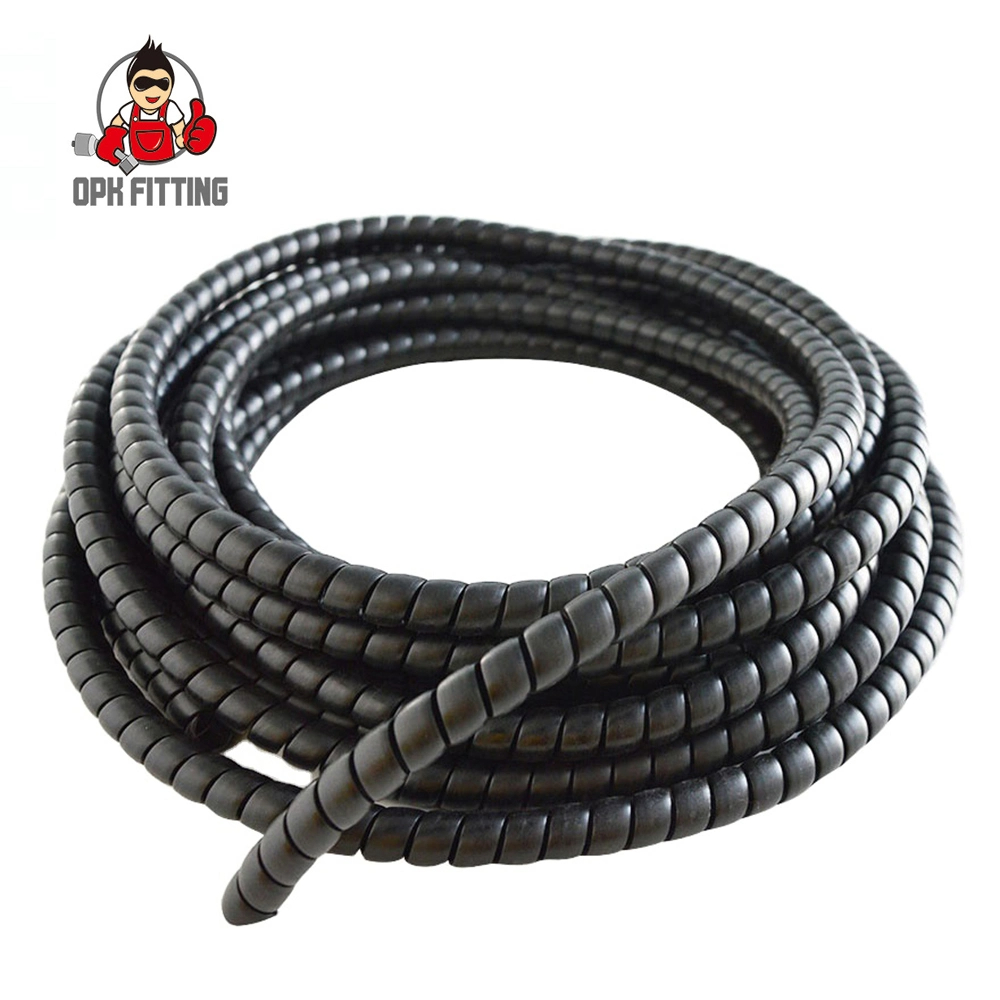
PRODUCT NAME: Spiral Protective Sleeve PP plastic hose guard for hydraulic hoseRecommended For: The use of Spiral Guard Wrap is an economical and conv...



.jpg)