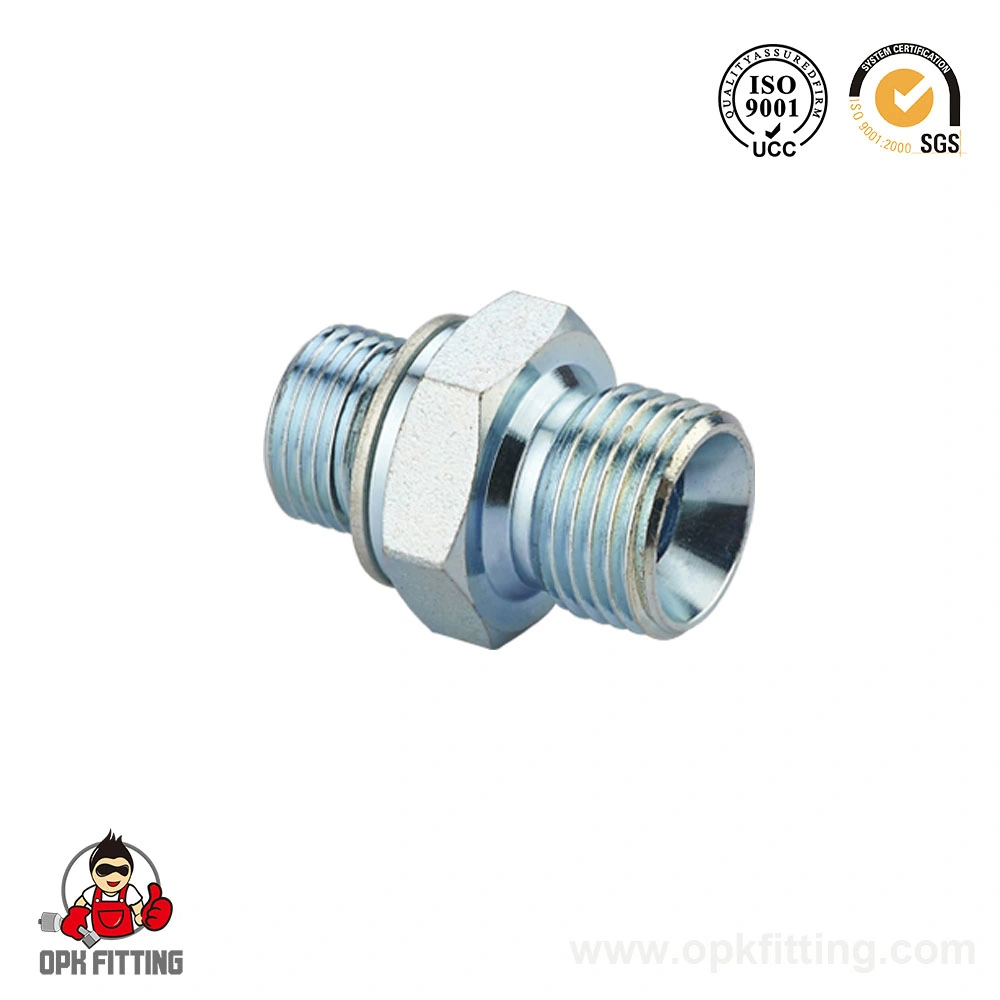
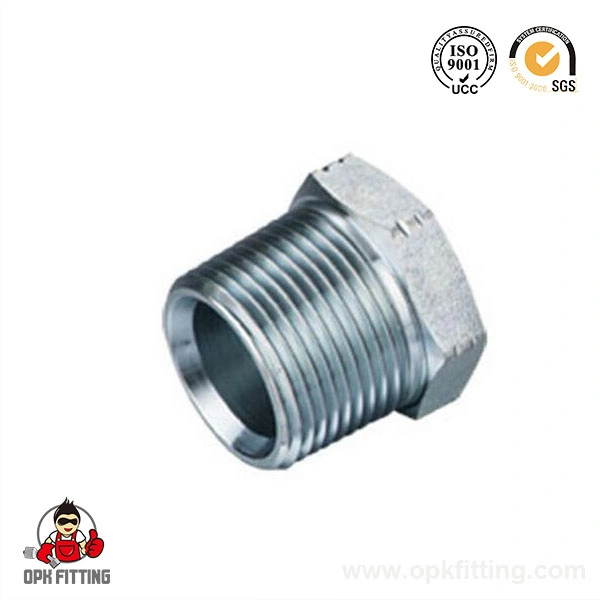
A socketless hose fitting is a hydraulic or fluid transfer connector that secures directly onto a hose using a barbed inner stem and an external clamp — with no crimped or swaged metal socket required. The fitting works by pushing its ribbed stem into the hose bore, then compressing a clamp band over the hose wall to lock the assembly in place and create a reliable fluid-tight seal. The entire process takes under 5 minutes with basic hand tools, making socketless fittings a practical solution for field repairs, low-to-medium pressure circuits, and applications where a hydraulic crimping machine is not available.
This guide covers everything you need to know about socketless hydraulic hose fittings: how they work, what they are made of, where they are used, how they compare to traditional socket fittings, and how to select the right type for your system. Whether you are maintaining agricultural equipment, building industrial fluid lines, or specifying components for a new hydraulic circuit, understanding socketless fittings will help you make faster, more informed decisions.
The Working Principle of a Socketless Hose Fitting
To understand why socketless fittings work, it helps to compare them with what they replace. A traditional crimped hose fitting uses a two-part design: an inner stem and an outer metal socket. The hose is inserted between the stem and the socket, then a crimping machine applies radial force to permanently deform the socket inward, gripping the hose from the outside. This creates a mechanically robust connection, but it requires a dedicated machine, factory setup, and skilled operators.
Socketless fittings solve this by eliminating the outer socket entirely. Instead, the connection relies on two mechanisms working together: interference fit between the barb and the hose bore, and clamping force applied from outside the hose wall. Neither mechanism alone provides full retention — together they create a seal capable of withstanding working pressures up to 35 bar (approximately 500 psi) in standard configurations, with some reinforced designs reaching 50 bar.
The Role of the Barbed Stem
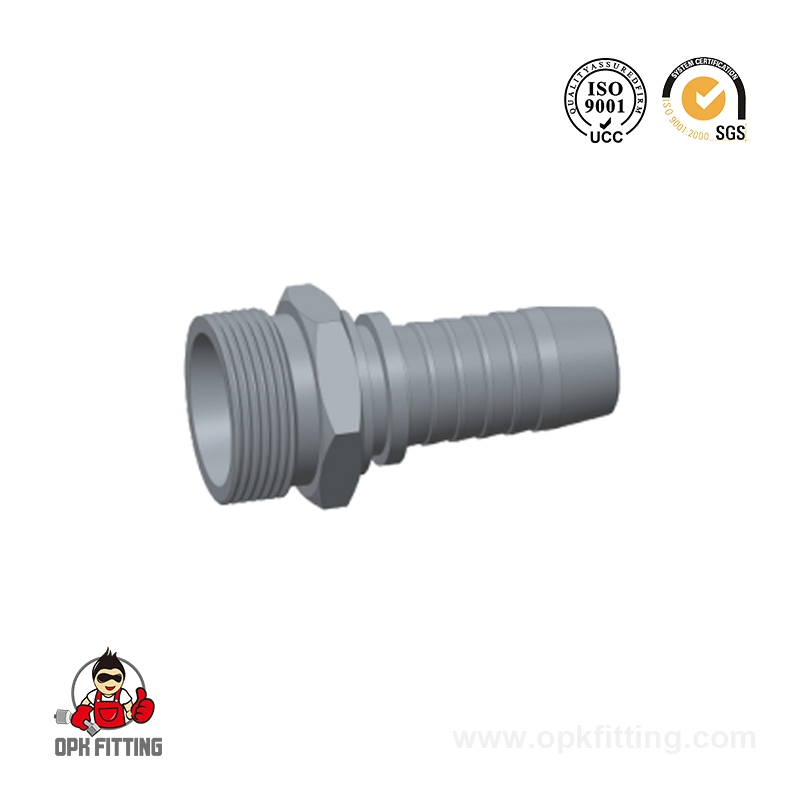
The barbed stem is the core sealing element of the fitting. It is machined with a series of circumferential ridges — typically 2 to 5 ribs depending on fitting size — that are slightly larger in diameter than the hose inner bore. When the stem is pushed into the hose, the hose liner stretches elastically around each rib. The ribs bite into the rubber, creating individual sealing rings along the stem's length. Each rib contributes to both pull-out resistance and leak prevention.
The rib profile matters significantly. A shallow, rounded rib profile is gentler on the hose liner but provides less pull-out resistance. A sharper, more aggressive rib profile grips harder but can damage the liner if the hose is forced over the stem without lubrication. Quality socketless fittings use a tapered rib profile — steeper on the outlet-facing side to resist pull-out, and more gradual on the insertion side to protect the liner during assembly.
How the Clamp Completes the Connection
The external clamp compresses the hose wall radially inward over the barb ribs. This compression does two things: it increases the contact pressure between the hose liner and the rib surfaces, which improves the fluid seal, and it creates friction between the hose outer wall and the clamp band, which resists axial pull-out forces. Without the clamp, the barb alone cannot reliably retain the hose under sustained pressure or surge loads. Without the barb, the clamp alone provides no internal sealing.
The clamp must be positioned directly over the barb region — not at the very tip of the hose and not behind the barb shoulder — to engage both mechanisms simultaneously. A worm-drive clamp tightened to 3 to 7 Nm (depending on hose diameter and clamp width) is sufficient for most standard hydraulic hose push-on fitting applications. Ear-type (single-use) clamps apply a fixed, pre-calculated compression force and are preferred in high-vibration or permanent-installation environments.
Pressure Dynamics Inside the Assembly
When the hydraulic system pressurizes, the fluid inside the hose acts on the inner surface of the stem and on the hose liner. At the barb interface, internal pressure pushes outward on the hose wall — the same direction the clamp is pushing inward. This means that at moderate pressures, the internal pressure actually increases the contact force at the barb ribs, improving the seal dynamically as system pressure rises. This self-energizing behaviour is one of the reasons correctly installed socketless fittings perform well in steady-state service.
However, pressure surges — rapid spikes above the steady working pressure caused by valve closure or actuator end-of-stroke impacts — produce axial forces that the clamp must resist. This is why socketless fittings have a defined surge pressure rating, typically 1.5 to 2 times the working pressure, which must not be exceeded in service. Systems with frequent, high-magnitude pressure surges should use crimped socket fittings on pressure lines and reserve socketless fittings for return and drain circuits.
Anatomy of a Socketless Hose Fitting: Components and Materials
A complete socketless hose fitting assembly consists of three to four distinct components. Understanding what each part does helps with specification, procurement, and troubleshooting when an assembly fails in service.
Fitting Body and Stem
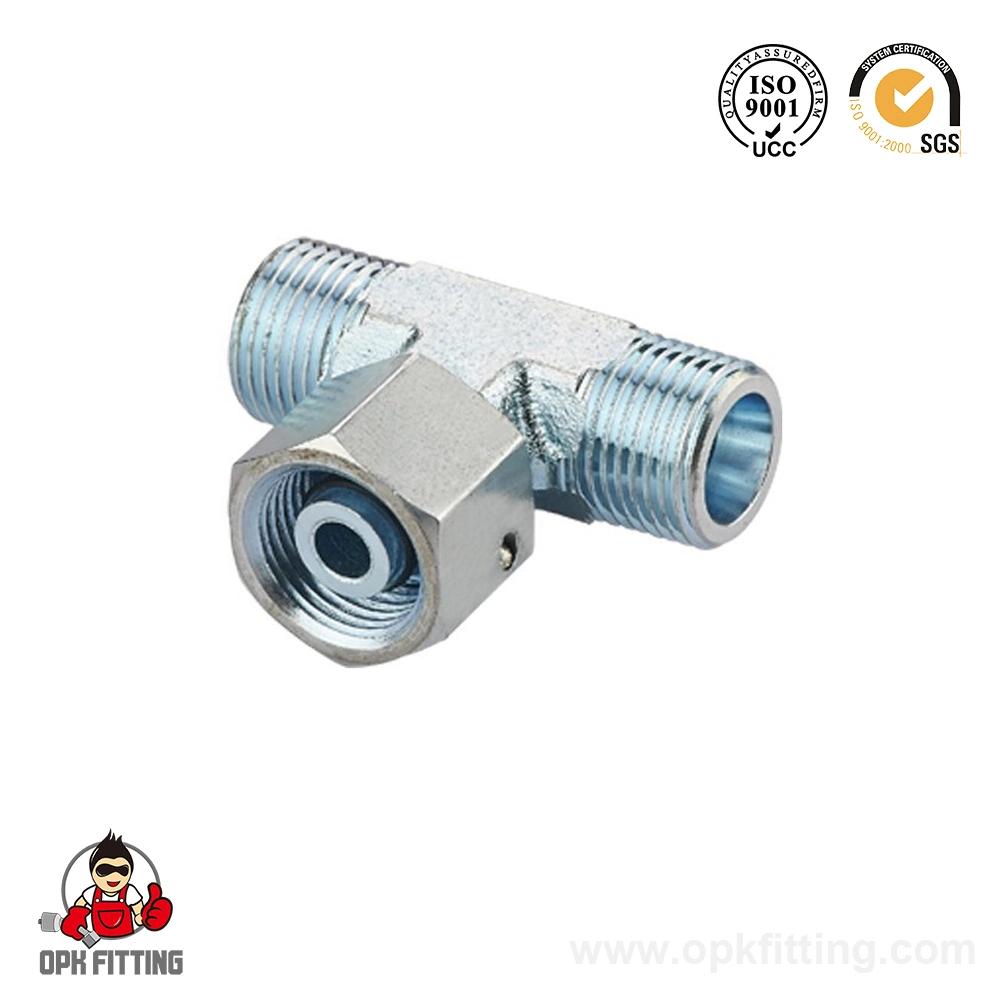
The fitting body is a single machined part that integrates the barbed stem on one end and the port connection on the other. The two ends serve different purposes: the stem end connects to the hose, and the port end connects to the hydraulic system. Port end configurations include straight threads (BSP, NPT, metric), flare connections (JIC 37°), and O-ring face seal (ORFS) interfaces.
Carbon steel is the default material for general hydraulic service, usually with a zinc or nickel plating to resist corrosion. Stainless steel grades 304 and 316 are specified for marine, food processing, and chemical environments where the fitting is exposed to moisture, salt water, or aggressive cleaning agents. Brass is used in low-pressure pneumatic and water systems, particularly where the hose connects to a brass valve body or manifold and galvanic compatibility is a concern.
Clamp Types and Their Trade-offs
The clamp is a separate component supplied with the fitting or specified independently. Four types are in common use across industrial and mobile hydraulic applications:
Table 1: Clamp types for socketless hose fittings — characteristics and best use cases
Large bore hoses (25–50 mm ID), higher clamp loads
Spring clamp
No
Low
Automotive coolant and very low-pressure water lines only
Seals and O-rings
Most socketless fittings rely on the hose liner itself as the primary seal at the barb interface. However, the port connection end typically includes a secondary seal — an O-ring seated in a groove on the fitting face or behind a locknut. This O-ring prevents external leakage at the port thread and must be specified correctly for the system fluid.
NBR (nitrile) O-rings are standard for petroleum-based hydraulic oil and are rated for temperatures from -40°C to +100°C. EPDM O-rings are used with water-glycol and phosphate ester fluids, and handle temperatures up to +150°C. FKM (Viton) O-rings are specified for high-temperature mineral oil, synthetic esters, and aggressive chemical environments, rated to +200°C. Selecting the wrong O-ring material leads to swelling, hardening, or degradation that causes external leakage at the port connection.
Thread Standards and End Connection Types
The port connection end of a socketless fitting is manufactured to the same thread and interface standards as any other hydraulic fitting. The most common standards encountered in global hydraulic systems are:
BSP (British Standard Pipe) — parallel (G) and taper (R) variants; G1/4" to G2" range; widely used in Europe, Asia, and Australasia.
NPT (National Pipe Taper) — tapered thread sealing by thread engagement; 1/8" to 2"; standard in North America.
JIC 37° flare — flared seat connection; AN4 to AN32; used in aerospace, mobile hydraulics, and fuel systems.
Metric DIN — M10×1 to M42×2; used in European industrial machinery and some agricultural equipment.
ORFS (O-ring Face Seal) — flat face with O-ring groove; preferred where vibration or system cleanliness requirements demand zero external leakage.
Socketless vs. Crimped Socket Fittings: A Practical Comparison
Choosing between socketless and traditional crimped socket fittings is not always straightforward. Both have legitimate roles in hydraulic system design, and understanding where each excels prevents both over-engineering and under-specification.
Pressure Range and Application Suitability
The most fundamental difference is pressure capability. Crimped socket fittings assembled on wire-reinforced hose are rated for working pressures from 100 bar up to 420 bar or more, covering the full range of hydraulic actuator circuits, steering systems, and high-pressure industrial circuits. Socketless fittings are limited to 10 to 35 bar (145 to 500 psi) for standard designs, making them appropriate for return lines, drain circuits, lubrication systems, cooling circuits, and low-pressure pneumatic lines.
This pressure boundary is not arbitrary — it reflects the physical limits of the barb-and-clamp retention mechanism. Beyond approximately 35 bar, the axial force trying to push the hose off the stem exceeds what a standard clamp can resist without cutting into the hose braid. Reinforced socketless designs with wider clamp bands and deeper barb profiles extend this ceiling, but still cannot match the retention strength of a properly crimped socket.
Table 2: Direct comparison of socketless and crimped socket hose fittings across key performance factors
Factor
Socketless Fitting
Crimped Socket Fitting
Max Working Pressure
10–35 bar (145–500 psi)
Up to 420+ bar (6,000+ psi)
Assembly Equipment
Hand tools only
Hydraulic crimping machine
Assembly Time
Under 5 minutes
15–30 minutes (including setup)
Field Reusability
High (worm-drive clamp)
Low (socket permanently deformed)
Hose Type Required
Push-on / single-braid low-pressure hose
Wire-braid / multi-spiral high-pressure hose
Typical Circuit
Return lines, drain, lube, cooling
Actuator, pump, high-pressure supply
Vibration Resistance
Moderate (clamp must be checked periodically)
High (permanently swaged connection)
Where Socketless Fittings Have a Clear Advantage
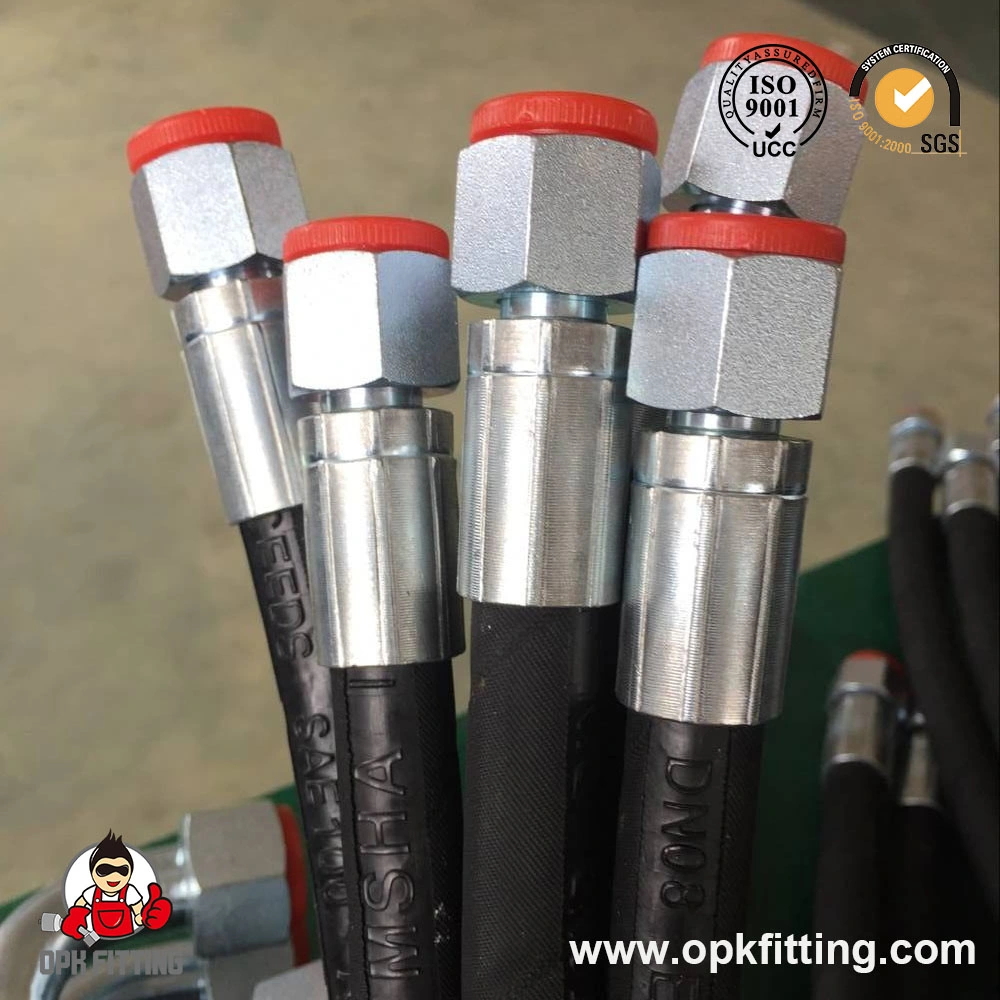
For the applications where socketless fittings are correctly specified, they offer practical advantages that crimped fittings cannot match. The most significant is field repairability. When a return line fails on an agricultural machine in the middle of a harvest, a technician can replace the hose and refit the socketless fitting using tools from a standard toolbox, without travelling to a hydraulic workshop. This reduces downtime from hours to minutes and avoids the need for expensive on-call service vehicles equipped with crimping machinery.
The second advantage is inventory simplicity. A single set of socketless fitting stems in common sizes, combined with a box of worm-drive clamps and a stock of push-on hose, covers a wide range of repair scenarios. There is no need to stock matched pairs of stems and sockets for each hose and fitting combination, and no need to track crimp die specifications for each hose type.
When to Choose Crimped Fittings Instead
Crimped socket fittings remain the correct choice for any circuit operating above 35 bar, any application with sustained high-frequency vibration, any safety-critical line (brake, steering, load-holding), and any application where the fitting must meet formal certification requirements under standards such as SAE J517, ISO 18752, or EN 853. Socketless fittings do not qualify under these pressure hose assembly standards and should never be used in circuits where a fitting failure could endanger personnel or cause uncontrolled machine movement.
Industry Applications and Real-World Use Cases
Socketless hydraulic hose fittings appear in almost every industry that uses fluid power or fluid transfer systems. Their distribution across industries reflects both the prevalence of low-pressure circuits in machinery and the practical value of tool-free assembly in field service environments.
Socketless Fitting Usage Distribution by Industry (%)
Agriculture27%
Construction22%
Industrial Machinery19%
Automotive14%
Marine & Shipbuilding10%
Food & Pharmaceutical8%
Estimated distribution based on global hydraulic hose fitting market analysis, 2023–2024.
Agriculture and Outdoor Power Equipment
Agricultural machinery is the largest single application segment for socketless hose fittings. Tractors, combine harvesters, sprayers, and irrigation systems all contain extensive low-pressure circuits for hydraulic return lines, fertilizer transfer, seed hopper pressurization, and cooling water supply. These circuits operate well within the pressure range of socketless fittings, and the equipment operates in remote field locations where workshop facilities are unavailable.
A combine harvester breakdown during the harvest window represents significant financial loss — crop losses can reach thousands of dollars per day when harvesting conditions are optimal. A socketless fitting that can be replaced in the field within 5 minutes, rather than requiring the machine to be transported to a dealer for a crimped hose replacement, has direct, measurable value to farming operations. Many agricultural equipment manufacturers now specify socketless fittings on all return and drain lines specifically to enable this field-repair capability.
Construction Equipment and Mobile Hydraulics
Construction equipment such as excavators, wheel loaders, concrete mixers, and compactors contains both high-pressure actuator circuits (where crimped fittings are mandatory) and low-pressure auxiliary circuits where socketless fittings are appropriate. Common applications include hydraulic oil return lines from the control valve bank back to the tank, cooling water lines on engine and hydraulic oil coolers, windshield washer and cab pressurization lines, and tool carrier lube circuits.
Construction sites are another environment where on-site repair capability is valuable. Transporting a large excavator to a workshop for a failed return line fitting is impractical and costly — machine move costs alone can exceed several hundred dollars. Site maintenance teams equipped with socketless fittings and push-on hose can restore the machine to operation in minutes.
Industrial Machinery and Manufacturing
In fixed industrial plant, socketless fittings serve coolant and cutting fluid supply lines on CNC machine tools, lubrication circuit feed lines on large presses, pneumatic tool air supply hoses, and vacuum system connections. These circuits are typically low-pressure (5–20 bar) and require periodic hose replacement as part of planned maintenance schedules. Socketless fittings speed up planned maintenance by allowing hose changes without specialist crimping equipment, reducing scheduled downtime.
The food and pharmaceutical manufacturing subsector uses socketless fittings in sanitary fluid transfer applications. Stainless steel 316 socketless fittings with EPDM O-rings and smooth-bore PTFE-lined hose meet the hygiene requirements for product contact lines in food processing plants, and the tool-free assembly allows the lines to be disassembled for cleaning and inspection without specialist tools, supporting CIP (clean-in-place) procedures.
Marine, Shipbuilding, and Offshore
Marine applications use stainless steel socketless fittings extensively on deck wash systems, bilge pump connections, fire suppression water supply lines, and non-critical hydraulic return circuits on deck machinery. The salt water and high-humidity environment demands 316 stainless steel rather than carbon steel, and the confined spaces typical of shipboard installations favour the compact, tool-minimal assembly of socketless fittings over crimped assemblies.
How to Select the Right Socketless Hose Fitting for Your System
Selecting the correct socketless fitting for a specific application requires working through five key parameters in order. Skipping any of these steps risks selecting a fitting that will leak, fail prematurely, or be incompatible with the connected components.
Step 1: Confirm the Pressure and Flow Requirements
Start with the system working pressure and verify it is within the socketless fitting's rated range. Include surge pressure analysis — if the circuit experiences frequent pressure spikes, apply a derating factor. A common guideline is to select a fitting rated for at least 1.5 times the maximum anticipated surge pressure. Also check the flow velocity: high flow velocities through small-bore fittings generate turbulence and erosion over time. For low-pressure return circuits, standard push-on hydraulic hose fitting assemblies are typically sized to keep fluid velocity below 3 m/s.
Step 2: Identify the Hose Inner Diameter and Type
The fitting stem must match the hose inner diameter precisely. Standard socketless fitting stem diameters are available in sizes from 6 mm to 51 mm (1/4" to 2"), covering the full range of common push-on hose sizes. The interference fit — the amount by which the stem OD exceeds the hose ID — should be 0.5 to 1.5 mm for standard rubber hose. An interference greater than 1.5 mm makes assembly difficult and risks tearing the hose liner; less than 0.5 mm provides insufficient sealing contact.
Also confirm that the hose construction is compatible. Socketless fittings are designed for push-on hose (single textile braid or light wire braid reinforcement). Using them with multi-spiral wire-reinforced hose is not appropriate — the hose wall is too rigid for the barb to compress effectively, and the hose OD may prevent the clamp from closing sufficiently.
Step 3: Match Material to Fluid and Environment
Use the following guide as a starting point for material selection, and always verify compatibility with the specific fluid being used:
Table 3: Material selection guide for socketless hose fittings by fluid and environment type
Fluid / Environment
Fitting Material
Seal / O-ring
Petroleum hydraulic oil (standard)
Carbon steel, zinc-plated
NBR (nitrile)
Water-glycol fire-resistant fluid
Carbon steel or stainless 304
EPDM
Salt water / marine exposure
Stainless steel 316
EPDM or FKM
Food-grade water / cleaning agents
Stainless steel 316
FDA-grade EPDM or silicone
Compressed air / pneumatics
Brass or zinc-plated steel
NBR or polyurethane
High-temperature synthetic oil (>120°C)
Carbon steel or stainless
FKM (Viton)
Step 4: Select the Correct Port Thread and Connection Type
Match the port end connection to the mating port on the valve, manifold, or component. If the port is BSP parallel, specify a BSP parallel fitting with an O-ring. If the port is NPT, specify an NPT fitting with PTFE thread sealant. Using the wrong thread type and forcing the connection risks cross-threading, leakage, and damage to the port that is far more costly to repair than the fitting itself.
For new system designs, ORFS (O-ring face seal) connections are recommended wherever the socketless fitting's pressure range is suitable. ORFS provides the most reliable external seal, tolerates vibration well, and allows the fitting to be removed and reinstalled multiple times without leak risk, provided the O-ring is replaced each time.
Step 5: Choose the Clamp Type for the Installation Environment
For permanent fixed installations and high-vibration environments, ear-type clamps are the appropriate choice. For field-serviceable assemblies and maintenance-intensive applications, worm-drive clamps allow re-tightening and reuse. For large bore hoses (25 mm ID and above), T-bolt clamps provide the clamping force distribution needed to compress the thicker hose wall uniformly over the barb.
Always use the clamp width recommended by the fitting manufacturer for each stem size. A clamp that is too narrow concentrates force on a small section of hose, potentially cutting through the reinforcement braid. A clamp that is too wide distributes force across a larger area but may not compress tightly enough over the barb ribs to achieve the required sealing contact pressure.
Pressure Ratings, Performance Data, and Service Life
Understanding the performance envelope of socketless fittings helps engineers and maintenance teams make informed decisions about where these fittings are appropriate, and when inspection or replacement is warranted.
Working Pressure vs. Hose Bore: The Key Relationship
Maximum working pressure for socketless fittings decreases as hose bore increases. This inverse relationship exists because axial pull-out force — the force trying to push the hose off the stem — is proportional to the internal pressure multiplied by the cross-sectional area of the bore. A larger bore means larger area, and therefore larger axial force for the same system pressure. The barb and clamp system must resist this force, and its capacity does not scale as fast as the axial load.
Max Working Pressure (bar) vs. Hose Inner Diameter
Typical maximum working pressure (bar) for standard socketless push-on fittings at common hose inner diameters. Values are indicative — verify against manufacturer datasheets for each specific assembly.
Service Life Expectations by Application Type
Socketless hose fitting assemblies correctly installed and maintained can achieve service lives that compare favourably with the hose itself. The fitting body and stem typically outlast the hose in normal service — hose degradation (surface cracking, liner hardening, reinforcement fatigue) usually drives replacement before the fitting fails. Published service life guidelines based on maintenance industry data are:
Static fluid transfer lines (plant equipment): 5 to 8 years, or 20,000 operating hours — whichever comes first.
Mobile equipment return circuits (tractors, excavators): 3 to 5 years, subject to annual clamp torque verification.
High-vibration environments (compactors, generators): 2 years or 5,000 hours, with 6-monthly clamp inspections.
Sanitary food processing lines: Replace at each major scheduled CIP cycle, typically every 12 to 18 months.
These figures assume correct initial installation, appropriate material selection, and operation within rated pressure and temperature limits. UV exposure, ozone, and chemical contamination shorten hose life and may require more frequent replacement on outdoor or chemically aggressive installations.
Safety Factor Requirements
All hydraulic hose assemblies — including socketless types — should be selected to provide a minimum 4:1 safety factor between the assembly's burst pressure and its rated working pressure. This means an assembly rated at 25 bar working pressure must burst-test at no less than 100 bar. Reputable socketless fitting manufacturers publish both working pressure and minimum burst pressure data for each product and size combination. Always request this data when specifying fittings for a new installation, and retain it for maintenance records.
Installation, Maintenance, and Troubleshooting
A correctly installed socketless fitting requires minimal maintenance beyond periodic visual inspection and clamp torque verification. The most important time investment is at installation — getting the assembly right the first time prevents the majority of in-service issues.
Installation Essentials
The five most critical installation steps for socketless hydraulic hose fittings are:
Cut the hose squarely using a rotary hose cutter — never a hacksaw. An angled cut prevents the hose end from seating flush against the stem shoulder, creating an uneven sealing line.
Lubricate the barb stem with petroleum jelly or compatible hydraulic fluid before insertion. This protects the hose liner from tearing during assembly and makes full stem insertion achievable by hand without excessive force.
Insert the stem fully until the hose end is flush with the stem shoulder. A partial insertion leaves barb ribs exposed without clamp coverage, dramatically reducing pull-out resistance.
Position the clamp over the barb region — 5 to 10 mm from the hose end — and tighten to the manufacturer's specified torque using a calibrated torque screwdriver.
Pressure-test before full-service use by pressurizing to 50% of working pressure, holding for 2 minutes, inspecting for leaks, then increasing to full working pressure and repeating the inspection.
Maintenance Schedule and Inspection Points
After the initial installation, the following inspection schedule keeps socketless hose assemblies in reliable service:
Table 4: Recommended maintenance schedule for socketless hose fitting assemblies
Interval
Action
Signs Requiring Immediate Action
After first 50 hours
Clamp torque check and visual inspection
Fluid film at clamp, hose swelling
Every 6 months / 1,000 hours
Full visual and torque verification
Corrosion, hose cracking, clamp rotation
Annually
Pressure test at 1.5x working pressure
Any leakage at clamp or port thread
Per service life guideline
Full hose assembly replacement
Surface cracking, blistering, liner hardening
Common Failure Modes and How to Diagnose Them
When a socketless fitting assembly leaks or fails, identifying the failure mode correctly guides the correct corrective action. The three most common failure modes are:
Clamp seepage (fluid weeping at the clamp band): Usually caused by insufficient clamp torque or clamp loosening due to vibration. First corrective action: re-torque the clamp. If seepage continues within 48 hours, disassemble and inspect the hose liner and barb for damage.
Hose blow-off (hose separates from stem under pressure): Caused by stem not fully inserted, clamp positioned away from barb region, or system pressure exceeding the fitting's rated range. Replace the entire hose assembly with correctly matched components and verify system pressure limits.
Port connection leakage (leakage at the thread or face seal): Caused by incorrect thread engagement, missing or damaged O-ring, or thread damage from cross-threading. Disassemble the port connection, inspect the O-ring and threads, and reassemble with a new O-ring and correct torque.
About OPK Fitting
OPK FITTING Hydraulic Equipment Factory is a specialized manufacturer with deep experience in hydraulic pipes, hose fittings, and adaptors. Our product range covers all kinds of materials across different pressure levels — including flexible hydraulic hoses in various size standards, socketless hose fittings, crimped fittings, adaptors, and custom hydraulic assemblies. OPK products serve the hydraulic and fluid conveyance systems of industries including machinery, metallurgy, petroleum, construction, marine and shipbuilding, aerospace, agriculture, pharmaceutical manufacturing, and food processing.
Over 10 years of manufacturing experience in hydraulic fitting production, with a consistent focus on precision and reliability.
A team of skilled design professionals and application engineers able to support system specification, material selection, and custom fitting development.
Rigorous quality control processes including pressure testing, dimensional inspection, and material verification for every production batch.
Thoughtful customer service with full technical support across the product selection, application, and after-sales process.
Whether you are sourcing socketless push-on hydraulic hose fittings for a maintenance stock program, specifying barbed hose connectors for a new OEM product, or seeking a custom hydraulic adaptor to solve a compatibility problem, OPK Fitting has the product range and technical expertise to support your requirements.
Frequently Asked Questions
Q1: What is the difference between a socketless hose fitting and a push-on hose fitting?
The terms are often used interchangeably. "Push-on hose fitting" refers to the assembly method — the hose pushes onto the barbed stem. "Socketless fitting" describes the construction — the fitting has no outer crimped socket. Both refer to the same type of barb-and-clamp connector. Some manufacturers use "push-on" to describe fittings assembled without any clamp (relying on barb grip alone at very low pressures), while "socketless" implies a clamp is used — but usage varies by manufacturer.
Q2: Can socketless hose fittings be used on high-pressure hydraulic lines?
No. Standard socketless fittings are rated for working pressures up to 35 bar (500 psi). High-pressure hydraulic circuits — actuator lines, pump discharge, steering circuits — typically operate between 100 and 420 bar, which is well beyond the socketless fitting's safe working range. Use crimped socket fittings on wire-reinforced hose for all high-pressure applications.
Q3: Do I need to skive the hose before installing a socketless fitting?
No skiving is required. Socketless fittings are specifically designed to be installed on the hose without removing the outer rubber layer. The barb stem inserts directly into the intact hose bore. This is one of the key assembly advantages — no skiving tool, no buffing, and no specialist preparation equipment needed.
Q4: How do I know what size socketless fitting I need for my hose?
Match the fitting stem size to the hose inner diameter (ID). Measure the hose ID with a calliper, then select a fitting stem whose OD is 0.5 to 1.5 mm larger than the hose ID for a correct interference fit. Also verify the hose outer diameter is within the clamp range, and that the fitting's port connection matches the thread type and size of the system port.
Q5: What causes a socketless fitting to leak, and how can it be fixed?
The three most common causes are insufficient clamp torque, clamp positioned away from the barb ribs, and hose stem not fully inserted. First, re-torque the clamp to the specified value. If leakage continues, disassemble and inspect the barb and hose liner for damage. If the port connection is leaking, check the O-ring condition and thread engagement. Replace any damaged components before reassembling.
Q6: Are socketless hydraulic fittings suitable for use with all types of hydraulic fluid?
Not all fluids are compatible with all socketless fitting materials and seals. Standard carbon steel fittings with NBR seals are compatible with petroleum-based hydraulic oil. For water-glycol, phosphate ester, or other fire-resistant fluids, specify EPDM or FKM seals and verify the fitting material's compatibility. Always check the fluid compatibility data from the fitting manufacturer before specifying fittings for non-standard hydraulic fluids.
Q7: How often should the clamp on a socketless fitting be re-tightened?
Check clamp torque after the first 50 operating hours, as initial hose compression can allow slight clamp relaxation. After that, verify torque at each 6-monthly or 1,000-hour inspection. In high-vibration environments, check every 3 months. Do not re-tighten a clamp that shows no sign of loosening — over-tightening damages the hose and reduces the clamp's fatigue life.