


00110A Ferrule For Sae100R1AT/Din20022 1SN Hose
Cat:Ferrules
Description Of Products:1. Raw Material: Carbon Steel & Stainless Steel available2. Standard Plating: Trivalent Zinc Plating ( Cr3 / Chrome Free )...
See DetailsContent
Choosing the right hydraulic hose ferrule comes down to four factors: hose type, operating pressure, fluid compatibility, and whether your assembly requires skiving. A mismatched ferrule is the leading cause of hydraulic hose assembly failure — not worn hoses, not faulty fittings — and accounts for an estimated 23% of unplanned hydraulic system downtime in industrial environments. Getting the selection right from the start eliminates leaks, prevents blow-offs, and extends assembly service life by 30–50% compared to generic or incorrectly specified components.
Hydraulic Hose Ferrules (also called Hydraulic Hose Sleeves) are the metal collars crimped around the outer cover of a hydraulic hose to lock the fitting stem inside the hose body. They are not interchangeable across hose brands, hose sizes, or fitting series. This guide walks through every selection variable — material, standard, size, crimp specification, and application — to help engineers, procurement teams, and maintenance professionals make informed decisions in 2026.
A hydraulic hose ferrule is a precision-machined cylindrical sleeve placed over the hose end prior to crimping. During the crimping process, a die set in a hydraulic crimping machine compresses the ferrule radially inward, simultaneously compressing the hose's outer cover, reinforcement braid or spiral layers, and inner tube around the fitting's barbed or serrated stem. The resulting mechanical interference creates a leak-free, high-pressure seal without adhesives, clamps, or welding.
The working principle depends on controlled plastic deformation. As the ferrule wall collapses under crimping pressure — typically 40–120 tons of force depending on hose size — it transfers compressive load evenly across the hose circumference. This uniform compression is what distinguishes a factory-quality crimped assembly from a field-fabricated clamp connection. Burst pressure ratings on properly crimped assemblies consistently reach 4× the maximum working pressure (per SAE J517), while clamp-style alternatives rarely exceed 2–2.5× safety factors.
Figure 1: Burst-to-working-pressure safety factor comparison across hose termination methods. Properly crimped hydraulic hose ferrules achieve the highest safety margin at 4:1, meeting SAE J517 requirements. This advantage is most pronounced in high-cycle and high-pressure applications where reusable or clamp-type alternatives introduce unacceptable failure risk.
The ferrule's geometry — internal diameter, wall thickness, and length — is engineered as a matched set with a specific hose construction and fitting series. Mixing components from different matched sets, even when they appear dimensionally similar, introduces uncontrolled crimp geometry that compromises both pull-off strength and pressure retention. This is why every credible Hydraulic Ferrule Manufacturer provides crimp specification tables rather than generic sizing charts.
The most fundamental classification in hydraulic hose ferrule selection is whether the assembly requires skiving — the removal of the hose's outer cover before fitting insertion. This distinction governs assembly time, tooling requirements, and the permissible hose constructions for each ferrule type.
Skive ferrules require the hose outer cover to be stripped back by a defined length — typically 10–25 mm depending on hose diameter — exposing the wire braid or spiral reinforcement before the fitting is inserted. The ferrule then crimps directly onto the exposed reinforcement, providing maximum mechanical contact. This approach is standard for Hydraulic Hose Assembly in high-pressure applications (above 400 bar) and is mandatory for some SAE 100R12 and R13 multi-spiral hose constructions. The tradeoff is assembly time: skiving adds 2–4 minutes per assembly end and requires a dedicated skiving tool calibrated for the specific hose wall thickness.
Non Skive Ferrules are designed to crimp over the intact hose outer cover, eliminating the skiving step entirely. The fitting stem features aggressive serrations or barbs that penetrate through the cover and into the reinforcement during crimping. Non-skive ferrules account for the majority of field assembly work because they reduce assembly time by 30–40% and require less operator skill. They are fully validated for pressures up to 420 bar on appropriate hose constructions and are the preferred choice for SAE 100R1, R2, R16, and R17 hose types.
| Attribute | Skive Ferrule | Non-Skive Ferrule |
|---|---|---|
| Assembly prep time | +2–4 min per end | No extra prep |
| Max pressure capability | Up to 700+ bar | Up to 420 bar |
| Operator skill required | Higher | Lower |
| Typical hose types | R9, R12, R13, R15 | R1, R2, R16, R17 |
| Field assembly suitability | Moderate | Excellent |
Material selection for Hydraulic Crimp Ferrules is driven by three factors: the corrosivity of the operating environment, the process fluid compatibility, and the temperature range. Using the wrong material in a corrosive marine or chemical environment can reduce ferrule service life from years to weeks.
Figure 2: Performance radar comparing carbon steel and 316L stainless steel hydraulic ferrules across five criteria. Stainless steel dominates in corrosion resistance, temperature range, and chemical compatibility, while carbon steel offers better cost efficiency and comparable tensile strength. The choice between them should be determined by the service environment, not by upfront material cost alone.
Hydraulic hose and ferrule specifications are governed by two dominant international standards bodies: SAE International (Society of Automotive Engineers) and DIN (Deutsches Institut für Normung). These standards define not just ferrule dimensions but the full assembly system — hose construction, pressure rating, crimp diameter, and pull-off force requirements. Specifying a ferrule outside its validated standard is an engineering decision that voids the performance certification of the assembly.
Key standards relevant to Hydraulic Hose Fittings and ferrule selection include:
When sourcing from a Hydraulic Ferrule Manufacturer, always request documentation confirming which standard series the ferrule is validated against, not merely which standard it was manufactured to. A ferrule manufactured to SAE tolerances may still fail assembly validation if it has not been tested as part of a crimped system with the corresponding hose and fitting.
Selecting the correct Hydraulic Ferrule Sizes requires knowing three measurements: the hose dash size (inner diameter in 1/16" increments), the hose series (which determines outer diameter and wall thickness), and the fitting series you are using. These three variables together define the ferrule's inside diameter (ID), outside diameter (OD), and length — none of which can be estimated from a single measurement alone.
| Hose Dash Size | Hose ID (mm) | Ferrule ID (mm) | Ferrule OD (mm) | Ferrule Length (mm) | Max WP (bar) |
|---|---|---|---|---|---|
| -04 | 6.4 | 14.6 | 20.2 | 22.0 | 400 |
| -06 | 9.5 | 18.8 | 25.2 | 25.5 | 350 |
| -08 | 12.7 | 22.5 | 30.0 | 28.6 | 275 |
| -10 | 15.9 | 27.5 | 35.5 | 32.0 | 215 |
| -12 | 19.1 | 32.2 | 41.2 | 36.5 | 215 |
| -16 | 25.4 | 40.6 | 51.0 | 42.0 | 180 |
Figure 3: Ferrule outside diameter progression across SAE 100R2 AT dash sizes. The non-linear OD growth reflects the combined increase in hose wall thickness and reinforcement bulk as inner diameter increases. This means that sizing a ferrule by hose ID alone is insufficient — the hose series and outer diameter must both be confirmed to select the correct ferrule OD for the crimping die.
The Hydraulic Hose Crimping process converts individual components — hose, fitting, and ferrule — into a validated pressure assembly. Each step has a defined tolerance; errors in any step compound and can result in assemblies that pass visual inspection but fail under pressure cycling. The following sequence applies to non-skive ferrule assemblies, which represent the majority of workshop and field production volume.
Figure 4: Relationship between crimp diameter deviation and pull-off strength for a representative -08 hose assembly. Maximum pull-off strength is achieved at the specified target crimp diameter; deviations in either direction — under-crimp or over-crimp — reduce retention strength significantly. A -3% under-crimp reduces pull-off strength by approximately 80% from peak, which explains why crimp diameter measurement is non-negotiable in every production assembly.
Field failure analysis of hydraulic hose assemblies consistently identifies a short list of root causes. Understanding these failure modes allows procurement and maintenance teams to implement preventive controls rather than reactive replacements.
Figure 5: Distribution of root causes in hydraulic hose assembly field failures based on aggregated maintenance data. The leading cause — wrong ferrule or fitting combination — is entirely preventable through proper component matching at the specification stage. Together, the top two causes (ferrule mismatch and incorrect crimp diameter) account for exactly half of all assembly failures, reinforcing the importance of validated crimp specifications over ad-hoc assembly practices.
Hydraulic Hose Sleeves and ferrules serve as the structural backbone of fluid power systems across a broad range of industries. Each sector imposes distinct requirements on pressure rating, material, cleanliness, and documentation — and the ferrule specification must match these requirements as precisely as the hose and fitting selections.
Q1: Can I reuse a hydraulic hose ferrule after removing it?
No. Once a ferrule has been crimped, the plastic deformation is permanent and the internal geometry is altered. Attempting to re-crimp a used ferrule will not reproduce the original crimp profile, resulting in an assembly with unpredictable pull-off strength and pressure retention. Ferrules are single-use components; always use a new ferrule for each assembly, including rework of a previously crimped hose end.
Q2: Are hydraulic hose ferrules and hydraulic hose sleeves the same thing?
Yes — the terms hydraulic hose ferrule and hydraulic hose sleeve refer to the same component in most contexts. "Ferrule" is the predominant term in North American and SAE-standard environments, while "sleeve" is more commonly used in European (DIN-standard) and some Asian markets. Both describe the cylindrical metal collar crimped over the hose end to retain the fitting. Some suppliers distinguish "sleeve" as referring specifically to the outer protective sheath on the hose body, so it is worth confirming terminology when placing orders internationally.
Q3: How do I know if my crimp ferrule is under-crimped or over-crimped?
The only reliable method is to measure the finished crimp diameter with a calibrated crimp gauge or outside micrometer and compare it against the manufacturer's crimp specification table. Visually, an under-crimped assembly may show the ferrule slightly loose on the hose after crimping. An over-crimped ferrule may show surface cracking on the ferrule wall or visible deformation of the fitting body. Neither visual check is a substitute for dimensional measurement — accept or reject assemblies based on the measured crimp diameter, not appearance alone.
Q4: What is the difference between a skive and non-skive ferrule — and which should I choose?
Skive ferrules require stripping the hose outer cover before assembly, providing direct contact between the ferrule and the wire reinforcement. They are preferred for pressures above 420 bar and for multi-spiral hose constructions (R9, R12, R13). Non Skive Ferrules crimp over the intact hose cover and are suitable for pressures up to approximately 420 bar on single and double wire braid hose (R1, R2, R16, R17). For most workshop and field applications below 420 bar, non-skive is the practical choice due to faster assembly and lower operator training requirements. For high-pressure or critical applications, confirm the correct type with the hose and fitting manufacturer's specification table.
Q5: Do stainless steel hydraulic ferrules require different crimping settings than carbon steel?
Stainless Steel Hydraulic Ferrules typically require higher crimping force than carbon steel ferrules of the same dimension, because stainless steel has higher yield strength and work-hardens more rapidly during deformation. The target crimp diameter remains the same — it is determined by the hose construction, not the ferrule material — but the crimping machine must be capable of generating sufficient force throughout the full stroke. Always verify that your crimping equipment's rated capacity covers stainless ferrule applications at the hose sizes you intend to assemble, and re-confirm crimp diameters after switching materials, as machine calibration can drift under higher load cycles.
Q6: Can I use ferrules from one manufacturer with hose and fittings from another?
This is technically possible in some cases but carries significant risk. Ferrule ID tolerances, wall thickness, and length are optimized as part of a matched system with a specific hose OD and fitting stem geometry. Mixing components from different manufacturers without validated crimp specifications introduces uncertainty in crimp diameter targets and pull-off performance. If cross-manufacturer use is unavoidable, the assembly must be tested to the applicable SAE or ISO standard — burst test, impulse test, and pull-off — before being put into service. Relying on dimensional similarity alone is not an acceptable engineering basis for approval.
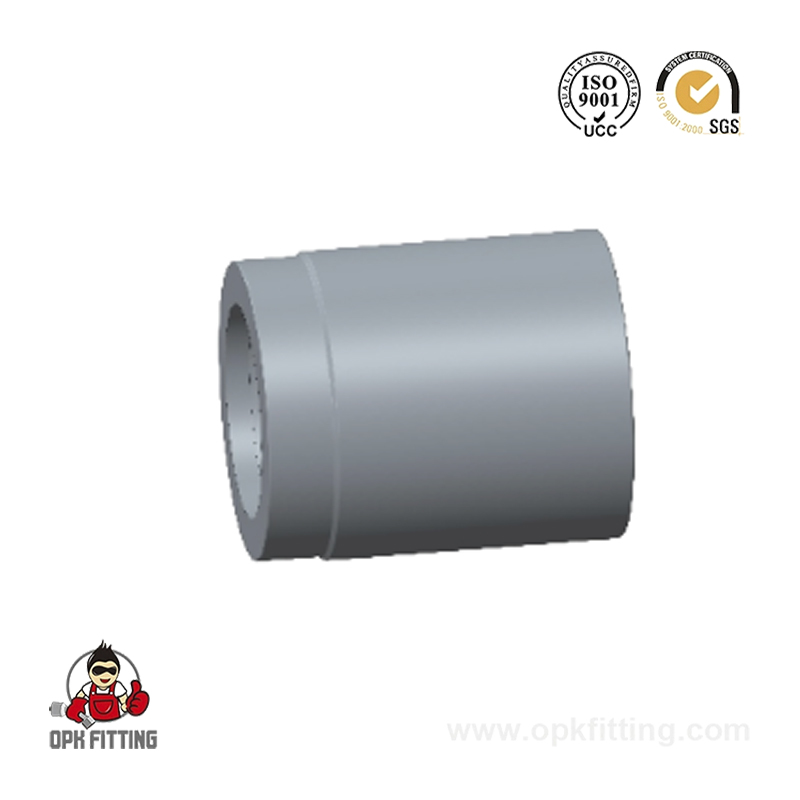
Description Of Products:1. Raw Material: Carbon Steel & Stainless Steel available2. Standard Plating: Trivalent Zinc Plating ( Cr3 / Chrome Free )...
See Details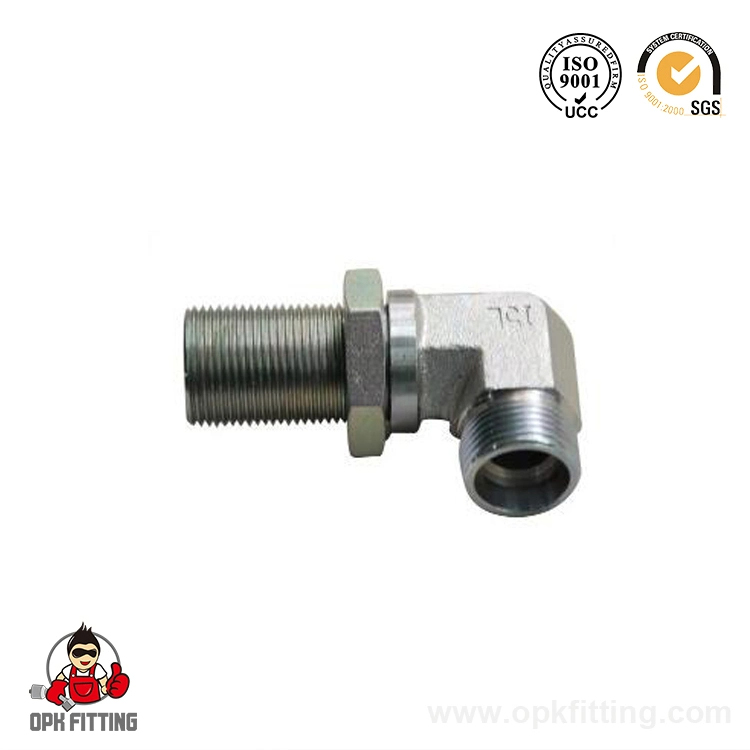
Product Descriptionhydraulic adaptor metric male O-Ring flat sealing pipe fittings Material: Carbon Steel, Stainless SteelSurface Treatment: White...
See Details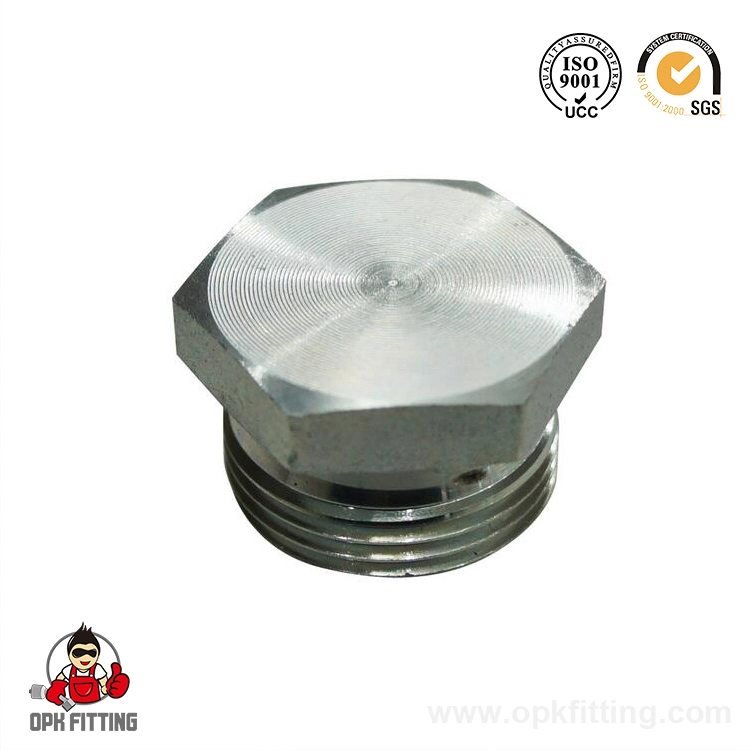
Product Descriptionhydraulic adaptor metric male O-Ring flat sealing pipe fittings Material: Carbon Steel, Stainless SteelSurface Treatment: White...
See Details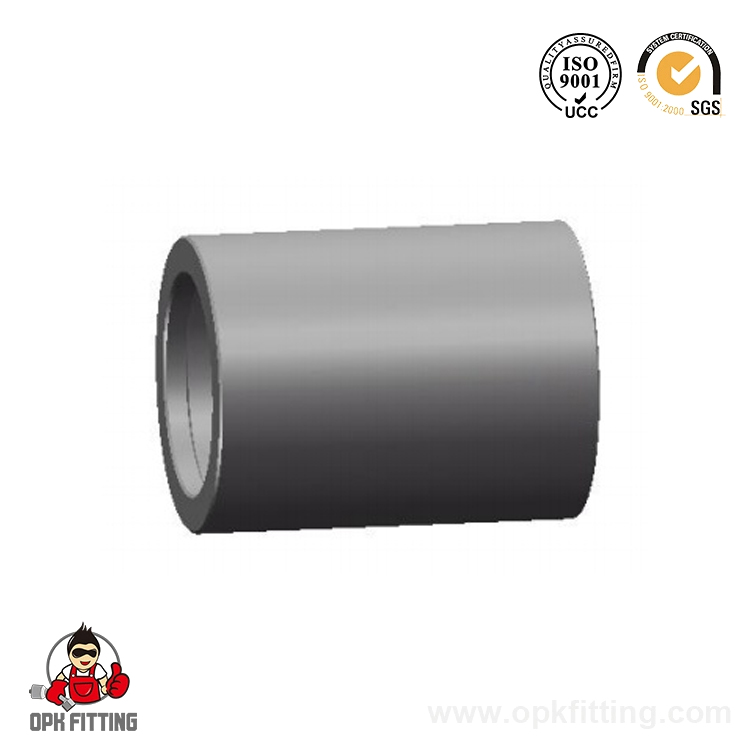
Description Of Products:1. Raw Material: Carbon Steel & Stainless Steel available2. Standard Plating: Trivalent Zinc Plating ( Cr3 / Chrome Free )...
See Details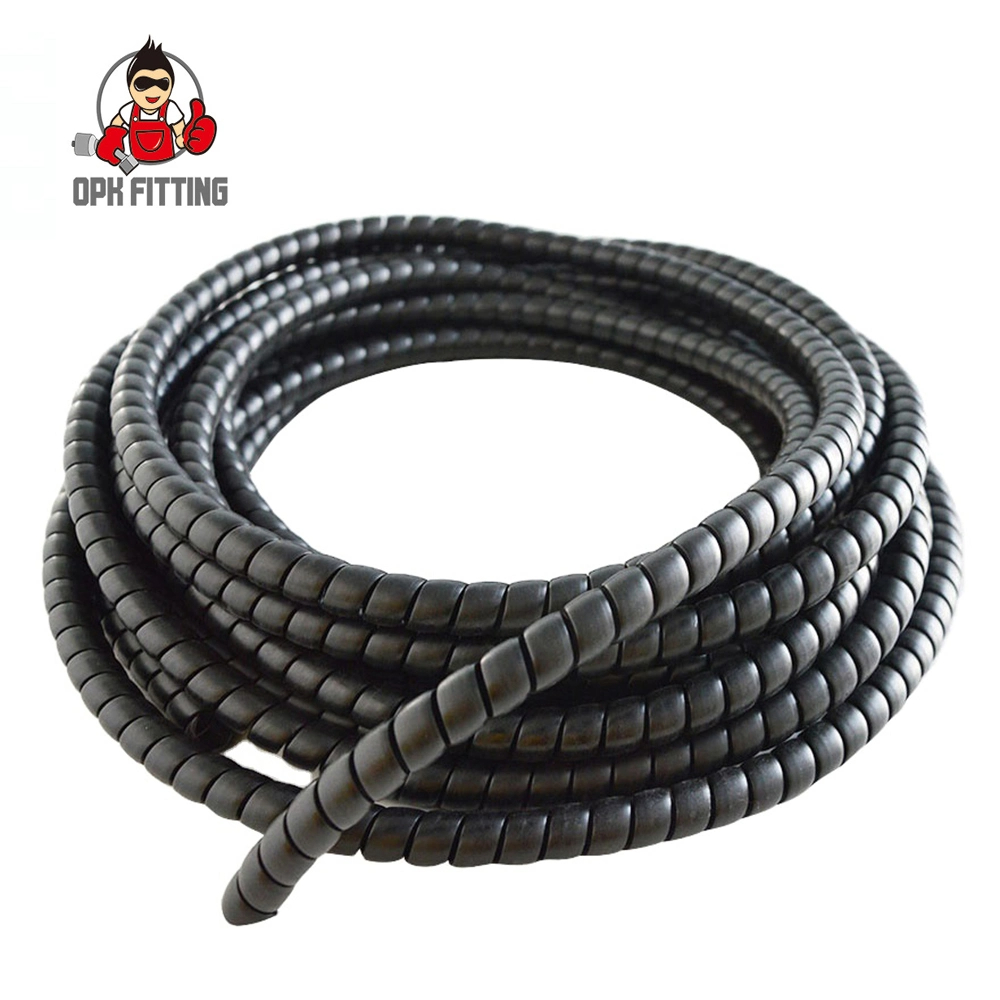
PRODUCT NAME: Spiral Protective Sleeve PP plastic hose guard for hydraulic hoseRecommended For: The use of Spiral Guard Wrap is an economical and conv...
See Details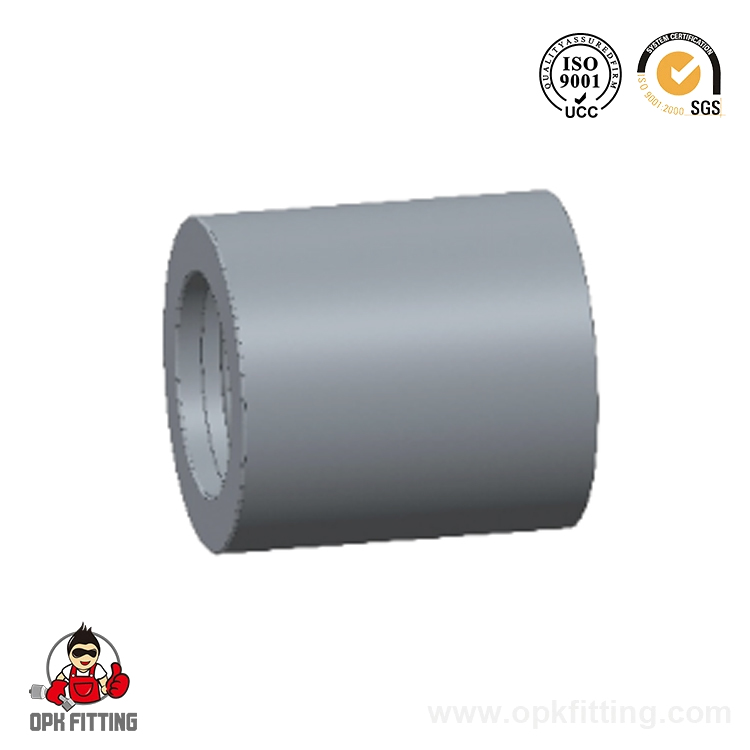
Description Of Products:1. Raw Material: Carbon Steel & Stainless Steel available2. Standard Plating: Trivalent Zinc Plating ( Cr3 / Chrome Free )...
See Details

+86-18868902802


No. 298, Chenghai Road, Binhai New District, Fenghua Economic Development Zone, Fenghua District, Ningbo City, Zhejiang Province, China
Copyright @ Ningbo Opk Fitting Co., Ltd. Hydraulic Hose Fittings Manufacturers OEM & Custom Adaptors Company
