Hydraulic hoses fail primarily due to abrasion, improper installation, pressure spikes, heat degradation, and age-related wear — and the good news is that most of these causes are entirely preventable with the right knowledge and maintenance habits. Whether you manage heavy construction equipment, agricultural machinery, or industrial hydraulic systems, understanding why hoses fail and how to stop it before it happens can save you thousands of dollars in downtime, repairs, and equipment damage.
Hydraulic hose failure is not just an inconvenience — it can be a serious safety hazard. High-pressure fluid injection injuries, fires from hydraulic fluid contacting hot surfaces, and equipment crashes are all documented consequences of unexpected hose failures. According to industry maintenance data, hydraulic system failures account for up to 30% of unplanned downtime in industrial and mobile equipment operations, with hose failures making up the largest share of those incidents.
This guide walks you through every major cause of hydraulic hose failure, explains the warning signs, and gives you a clear, actionable prevention strategy so you can keep your systems running safely and efficiently.
Understanding Hydraulic Hose Construction
Before diving into failure modes, it helps to understand what a hydraulic hose actually is and how it's built. A hydraulic hose is a flexible conduit designed to transmit pressurized hydraulic fluid between components such as pumps, cylinders, valves, and actuators. Unlike rigid piping, hoses allow for movement, vibration absorption, and flexible routing in complex machinery.
A typical hydraulic hose consists of three main layers:
- Inner Tube: The innermost layer that carries the hydraulic fluid. It must be chemically compatible with the fluid being used — typically made from synthetic rubber, PTFE (polytetrafluoroethylene), or thermoplastic materials.
- Reinforcement Layer: One or more layers of braided or spiral-wound wire or fiber that give the hose its pressure-handling capability. The number of reinforcement layers determines the hose's maximum working pressure — ranging from single-wire braid for low-pressure systems to six-spiral wire for ultra-high-pressure applications exceeding 10,000 PSI.
- Outer Cover: The outermost protective layer, usually made from synthetic rubber or thermoplastic. It protects the reinforcement layer from environmental damage such as abrasion, ozone, UV radiation, and chemicals.
Each of these layers can be compromised by different failure mechanisms, which is why understanding failure causes requires a layered approach — both literally and figuratively.
The Most Common Causes of Hydraulic Hose Failure
1. Abrasion and External Damage
Abrasion is the leading cause of hydraulic hose failure, responsible for an estimated 40% of all hose failures in mobile equipment environments. It occurs when hoses rub against metal surfaces, other hoses, sharp edges, or abrasive materials repeatedly over time. Even a small amount of constant friction can wear through the outer cover and eventually compromise the reinforcement braid, leading to catastrophic failure.
Common abrasion scenarios include hoses routed too close to chassis components, hoses bundled together without proper separation, and hoses exposed to moving mechanical parts. In construction equipment, hoses running along boom arms or undercarriage components are particularly vulnerable due to constant motion cycles.
2. Improper Installation and Routing
Installation errors are the second most frequent root cause of premature hose failure. A hose that is twisted during installation can lose up to 90% of its service life according to SAE technical data — even a 7-degree twist significantly reduces fatigue life. Other common installation mistakes include:
- Installing hoses with insufficient length, causing them to pull taut and stress the fittings at full extension
- Routing hoses with bend radii tighter than the manufacturer's minimum specification
- Failing to use proper clamps or supports, allowing hoses to vibrate or sag
- Using the wrong type of fitting or over-torquing connections during assembly
Many hydraulic hoses come with orientation stripes specifically to allow installers to verify that twisting has not occurred during installation. Ignoring these markings is a common but easily avoided mistake.
3. Pressure Spikes and Hydraulic Surges
Every hydraulic hose is rated for a specific maximum working pressure, but the system it operates in can generate momentary pressure spikes that dramatically exceed that rating. These surges, sometimes called pressure transients or water hammer effects, occur during rapid valve closures, pump startups, or sudden load changes. A single pressure spike can reach three to four times the normal operating pressure and last only milliseconds — yet still cause internal layer separation or fitting blow-off.
Repeated exposure to pressure spikes causes fatigue failure even in hoses that appear outwardly healthy. The reinforcement wire strands develop micro-cracks that propagate until the hose bursts suddenly without visible warning signs on the exterior.
4. Heat Degradation and Temperature Extremes
Heat is a silent destroyer of hydraulic hoses. Most standard hydraulic hoses are rated for continuous service between -40°F (-40°C) and 212°F (100°C), with some high-temperature hoses rated up to 300°F (149°C). When operating temperatures consistently exceed these limits — even by 20 to 30 degrees — hose life can be cut in half for every 18°F (10°C) increase above the rated maximum.
Heat causes the inner tube to harden and crack, reduces the elasticity of the outer cover, and can degrade the adhesion between layers. Hoses routed near exhaust manifolds, turbochargers, or other heat sources are especially at risk. Conversely, extreme cold makes rubber hoses brittle and prone to cracking at the fitting ends when the system starts up.
5. Chemical Incompatibility and Fluid Contamination
The inner tube of a hydraulic hose must be chemically compatible with the fluid it carries. Using the wrong hose with biodegradable fluids, water-glycol fluids, phosphate ester fluids, or certain synthetic hydraulic oils can cause the inner tube to swell, soften, or dissolve — contaminating the hydraulic fluid and degrading the hose from the inside out.
Contamination also works the other way: a deteriorating inner tube sheds particles into the hydraulic fluid, which can damage pumps, valves, and cylinders throughout the system. Studies suggest that over 70% of hydraulic system failures are caused or worsened by fluid contamination, making inner tube compatibility a system-wide concern, not just a hose issue.
6. Age and Natural Wear
Even perfectly maintained hoses have a finite service life. Rubber compounds degrade over time through a process called oxidation and ozone cracking. UV exposure accelerates this process in hoses exposed to sunlight. Most hose manufacturers recommend replacing hydraulic hoses every 6 years from the date of manufacture, regardless of visible condition — with replacement intervals shortened to 2 to 4 years in demanding applications involving extreme temperatures, frequent pressure cycling, or harsh environments.
Hydraulic Hose Failure Modes at a Glance
Table 1: Summary of common hydraulic hose failure causes, symptoms, and recommended preventive actions
| Failure Cause |
Affected Layer |
Visible Symptoms |
Prevention Method |
| Abrasion |
Outer cover |
Worn, frayed, or bare wire visible |
Sleeves, guards, proper routing |
| Improper installation |
Fittings / reinforcement |
Leaks at ends, spiral marks, kinks |
Follow SAE routing guidelines |
| Pressure spikes |
Reinforcement / inner tube |
Blistering, sudden burst |
Pressure accumulators, rated hoses |
| Heat degradation |
Inner tube / outer cover |
Hardening, cracking, brittleness |
Heat shields, rerouting, high-temp hoses |
| Chemical incompatibility |
Inner tube |
Swelling, soft spots, discoloration |
Match hose to fluid specification |
| Age / oxidation |
All layers |
Surface cracks, stiffness, discoloration |
Scheduled replacement every 6 years |
How to Prevent Hydraulic Hose Failure: A Practical Guide
Select the Right Hose for the Application
Prevention starts at the specification stage. Selecting the correct hose requires matching four critical parameters — often remembered as the STAMP method:
- S – Size: Inside diameter must be large enough to maintain fluid velocity within the recommended range (typically 2–4 m/s for return lines and 4–6 m/s for pressure lines). Undersized hoses cause excessive heat buildup and pressure drop.
- T – Temperature: Both the ambient operating temperature and the fluid temperature must fall within the hose's rated range. For high-heat environments, specify PTFE-lined hoses or high-temperature rated assemblies.
- A – Application: Consider the mechanical demands — will the hose be subject to flexing, vibration, or sharp bends? Spiral-wound hoses offer better fatigue resistance in high-flex applications than braided hoses.
- M – Media: Confirm chemical compatibility between the hose inner tube material and the hydraulic fluid type. Always consult the hose manufacturer's fluid compatibility chart.
- P – Pressure: The hose's working pressure rating must exceed the system's maximum operating pressure, including anticipated surge pressures. A 4:1 safety factor is the industry standard — a hose rated at 5,000 PSI working pressure has a burst pressure of at least 20,000 PSI.
Follow Proper Installation Practices
Correct installation is perhaps the single most impactful way to extend hose service life. Follow these key principles every time:
- Never twist a hose during installation. Always use the orientation stripe to confirm zero-twist alignment. Tighten fittings while holding the hose body stationary to prevent rotation.
- Maintain minimum bend radii as specified by the manufacturer. For a typical 1-inch hydraulic hose, the minimum bend radius is approximately 7 to 9 inches — tighter bends collapse the reinforcement and damage the inner tube.
- Add 10 to 15% extra length to allow for movement and pressure elongation — hoses can change length by up to 4% when pressurized.
- Use appropriate clamps, saddles, or mounting brackets to support hoses along their length and prevent sagging or vibration-induced fatigue.
- Route hoses away from heat sources, sharp metal edges, and moving parts. Where routing near hazards is unavoidable, use protective sleeves, heat shields, or spiral wraps.
Implement a Regular Inspection Schedule
Even correctly specified and installed hoses require regular inspection to catch developing problems before they result in failure. A proactive inspection program should include:
- Daily walk-around checks in heavy equipment applications — look for obvious leaks, damaged covers, or displaced hose supports.
- Monthly detailed inspections — check for surface cracking, hardening, blistering, corrosion on fittings, loose clamps, and hoses rubbing against adjacent components.
- Annual comprehensive assessments — record hose age, condition, and service history; replace any hose approaching its service life limit or showing signs of deterioration.
When inspecting, never use your bare hands to check for leaks — hydraulic fluid under pressure can inject through skin at velocities that cause severe, life-threatening injuries. Use a piece of cardboard or a dedicated leak detection device instead.
Control System Pressure and Temperature
Managing the operating conditions of the hydraulic system is just as important as managing the hoses themselves. To reduce pressure spikes, ensure your system has properly adjusted relief valves and consider installing hydraulic accumulators to absorb surge energy in high-cycle applications. Monitor system temperature with inline thermometers or smart sensors; if fluid temperatures regularly exceed 180°F (82°C), investigate the root cause — often a failing heat exchanger, incorrectly sized pump, or excessive back pressure in return lines.
Maintaining clean hydraulic fluid is equally essential. Install and regularly service filtration systems to maintain fluid cleanliness at ISO 16/14/11 or better, depending on system sensitivity. Conduct regular fluid sampling and analysis — a lab report costs far less than a pump replacement caused by contamination.
Use Protective Accessories
A range of accessories can significantly extend hose life in demanding environments:
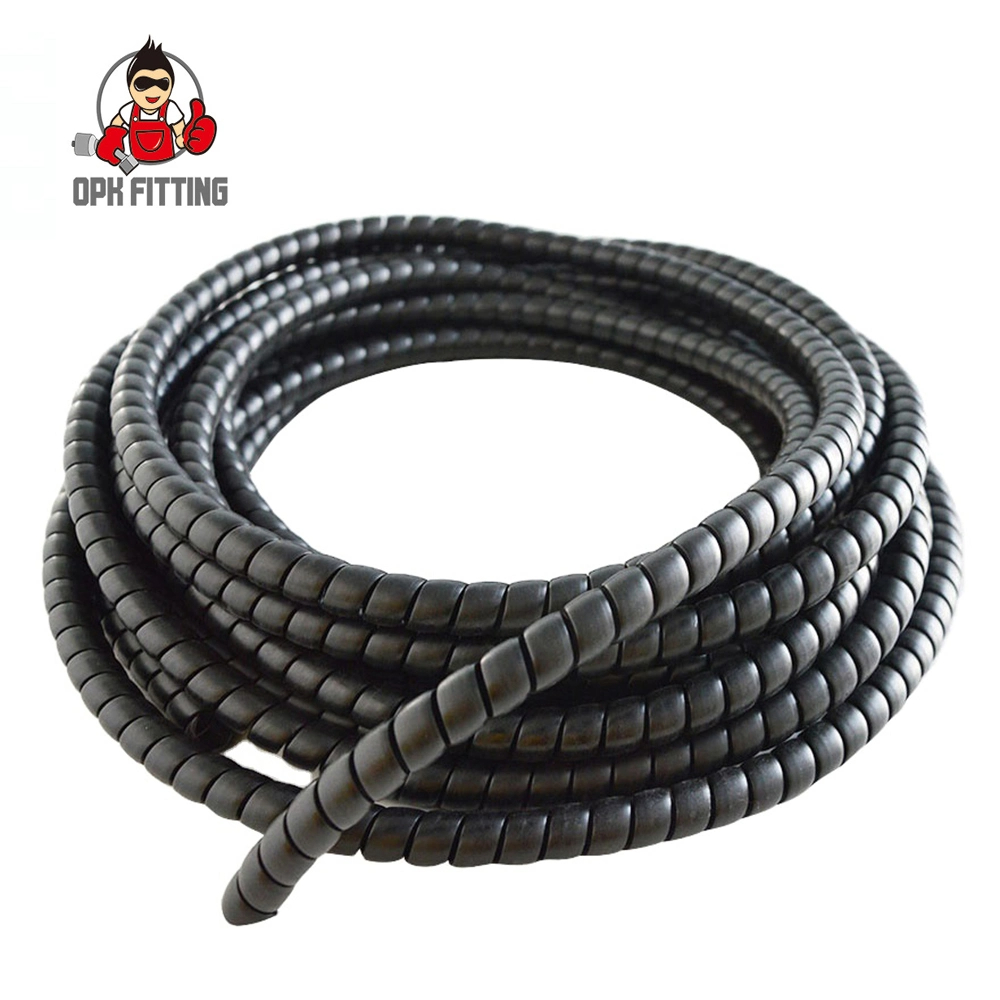
- Abrasion-resistant sleeves — nylon, polyethylene, or metal coil guards protect against contact with sharp surfaces or other hoses.
- Heat shields and reflective wraps — aluminum-foil-lined sleeves deflect radiant heat from exhaust components.
- Bend restrictors — spring guards or molded restrictors at the fitting ends prevent kinking in high-flex applications.
- Fire-resistant covers — critical in applications where a hose failure near a hot surface could ignite hydraulic fluid and cause a fire.
Establish a Proactive Replacement Policy
Waiting for hoses to fail before replacing them — a reactive maintenance strategy — is consistently more expensive and more dangerous than replacing hoses on a scheduled basis. Many organizations implement a time-based replacement policy, changing all hoses after a fixed number of operating hours or calendar years, regardless of visible condition. Others use condition-based monitoring, combining visual inspections with fluid analysis data to predict failure before it occurs.
For critical applications, consider replacing hoses in matched sets — if one hose in a bundle fails, the others are likely at a similar stage of deterioration and will follow shortly. Replacing the entire bundle during a planned maintenance window is more cost-effective than multiple emergency shutdowns.
Recognizing Early Warning Signs of Hose Failure
Hydraulic hoses rarely fail completely without some warning. Recognizing the early signs gives you the opportunity to take corrective action before a minor issue becomes a major failure. Watch for the following indicators:
- Weeping or seeping at fittings: A small but persistent leak around a fitting end indicates fitting loosening or inner tube damage. Even a minor weep can become a full blown leak rapidly under pressure cycling.
- Outer cover cracks or surface checking: Fine surface cracks that appear like a dried mud pattern indicate UV degradation or ozone cracking. These cracks may look superficial but can accelerate deterioration of the reinforcement layer underneath.
- Blistering or bubbling: Blisters on the hose wall indicate internal tube delamination, often caused by pressure surges or fluid incompatibility. A blistered hose can burst at any time and should be removed from service immediately.
- Kinking or permanent set: A hose that retains a bent shape when relaxed has lost its flexibility and is no longer able to absorb pressure cycles effectively.
- Visible wire reinforcement: Any area where the outer cover has worn through to expose the wire braid is critically dangerous. The wire will rust rapidly and the hose will fail very soon.
- Hydraulic fluid discoloration or unusual odor: Darkened, foamy, or foul-smelling hydraulic fluid can indicate inner tube degradation contaminating the fluid stream.
The Real Cost of Hydraulic Hose Failure
It's easy to underestimate the true cost of a hydraulic hose failure because the visible expense — a replacement hose and fittings — is often relatively small. But the full cost picture is much more significant. Consider a single hose failure on a construction excavator operating at a busy job site:
- Equipment downtime: Waiting for a service technician and replacement parts can mean 4 to 8 hours of downtime. At an equipment rental rate of $500 per hour, that's $2,000–$4,000 in lost productivity per incident.
- Environmental cleanup: A high-pressure hose failure can spray several gallons of hydraulic fluid over a wide area. Environmental remediation costs for soil contamination can range from $1,000 to $50,000 depending on the location and severity.
- Secondary equipment damage: Fluid starvation following a hose failure can damage pumps, motors, and cylinders. Pump replacement alone can cost $5,000 to $30,000 or more.
- Safety incidents: Worker injuries from fluid injection or slips on oil-contaminated surfaces carry both human and financial costs that are incalculable.
In contrast, a proactive hose replacement program typically costs 20 to 40% less than reactive breakdown maintenance when all direct and indirect costs are factored in. The return on investment for a well-managed hydraulic maintenance program is consistently positive across industries.
Industry-Specific Considerations
Different industries present unique challenges for hydraulic hose management. Understanding your specific operating environment helps you tailor your prevention strategy effectively.
Construction and Mining Equipment
Heavy construction and mining equipment operates in some of the harshest conditions imaginable — extreme temperatures, dusty and abrasive environments, continuous high-pressure cycles, and heavy physical impact. Hoses on excavators, loaders, and drilling rigs are subject to all six major failure mechanisms simultaneously. In these applications, use multi-spiral hoses with abrasion-resistant covers, implement daily inspection routines, and budget for annual hose replacement on high-movement circuits such as boom and stick cylinders.
Agricultural Machinery
Agricultural hydraulic systems face a different set of challenges: seasonal storage in extreme temperatures, UV exposure in open fields, and the use of biodegradable hydraulic fluids that require specific hose inner tube materials. Tractors and harvesters may sit unused for months, during which time rubber degradation continues. Inspect all hoses at the start of each season before returning equipment to service, and replace any hose that has been in service for more than five years regardless of appearance.
Industrial Manufacturing
In factory hydraulic systems, hoses may be exposed to chemicals from adjacent processes, high-cycle pressure loading from CNC machinery or presses, and heat from nearby furnaces or welding operations. Implement predictive maintenance using inline condition monitoring sensors where possible, and maintain a comprehensive hose register documenting the specification, installation date, and service history of every hose in the facility.
Marine and Offshore Applications
Hydraulic hoses on ships and offshore platforms face saltwater corrosion, constant motion from wave action, and the added safety complexity of operating in environments where fluid leaks can cause fires or environmental incidents. Use stainless steel fittings and corrosion-resistant hose covers in marine environments, and adhere strictly to scheduled replacement intervals given the difficulty of emergency repairs at sea.
About OPK FITTING Hydraulic Equipment Factory
OPK FITTING Hydraulic Equipment Factory is a specialized domestic factory with extensive hydraulic pipes and adaptors production experience. Our managing scope relates to various fields such as hydraulic systems and beyond, including all kinds of materials with different pressure levels, flexible hydraulic hoses with various size criteria, hose fittings, adaptors, and more.
Our products have been respectively applied in the hydraulic and fluid conveyance systems of industries such as machinery, metallurgy, petroleum, construction, ships, space-flight, agriculture, pharmaceutical, food, and so forth. With over 10 years of experience, a team of skilled design professionals and talented engineers, and a commitment to excellent product quality and thoughtful customer service, OPK FITTING is your trusted partner for reliable hydraulic hose solutions.
- Over 10 years of industry experience in hydraulic hose and fitting manufacturing
- A skilled team of design professionals dedicated to engineering precision
- Excellent product quality backed by rigorous testing and quality control
- Thoughtful customer service from pre-sale consultation to after-sale support
- Wide product range covering high-pressure, medium-pressure, and low-pressure hose assemblies
Frequently Asked Questions
Q1: How often should hydraulic hoses be replaced?
The general industry recommendation is to replace hydraulic hoses every 6 years from their manufacture date, regardless of visible condition. However, in high-demand applications — such as construction equipment, mining machinery, or systems with frequent pressure cycling — replacement intervals should be shortened to 2–4 years. Always check the manufacturer's date code stamped on the hose and maintain a service log to track hose age across your equipment fleet.
Q2: What is the most common cause of hydraulic hose failure?
Abrasion is the most common cause, accounting for approximately 40% of all hydraulic hose failures in field conditions. It results from hoses rubbing against metal surfaces, chassis components, or each other during machine operation. The second most common cause is improper installation — particularly twisting and under-length routing — which introduces stress concentrations that dramatically shorten hose service life.
Q3: Can I repair a damaged hydraulic hose, or does it need to be replaced?
In the vast majority of cases, a damaged hydraulic hose should be replaced, not repaired. Hydraulic hoses operate under significant pressure and any internal damage — to the inner tube or reinforcement — is not visible externally and cannot be reliably fixed through surface patching. Temporary field repair methods such as hose repair kits should only be used to get equipment to a workshop safely and must be followed by proper replacement immediately. Never use tape, clamps, or epoxy as permanent repairs on pressurized hydraulic hoses.
Q4: How do I choose the right hydraulic hose for my application?
Use the STAMP method as your selection guide: Size (match the bore to your required flow rate), Temperature (ensure the hose is rated for both fluid and ambient temperatures in your application), Application (consider the mechanical demands such as flexing frequency, bend radius, and vibration), Media (confirm chemical compatibility between the inner tube material and the hydraulic fluid type), and Pressure (select a hose with a working pressure rating that accommodates your maximum system pressure including surge peaks, with at least a 4:1 safety factor). When in doubt, consult your hose supplier with the system specifications.
Q5: What are the safety risks of a hydraulic hose failure?
Hydraulic hose failures pose several serious safety risks. The most dangerous is hydraulic fluid injection injury — high-pressure fluid can penetrate skin at pressures above 100 PSI and cause devastating internal tissue damage that appears minor on the surface but requires emergency surgery. Other risks include fire (hydraulic fluid contacting hot surfaces such as exhaust manifolds), operator injury from equipment loss of control, and slipping hazards from oil-covered surfaces. Never search for hydraulic leaks with bare hands; always use cardboard or a dedicated detector. Treat any suspected injection injury as a medical emergency.
Q6: What is the difference between braided and spiral hydraulic hoses, and when should I use each?
Braided hoses have one or two layers of interwoven wire reinforcement and are designed for low-to-medium pressure applications (typically up to 5,000 PSI). They are more flexible and lighter than spiral hoses, making them suitable for applications requiring tight bends or frequent movement. Spiral hoses have four to six layers of wire wound helically around the inner tube and are designed for high-pressure and high-impulse applications (up to 10,000 PSI or more). They offer superior fatigue resistance in high-cycle systems such as excavator booms and hydraulic hammers but are less flexible than braided hoses. For most mobile equipment main circuits, spiral hoses are the preferred choice; for pilot lines, return lines, and case drain lines, braided hoses are typically sufficient and more economical.