Your hand already knows the difference: a JIC male fitting threads smoothly into a JIC female swivel and seats with a metal-to-metal 37° flare. Try the same male into an NPT port, and it binds, leaks, or damages the threads. That short test captures why JIC hydraulic fittings are both popular and misunderstood. JIC stands for Joint Industry Council, and the geometry is defined in SAE J514: parallel UNF threads plus a 37° flared sealing surface. When you are ordering or assembling hydraulic hose, match both the dash size and the seat angle, not just the thread diameter.
What Are JIC Hydraulic Fittings?
JIC fittings are flared tube fittings. A male JIC connector has a 37° cone machined on the end; the female fitting has a matching 37° cone seat. As the coupling nut is tightened, the flared tube end or the male cone is pressed against the female seat. The resulting metal-to-metal seal can handle high pressure and vibration without an O-ring or thread sealant.
This design differs from tapered pipe threads such as NPT, which seal by wedging the threads. It also differs from ORFS, which uses an O-ring on a flat face. Because JIC uses parallel threads, it can be disassembled and remade repeatedly if the seating surfaces stay clean and undamaged.
Most JIC fittings are machined from carbon steel and zinc-plated, or stainless steel for corrosive environments. In mobile equipment, machine tools, and agricultural machinery, the 37° flare has become a default choice for rigid tube and hose assemblies.
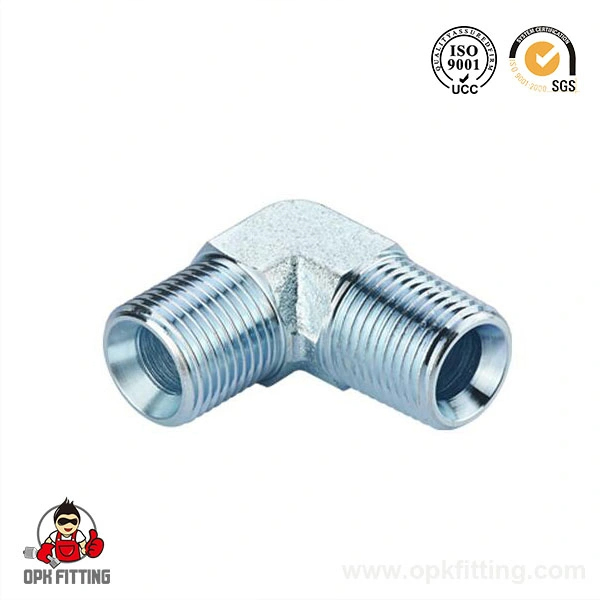
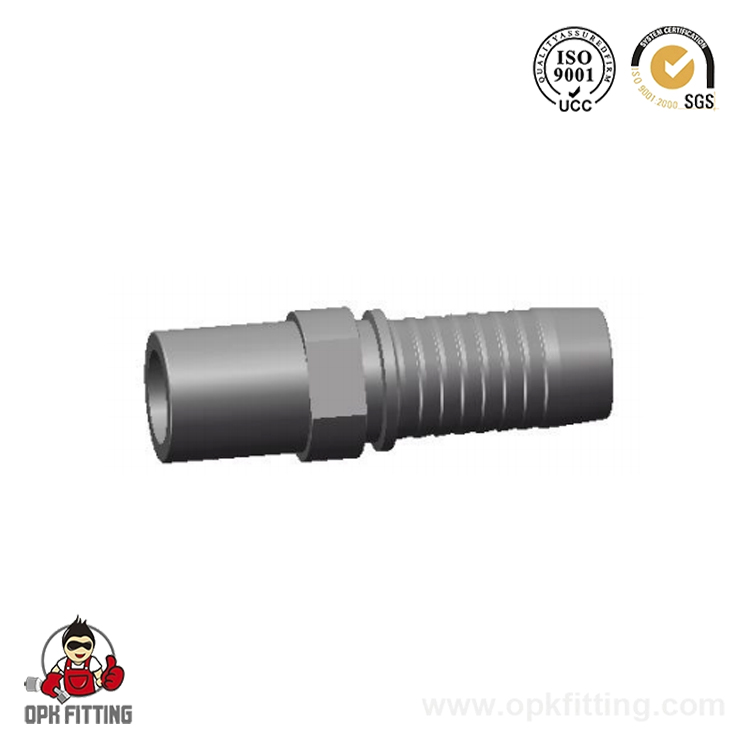
If you are building or replacing a hose assembly, start with a well-made JIC male 74° cone fitting; the included angle of 74° is the same as the 37° angle measured from the centerline.
A 37° seat must be paired with a 37° cone. A 45° flare looks similar but will not seal. Even a small nick in the 37° seat can create a leak path. Therefore, inspect the cone and seat under good light before assembly.
JIC Fitting Sizes: Dash Numbers and Thread Dimensions
JIC fittings are sized by dash numbers based on the nominal tube outside diameter in 1/16-inch increments. A -6 fitting matches 3/8-inch tube; a -12 matches 3/4-inch tube. The thread is a parallel UNF thread, not a pipe thread. For example, a -6 male JIC has a 9/16-18 UNF thread.
The chart below shows typical thread outside diameters for common JIC dash sizes. This is a quick way to check what you are holding before you order a replacement.
Common JIC dash sizes: thread OD is not the same as tube OD.
Common JIC dash sizes, nominal tube OD, and UNF thread dimensions.
Dash Size
Nominal Tube OD
Thread Size
Seat Angle
-4
1/4 in
7/16-20 UNF
37°
-6
3/8 in
9/16-18 UNF
37°
-8
1/2 in
3/4-16 UNF
37°
-10
5/8 in
7/8-14 UNF
37°
-12
3/4 in
1-1/16-12 UNF
37°
-16
1 in
1-5/16-12 UNF
37°
-20
1-1/4 in
1-5/8-12 UNF
37°
-24
1-1/2 in
1-7/8-12 UNF
37°
For exact tolerances, always consult a drawing or the supplier's catalog, because some manufacturers mark the dash size on the hex and others do not.
JIC vs. NPT, BSP, and ORFS
JIC fittings are frequently confused with other hydraulic fitting families, especially when a machine has mixed connections. A quick comparison is useful.
Key differences between common hydraulic fitting thread types.
Feature
JIC
NPT
BSPP / BSP
ORFS
Thread form
Parallel UNF
Tapered NPT
Parallel BSP or tapered BSPT
Parallel UNF
Seal method
37° metal flare
Thread interference
60° metal cone, O-ring, or washer
O-ring in face groove
Typical use
Mobile and plant hydraulics
General piping
European and metric equipment
High-pressure leak control
JIC compatible?
-
No
No
No
JIC is not interchangeable with any of the common thread types above. The differences are not just cosmetic. Mismatched threads can cross-thread quickly, or they may seem to tighten but leak under pressure.
A 30-Second Identification Check
Check whether the thread is parallel or tapered; NPT visibly tapers, while JIC does not.
Measure the seat angle: JIC is 37°, SAE 45° is different, BSP is 60°, and ORFS has a flat face with an O-ring groove.
Use a thread pitch gauge to confirm UNF pitches such as 20, 18, 16, 14, or 12 threads per inch.
Verify the dash size with a caliper and compare it with the thread OD in the table above.
When you must connect JIC to NPT, BSP, or ORFS, do not force the threads. Use a quality hydraulic adapter designed for that transition.
How to Select the Right JIC Fitting
Start with the system pressure and peak pressure. The fitting must be rated for at least the maximum working pressure of the hose and the application. Next, choose the correct dash size and thread. Then choose the shape: straight, 45°, 90°, swivel, bulkhead, union, or adapter.
Consider the space around the fitting. If a straight connector points into a tight corner, a 45° or 90° version reduces hose stress. If the hose needs to rotate during installation, a swivel JIC female or male design is easier to tighten. If you go through a panel or bulkhead, use a bulkhead fitting.
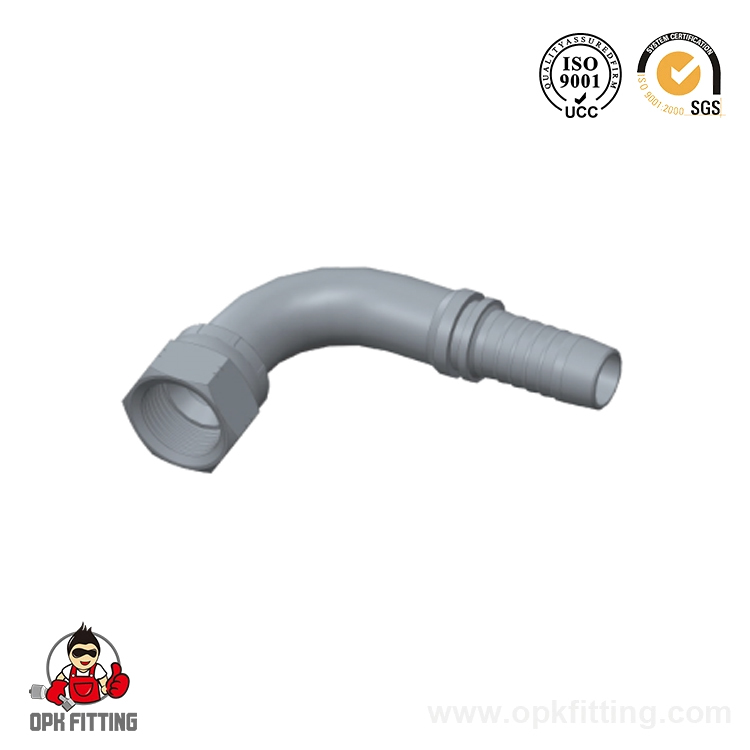
For a clean female connection seat, select a JIC female 74° cone seat fitting with smooth, burr-free threads.
Material selection matters. Zinc-plated carbon steel is common in dry indoor or light industrial equipment. Stainless steel resists corrosion in marine, food processing, and chemical environments. Brass JIC fittings are available for low-pressure service but are less common.
From a sourcing perspective, a manufacturer that produces multiple standard families under one roof can simplify quality control. Ningbo's hydraulic fitting factories supply JIC, BSP, metric, flange, and adapter lines, which helps buyers combine parts and keep tolerances consistent. A reputable supplier should be transparent about plating, heat treatment, and pressure testing. If you are sourcing for OEM production or maintenance, discuss your JIC requirements with our team and confirm the exact part before ordering.
Installation and Common Leak Causes
Even a good JIC fitting will leak if installed incorrectly. Before assembly, wipe the cone and seat, inspect for scratches, and verify that the threads are clean. Many JIC assemblies are installed without sealant, so keep the sealing surfaces free of debris.
Do not use PTFE tape on a 37° flare seat. It can prevent metal-to-metal contact and deposit debris into the system.
Hand-tighten until the flare seats, then use a wrench for the final turn. Overtightening can distort the seat.
Hold the hex with a backup wrench so the hose does not twist.
Check that both parts are the same dash size and seat angle before final assembly.
If the assembly vibrates, use a swivel or a union to reduce stress on the hose.
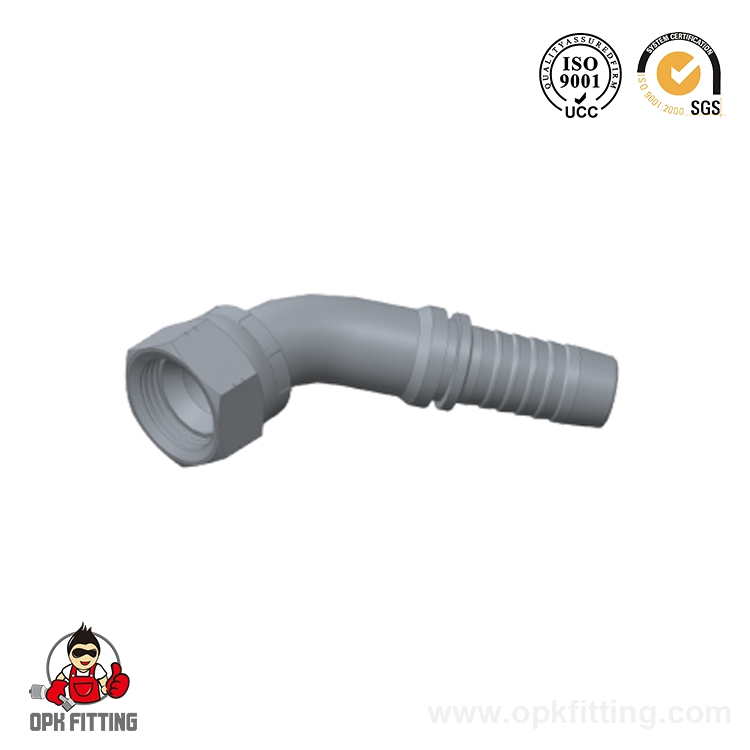
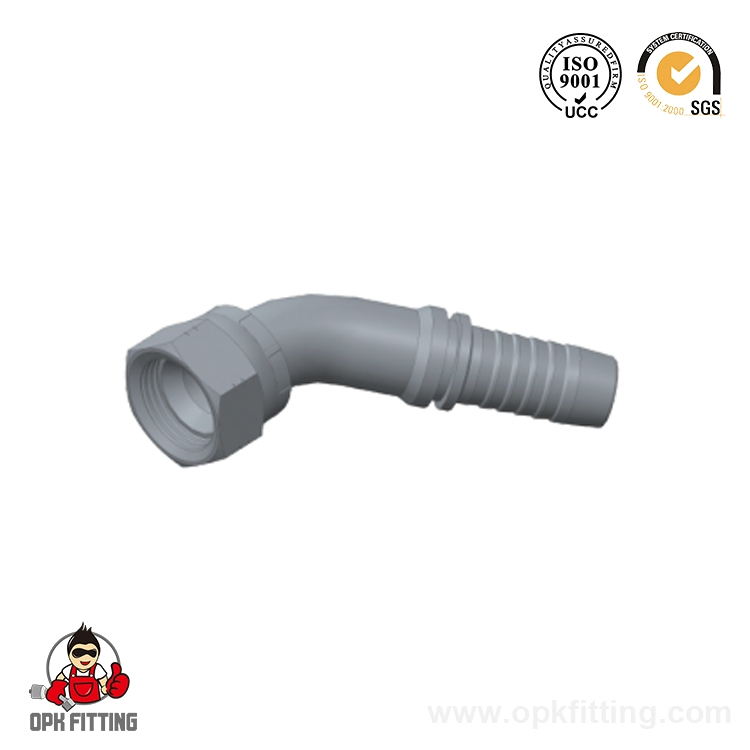
For tight routing, a 45° JIC female 74° cone seat fitting can reduce hose bend and keep the assembly within its minimum bend radius.
Why do JIC fittings leak? A leak almost always points to a damaged seat, a slightly wrong flare angle, or cross-threading. Replace the fitting rather than trying to stop the leak with sealant.
After crimping a hose assembly, a professional shop should pressure-test every assembly and flush the bore before packaging. This helps catch loose ferrules, damaged seats, and contamination.
Frequently Asked Questions About JIC Hydraulic Fittings
Q1. What is the difference between JIC and NPT fittings?
A1. JIC uses parallel threads and a 37° flare metal seal. NPT uses tapered threads and seals by thread interference. They are not interchangeable.
Q2. Are JIC and SAE fittings the same?
A2. JIC fittings follow SAE J514 with a 37° flare. SAE 45° flare fittings are a different standard and are not compatible with JIC.
Q3. How do I measure a JIC fitting size?
A3. Determine the dash size by measuring the thread OD and comparing it with a standard JIC dimension chart, then verify the 37° seat angle.
Q4. Can I use a JIC male with an ORFS female?
A4. No. ORFS seals with an O-ring on a flat face, while JIC seals with a 37° metal cone. Mixing them will leak and can damage both surfaces.
Q5. Why are my JIC fittings leaking?
A5. Common causes are damaged flare seats, cross-threading, wrong flare angle, overtightening, or debris on the sealing surfaces.
Q6. What materials are JIC hydraulic fittings made of?
A6. Zinc-plated carbon steel and stainless steel are the most common choices. Brass is available for low-pressure or corrosion-sensitive applications.
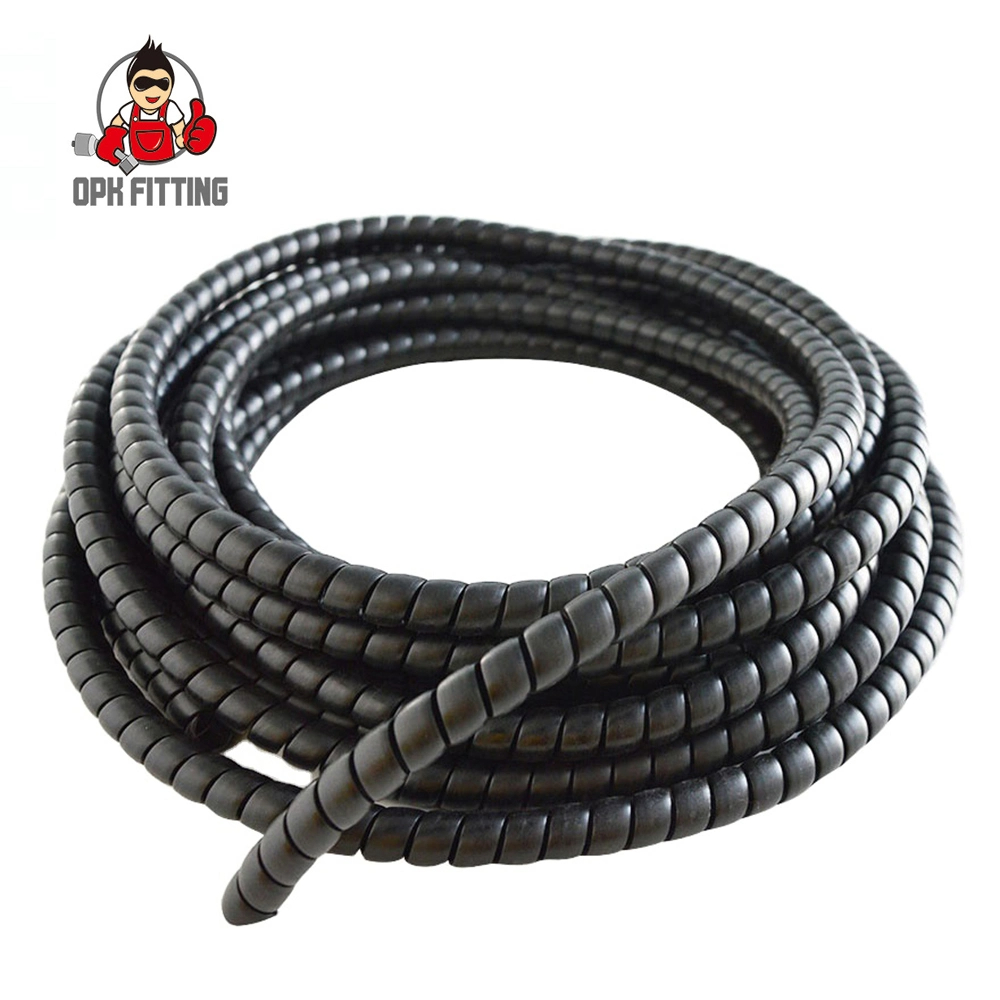
PRODUCT NAME: Spiral Protective Sleeve PP plastic hose guard for hydraulic hoseRecommended For: The use of Spiral Guard Wrap is an economical and conv...



.jpg)
.jpg)