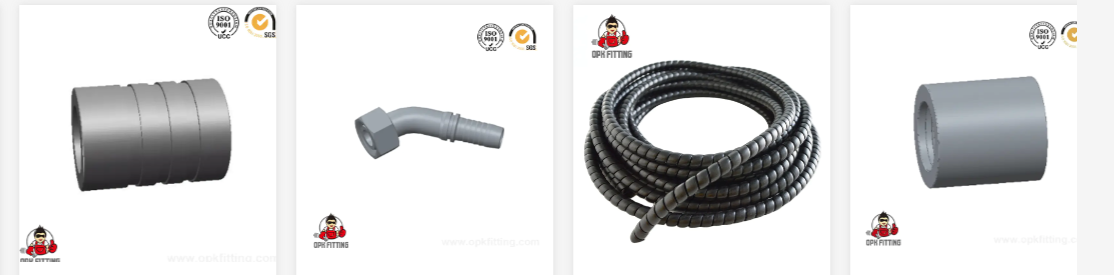
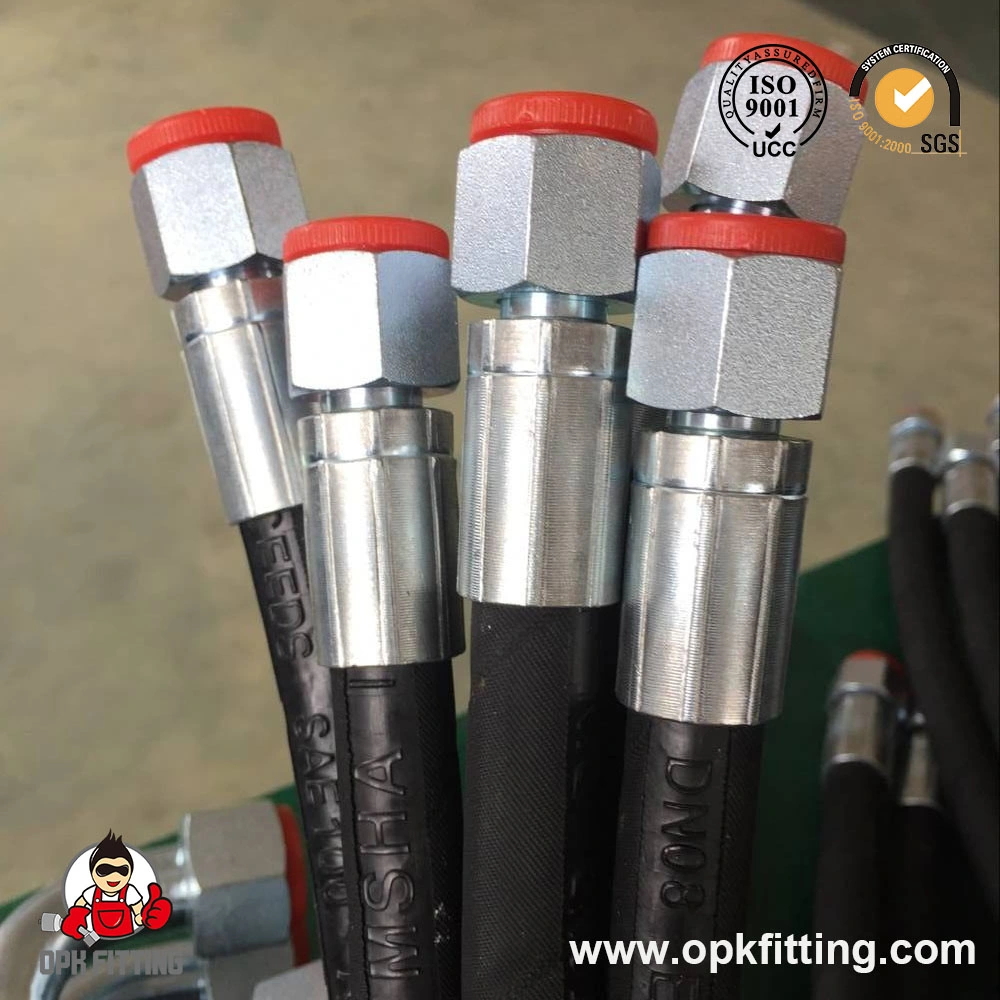
A hydraulic hose is a flexible, reinforced tube designed to carry pressurized fluid between components in a hydraulic system, transferring the force needed to move cylinders, motors and other actuators. Unlike rigid steel pipe, a hydraulic hose can bend around moving parts and absorb vibration, which is why it is the standard choice wherever equipment flexes, rotates or shifts position during operation. A complete hydraulic hose assembly pairs the hose itself with hydraulic hose fittings crimped onto each end, creating a sealed path that connects pumps, valves, cylinders and reservoirs into one working circuit.
Most hydraulic hoses share a similar layered structure regardless of the application. An inner tube carries the fluid and resists the chemical makeup of that fluid, a reinforcement layer of braided or spiral wound wire or textile gives the hose its pressure capacity, and an outer cover protects the reinforcement from abrasion, weather and general wear. Understanding this structure makes it far easier to choose the correct hose and matching fitting for any given machine.
How a Hydraulic Hose Is Constructed
Every hydraulic hose is built in layers, and the number and type of those layers determine how much pressure the hose can handle and how it behaves under bending, heat and repeated flexing.
Table 1: Core layers found in a typical hydraulic hose
Layer
Function
Common Material
Inner Tube
Carries and contains the hydraulic fluid
Synthetic rubber or thermoplastic
Reinforcement
Provides pressure capacity and burst strength
Braided or spiral steel wire, textile
Outer Cover
Protects against abrasion, weather and chemicals
Synthetic rubber, polyurethane
A single wire braid layer is common on lighter duty hoses, while a high pressure hydraulic hose used in demanding equipment often uses two or more spiral wire layers to reach a much higher working pressure without expanding or weakening under repeated pressure cycles.
Understanding Hydraulic Hose Pressure Rating
The hydraulic hose pressure rating tells you the maximum working pressure a hose can safely handle during normal operation, and it should always be matched to the actual pressure the connected pump or system produces, not simply chosen at random. Two figures matter here, the working pressure a hose is rated for during continuous use, and the burst pressure, which is the point of failure and sits well above the working pressure as a built in margin.
Figure 1: Relative working pressure capacity by reinforcement construction, low to high scale
Spiral wound hydraulic hoses generally reach the highest pressure capacity in this comparison, which is why a high pressure hydraulic hose used on excavators, presses and heavy lifting equipment is almost always built with spiral wire reinforcement rather than a single textile braid.
Hydraulic Hose Fittings and How They Work
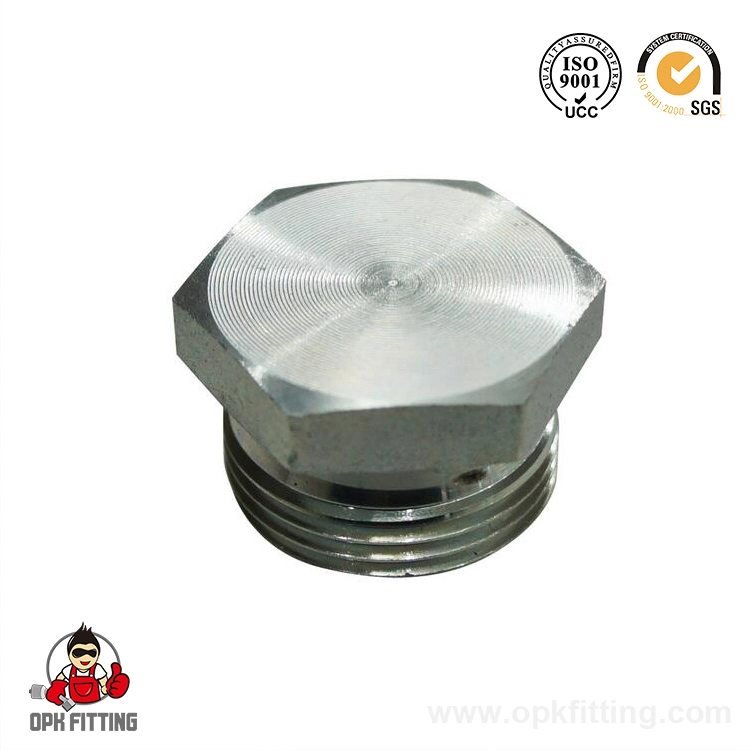
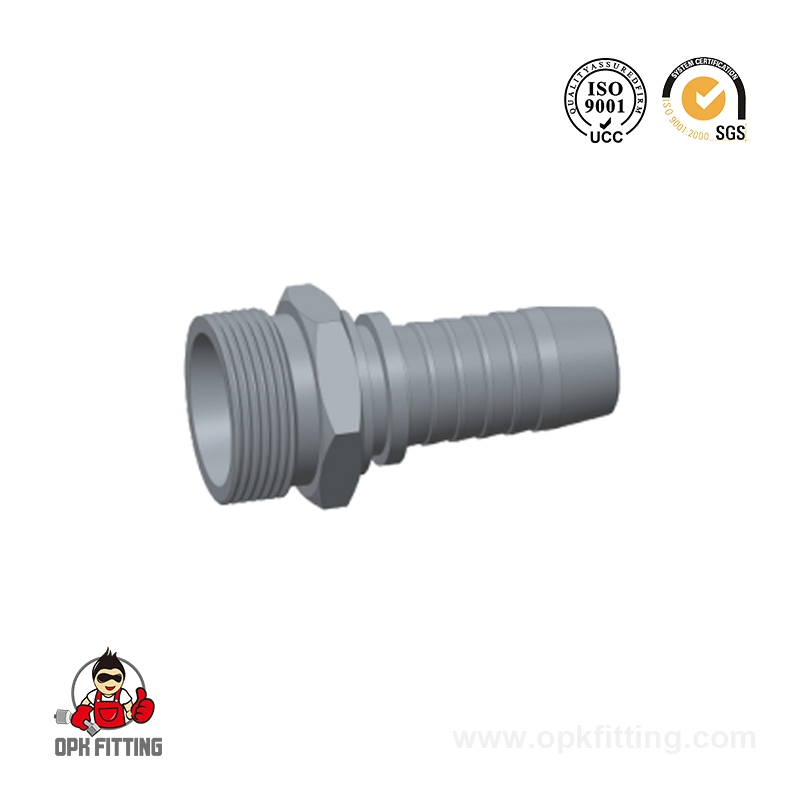
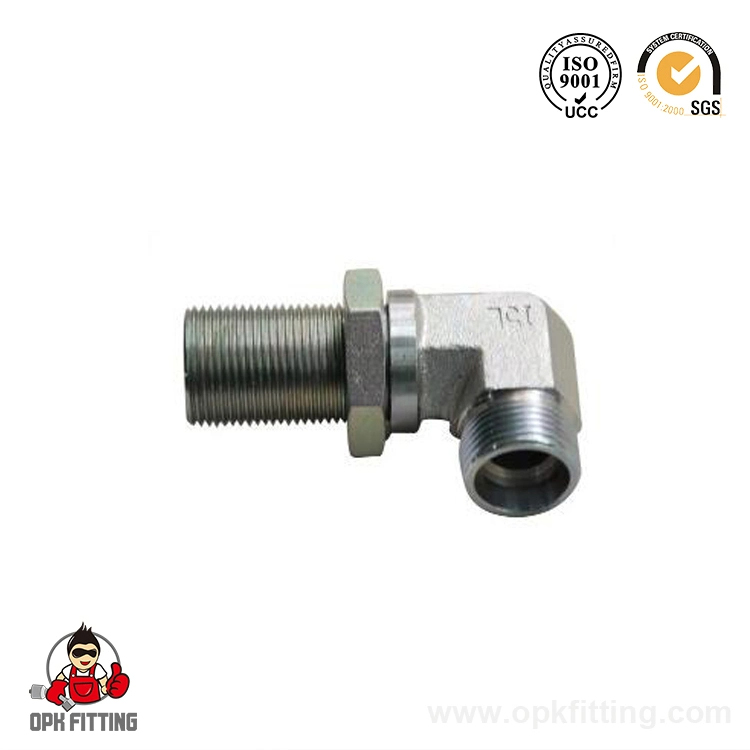
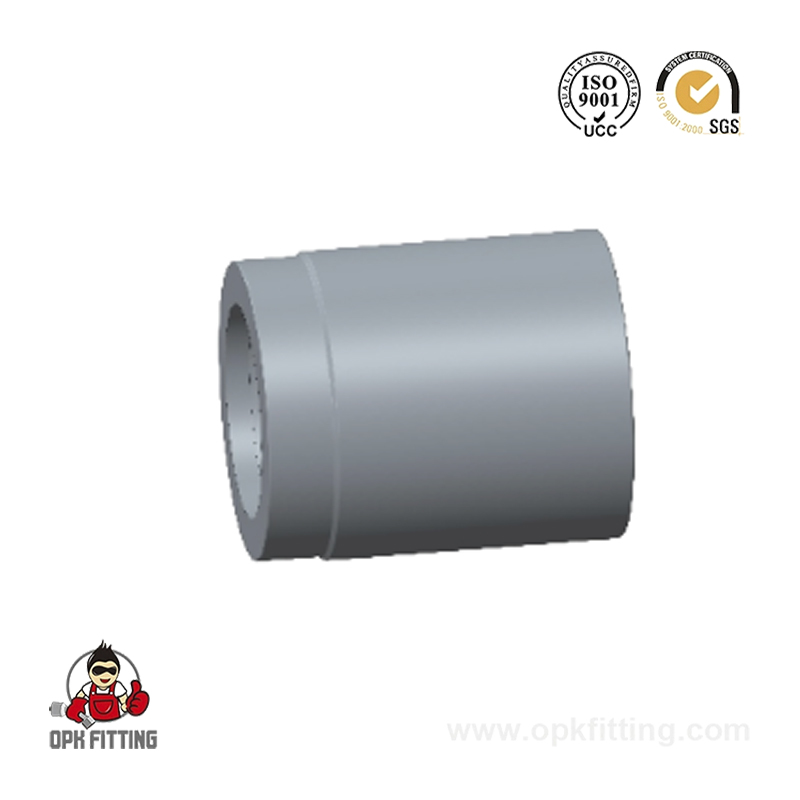
Hydraulic hose fittings connect the hose to pumps, cylinders, valves and manifolds, and the fitting is just as important to a leak free system as the hose itself. A fitting is typically crimped onto the hose end using a matched ferrule, forming a permanent, pressure rated hydraulic hose assembly.
Common Fitting Types
JIC fittings, recognized by a 37 degree flare seat and widely used across general hydraulic equipment
ORFS fittings, sealing with an O-ring face for a strong leak resistant connection
NPT and BSP threaded fittings, common on pump ports and valve blocks
Flange fittings, used on larger diameter hose where a bolted connection is needed
Quick disconnect couplings, allowing fast, tool free connection and disconnection
Hydraulic Hose Fitting Identification
Hydraulic hose fitting identification usually comes down to checking three details together rather than relying on appearance alone: the thread type and size, the seat angle or seal style, and whether the connection is male or female. Measuring thread diameter with a caliper and comparing the seat shape against a reference chart is the most reliable way to confirm a fitting before ordering a replacement.
How to Choose the Right Hydraulic Hose Assembly
Selecting a hydraulic hose assembly starts with matching four factors to the equipment it will serve, rather than choosing based on hose diameter alone.
Working pressure of the system, confirmed against the hose pressure rating with an appropriate safety margin
Fluid type and temperature, since inner tube material must resist the specific hydraulic fluid in use
Hose inside diameter, sized to maintain proper flow without excess pressure drop or heat buildup
Routing and bend radius, since a hose forced below its minimum bend radius wears out far sooner than expected
Figure 2: Illustrative relationship between working pressure and burst pressure margin across hose sizes
The gap between the working pressure line and the burst pressure line represents the safety margin built into a properly rated hose, and this margin should never be treated as spare operating capacity during normal system use.
Hydraulic Hose Installation Guide
Correct installation extends service life and reduces the chance of premature leaks or hose failure. A basic hydraulic hose installation guide generally follows this sequence.
Cut the hose square and clean, removing any loose reinforcement wire from the cut end
Select the matching fitting and ferrule based on hose size and reinforcement type
Crimp the fitting to the manufacturer specified crimp diameter for that hose and fitting combination
Route the hose avoiding sharp bends below the minimum bend radius and away from hot surfaces or moving parts
Support long hose runs with clamps at regular intervals to prevent sagging and rubbing
Pressure test the finished assembly before putting it into full service
Hydraulic Hose Maintenance Checklist
Routine inspection catches most hose problems long before they cause downtime. A practical hydraulic hose maintenance checklist covers the following points during each inspection round.
Check the outer cover for cracking, abrasion, blistering or exposed reinforcement wire
Inspect fittings for signs of leakage, corrosion or movement at the crimp area
Confirm hose routing has not shifted into contact with hot components or sharp edges
Look for kinks, twists or flattened sections along the hose length
Record hose age and replace assemblies that have reached the recommended service interval
Figure 3: Illustrative ranking of common contributing factors behind hose failure in the field
Comparing Hydraulic Hose Types
Different hose constructions perform differently across the same set of practical measures, which makes side by side comparison useful when narrowing down an option.
Figure 4: Comparative performance across five practical measures on a relative scale
Spiral wire hose generally leads on pressure capacity and abrasion resistance, which fits its common use on heavy machinery, while single wire braid hose stays lighter and more flexible, making it a common choice on equipment with tighter routing and frequent movement.
Industries That Rely on Hydraulic Hose Assemblies
Hydraulic hose and hydraulic hose fittings appear across a wide range of industrial equipment wherever fluid power is used to generate motion or force.
Table 2: Common industries and typical hydraulic hose applications
Industry
Typical Application
Engineering Machinery
Excavator, loader and crane hydraulic circuits
Metallurgy and Mining
Heavy press lines and material handling equipment
Petroleum and Chemical
Fluid transfer lines resistant to specific process fluids
Shipping and Marine
Deck machinery and steering hydraulic systems
Aerospace and Military
Ground support and specialized mobile equipment
Construction
Concrete pumps, lifts and compact equipment
About OPK FITTING Hydraulic Equipment Factory
OPK FITTING Hydraulic Equipment Factory is a specialized manufacturer of hydraulic hose, hydraulic hose fittings and adaptors, based in Ningbo City, Zhejiang Province, an area long recognized as a center for hydraulic pipe production in China. With over 10 years of manufacturing experience, the factory covers a wide range of pressure levels, hose sizes and fitting types serving machinery, metallurgy, petroleum, construction, shipping, aerospace, agriculture, pharmaceutical and food industries.
Manufacturing at the factory follows a full process line including pipe cutting, rubber stripping, hose crimping, trial pressure testing and rinsing. Elbow joints are produced through an integral production process using high frequency heating equipment and computer controlled pipe benders, supporting a clean structure and reliable finish across each hydraulic hose assembly leaving the facility. The team includes skilled design professionals focused on both product performance and responsive customer support, and products from the factory are supplied to customers across the Middle East, Europe and the United States.
Frequently Asked Questions
Q1. Which hydraulic hose should I choose
Match the hose to your system working pressure, fluid type, temperature range and required bend radius rather than choosing by diameter alone.
Q2. Which hydraulic fitting is best
The right fitting depends on the port thread type already on your equipment, such as JIC, ORFS, NPT or BSP, so identification comes before selection.
Q3. What pressure rating do I need
Check the maximum working pressure your pump or system generates and select a hose rated above that figure with an appropriate safety margin.
Q4. How to identify hydraulic hose fittings
Measure the thread diameter, check the seat angle or seal style, and confirm whether the connection is male or female before ordering a match.
Q5. How to read hydraulic hose markings
Hose layline text typically lists the inside diameter, working pressure, temperature range and manufacturing batch information printed along the outer cover.
Q6. How the goods are shipped to customers
Shipments usually move by sea, since the factory sits close to Ningbo port, with air freight available through Ningbo and Shanghai airports for urgent orders.
Q7. What application fields the products cover
Products serve hydraulic and fluid conveying systems across engineering machinery, metallurgy, petroleum, mining, construction, chemical, shipping, aerospace and military fields.
Q8. What the payment method looks like
Terms such as FOB, CIF or CNF are confirmed at quoting, with mass production orders commonly arranged as a deposit followed by the balance before delivery, and monthly settlement available on request.
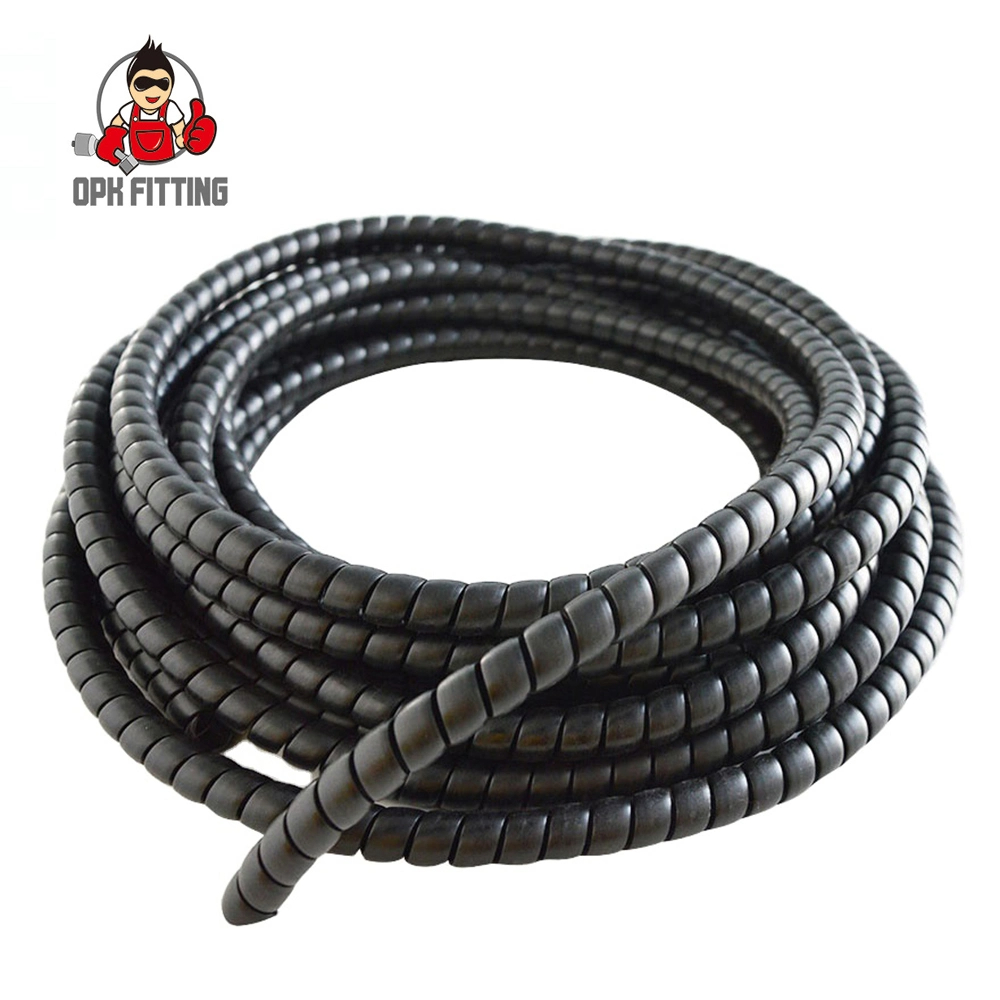
PRODUCT NAME: Spiral Protective Sleeve PP plastic hose guard for hydraulic hoseRecommended For: The use of Spiral Guard Wrap is an economical and conv...