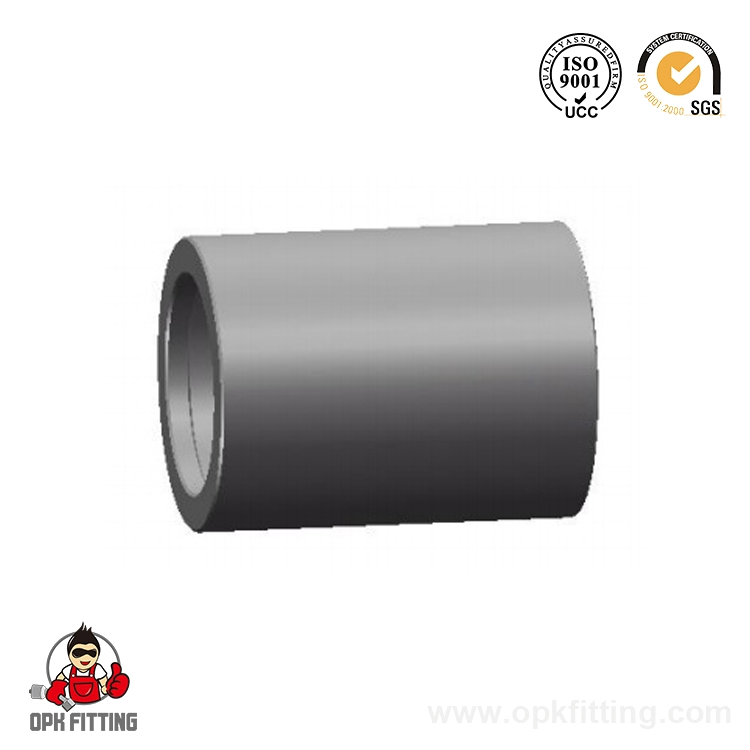
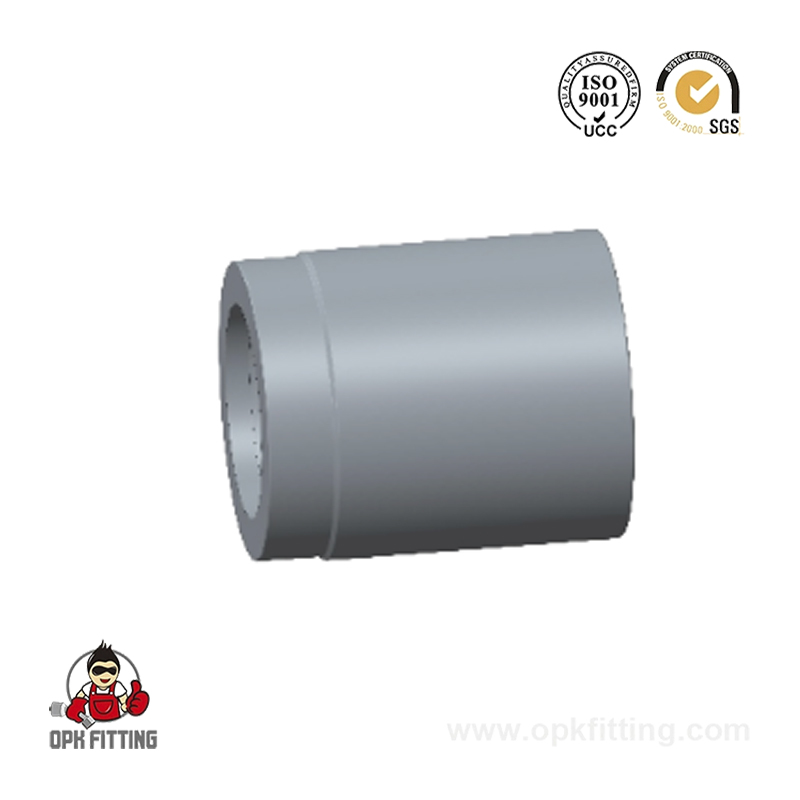
Conclusion:Socketless hydraulic hose fittings, also known as push-on fittings, are designed for quick, reliable connections in low-pressure hydraulic systems. Their barbed design and reusable nature eliminate the need for clamps or crimping tools, significantly reducing installation time and cost. This guide provides a comprehensive overview of socketless fittings, covering their types, working principles, applications, and maintenance to help you select and use them effectively.
Common Types and Characteristics of Socketless Fittings
Socketless hydraulic hose fittings come in a variety of types, categorized by material, shape, and connection style. The choice depends on the specific application requirements, including the fluid type, pressure rating, and installation environment.
By Material
Brass Fittings: Brass is a common choice for socketless fittings due to its excellent corrosion resistance, good machinability, and compatibility with a wide range of hydraulic fluids. Brass fittings are often used in general industrial and mobile applications. They are also available with a brass plating for added durability.
Steel Fittings: Steel fittings, often with a zinc or trivalent chromium plating, are used in more demanding environments requiring higher strength and resistance to mechanical wear. They are suitable for applications with higher pressure ratings and harsh operating conditions.
Aluminum Fittings: Lightweight aluminum socketless fittings are used in specialized applications, such as in motorsports or aerospace, where weight reduction is a priority. They are anodized for a corrosion-resistant finish and are available in various anodized colors for easy identification.
By Shape and Configuration
Socketless fittings are available in numerous shapes to accommodate different routing requirements. Standard configurations include straight, 45-degree, 90-degree, 120-degree, and 180-degree (bulkhead) fittings. The shape is a critical factor in hose assembly design, affecting both fluid flow and space utilization.
By Connection Type
The primary connection type for socketless fittings is the hose barb on the hose side. The barb creates a mechanical lock with the hose's inner tube, providing a leak-tight seal without the need for clamps. The other end of the fitting can be a variety of thread types, with NPTF (National Pipe Taper Fuel) being the most common for socketless fittings. NPTF threads are designed to provide a dry, leak-tight seal without the need for sealant, making them ideal for socketless connections.
Key Takeaway: The versatility in material and shape allows socketless fittings to be tailored to a wide range of hydraulic applications, from simple shop air lines to complex fluid power systems.
Working Principle and Component Structure
The working principle of a socketless fitting is based on the mechanical interference fit between the fitting's barb and the hose's inner tube. The barb has a larger outer diameter than the hose's inner diameter. When the fitting is pushed into the hose, the hose material stretches, creating a tight seal. This is a "push-on" or "push-in" design, which eliminates the need for clamps or crimping tools.
This diagram illustrates a typical socketless fitting, highlighting its key components. The barbed section ensures a leak-tight fit with the hydraulic hose, while the NPTF thread provides a seal with the port. The hex flat is for tightening the fitting during installation.
The design of the barb is critical. It features a series of ridges, which have an outer diameter larger than the hose's inner diameter. This not only creates the seal but also provides significant resistance to pull-out forces.
Key Takeaway: The push-on design of socketless fittings leverages a mechanical interference fit to create a reliable seal, simplifying the assembly process and reducing potential leak points.
Application Scenarios and Selection Criteria for Socketless Fittings
Socketless fittings are used across a broad range of industries. Their ease of installation and reliability make them a preferred choice for many low-pressure applications.
Common Applications
Socketless fittings are used in various industries, including machinery, construction, agriculture, and marine. They are suitable for air, gasoline, fuel, and hydraulic systems with petroleum-based and water-based fluids. They are also used in low-pressure lube or oil lines, and in shop or service air lines.
Selection Criteria
Pressure Rating: Ensure the fitting is rated for the system's maximum working pressure. Most socketless fittings are rated up to 300 psi.
Hose Compatibility: The fitting must match the hose's inner diameter and be compatible with the hose material. For example, a -4 dash size fitting is for a 1/4" hose ID.
Material Compatibility: The fitting material must be compatible with the fluid being conveyed.
Thread Type: Ensure the thread type matches the port. NPTF is common, but JIC and other threads are available.
When selecting a socketless fitting, it is also important to consider the hose series. Certain fitting series are designed to be used with specific hoses to ensure a proper fit and seal. For example, a fitting may be specified for use with hose series like 2556, 2565, or FC332.
Key Takeaway: The wide applicability and ease of selection make socketless fittings a versatile solution for low-pressure fluid conveyance, but careful attention to pressure, hose compatibility, and thread type is crucial.
Detailed Comparison: Socketless vs. Crimped Fittings
While socketless fittings offer simplicity, it's helpful to compare them with traditional crimped fittings. The table and chart below highlight the key differences.
The following chart compares socketless and crimped fittings across four key performance metrics: ease of installation, cost, pressure rating, and reliability. This visual comparison helps in selecting the right fitting for specific applications.
The chart shows that socketless fittings are superior in ease of installation and cost-effectiveness. They require no special tooling, reducing both labor time and capital expenditure. However, crimped fittings are the clear choice for high-pressure applications, offering superior reliability and performance under extreme conditions.
In terms of reliability, socketless fittings are generally adequate for low-pressure systems and have a good track record. The choice ultimately depends on the system's pressure rating. For applications under 300 psi, socketless fittings offer an excellent balance of performance and convenience. For high-pressure systems, crimped fittings remain the standard.
Table 1: Comparison of Socketless and Crimped Fittings
Feature
Socketless Fitting
Crimped Fitting
Installation
Push-on, no tools required
Requires crimping machine
Cost
Lower initial cost
Higher initial cost (tools, dies)
Pressure Rating
Typically up to 300-350 psi
Can exceed 10,000 psi
Reusability
Yes
No
Typical Application
Low-pressure hydraulic, air, fuel
High-pressure hydraulic systems
Key Takeaway: The choice between socketless and crimped fittings is a decision based on pressure requirements and installation environment. Socketless fittings shine in low-pressure systems where speed and simplicity are valued.
Maintenance and Troubleshooting of Socketless Fittings
Maintaining socketless hydraulic hose fittings is straightforward, but a few key practices can ensure their long-term reliability. OPK FITTING Hydraulic Equipment Factory, a leading China Socketless Hydraulic Hose Fitting supplier, emphasizes the importance of proper installation and regular inspection to maximize the service life of their products.
Installation Tips
Cut the Hose Squarely: Use a sharp hose cutter to ensure a clean, square cut. A clean cut provides a uniform surface for the fitting to seal against.
Lubricate: A light lubricant (e.g., a small amount of hydraulic fluid or specialized assembly lubricant) on the fitting's barb helps to ease insertion and prevents damage to the hose's inner tube.
Push-On Force: Apply steady pressure to push the fitting into the hose. Some assembly machines are available for this purpose.
Check Insertion Depth: The hose should completely cover the barbs, typically seating against the fitting's hex or shoulder.
Routine Inspection
Regularly inspect socketless fittings for:
Leaks: Check for any fluid weeping from the fitting area. This could indicate a poor seal or a damaged fitting.
Corrosion: Look for signs of corrosion, particularly on brass fittings. Corrosion can compromise the fitting's integrity.
Pull-Out: Ensure the fitting has not pulled out of the hose. This can happen if the hose has been subjected to excessive strain or if the fitting wasn't fully inserted.
Hose Condition: Check the hose for signs of cracking, abrasion, or swelling. A damaged hose can lead to fitting failure.
Troubleshooting Common Issues
Common issues with socketless fittings include leaks and hose blow-off. Leaks often stem from a damaged fitting barb or an incorrectly seated hose. Hose blow-off is usually due to over-pressurization or using a fitting with a hose that is not compatible. In these cases, it is recommended to replace the fitting and hose assembly.
Key Takeaway: Proper installation and routine inspection are key to the safe and long-lasting operation of socketless fittings, helping to prevent leaks and system failures.
Frequently Asked Questions (FAQ) About Socketless Fittings
What is a socketless hydraulic hose fitting?
A socketless hydraulic hose fitting, also known as a push-on fitting, uses a barbed design to create a seal without the need for clamps or crimping tools. The fitting is pushed into the hose, relying on the interference fit to prevent leaks.
What pressure are socketless fittings rated for?
Most socketless fittings, such as those used for general hydraulic applications, are rated for up to 300 psi. Some high-quality fittings can handle up to 350 psi.
Are socketless fittings reusable?
Yes, many socketless fittings are reusable. This is a key advantage, as they can be removed and reused on a new hose, provided the barbs are not damaged.
What hoses are compatible with socketless fittings?
Socketless fittings are designed for use with specific hose series, such as 2556, 2565, 2575, FC332, and FC647. Always check compatibility charts from the manufacturer, like OPK FITTING, a professional Socketless Hydraulic Hose Fitting Manufacturer.
What is the advantage of a one-piece socketless fitting?
A one-piece socketless fitting reduces potential leak points and improves flow. It also simplifies installation and enhances the overall appearance of the assembly.
Key Takeaway: Understanding these frequently asked questions about socketless fittings helps in making informed decisions and ensuring their proper application in hydraulic systems.
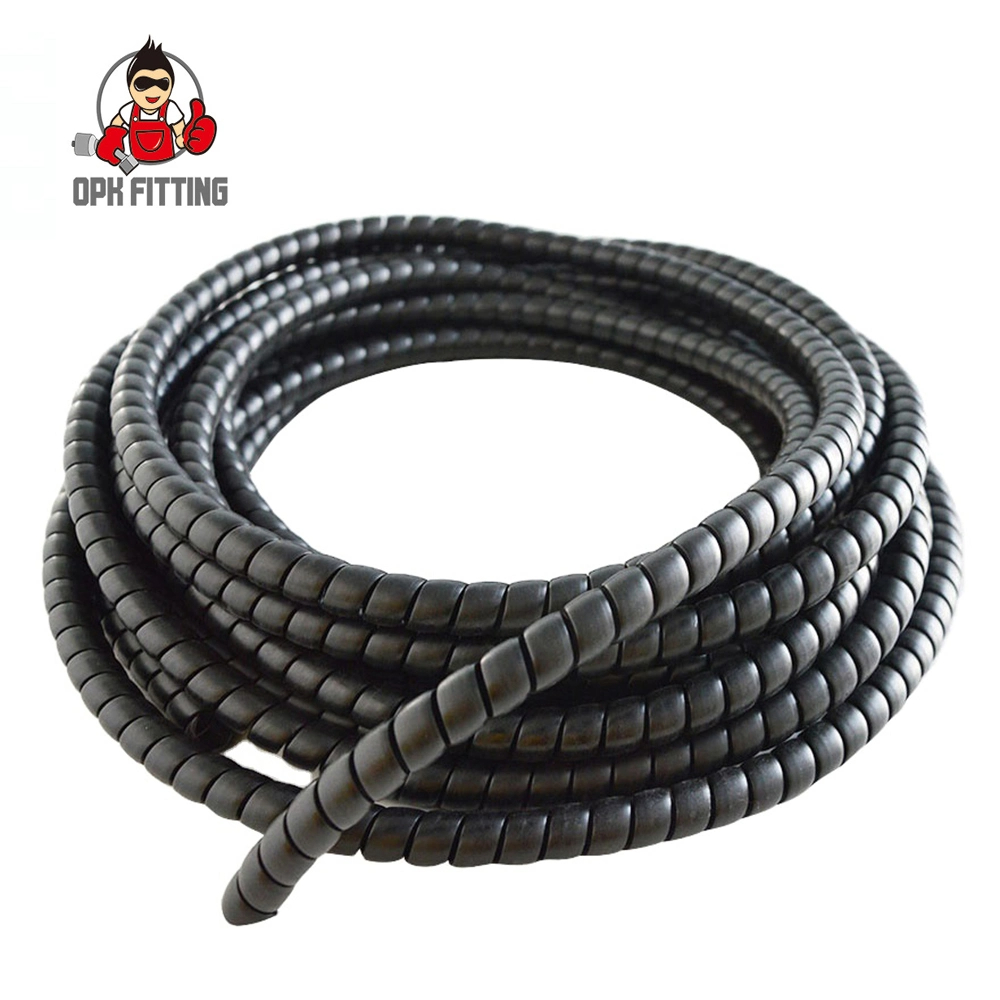
PRODUCT NAME: Spiral Protective Sleeve PP plastic hose guard for hydraulic hoseRecommended For: The use of Spiral Guard Wrap is an economical and conv...