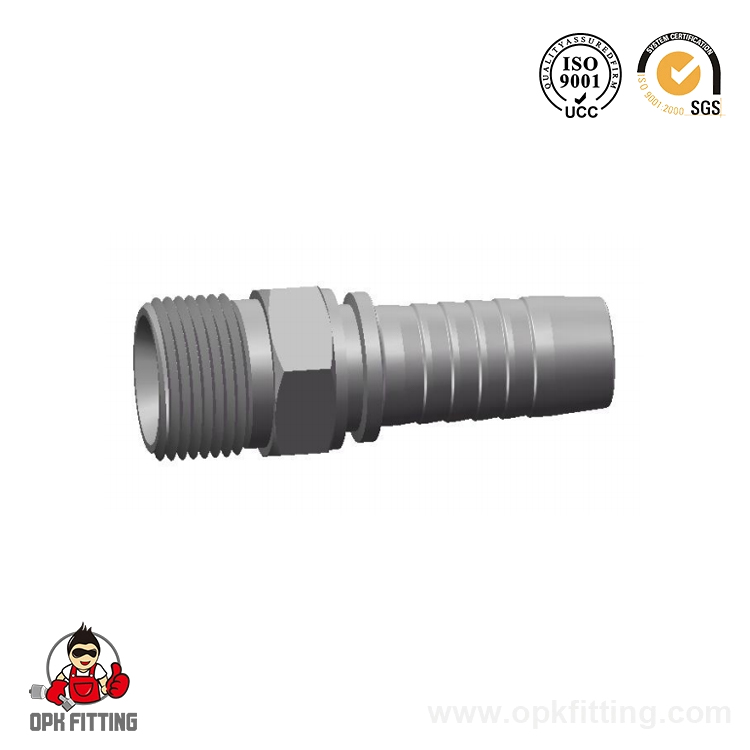
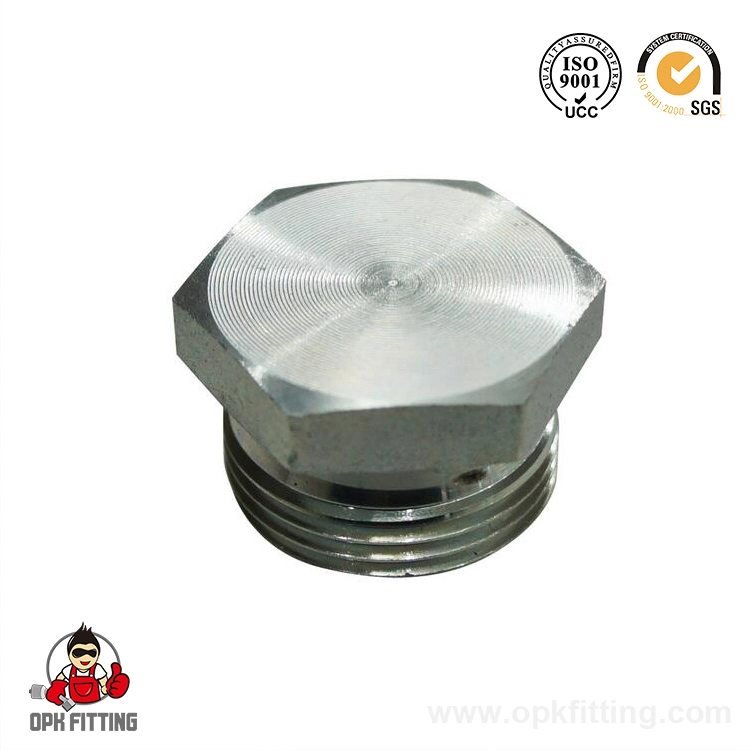
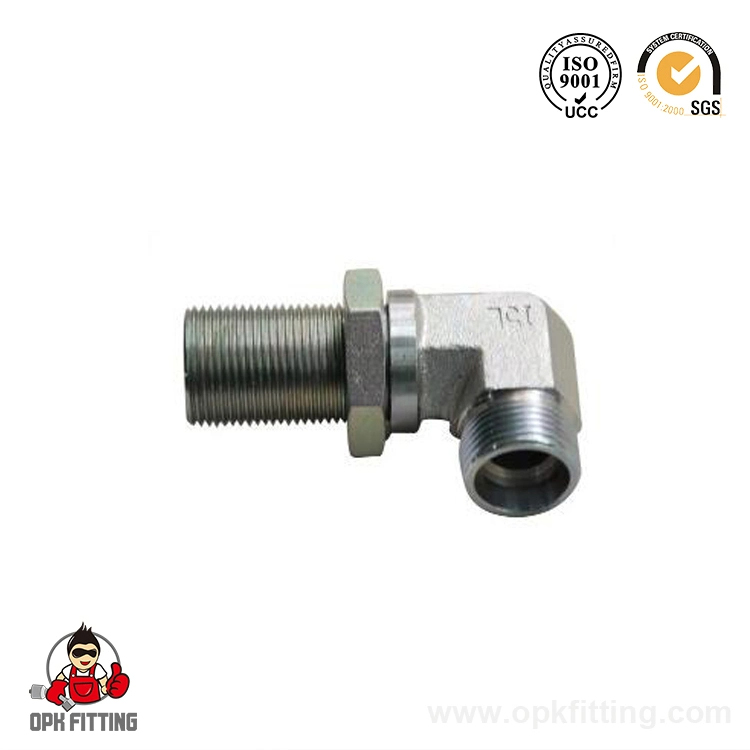
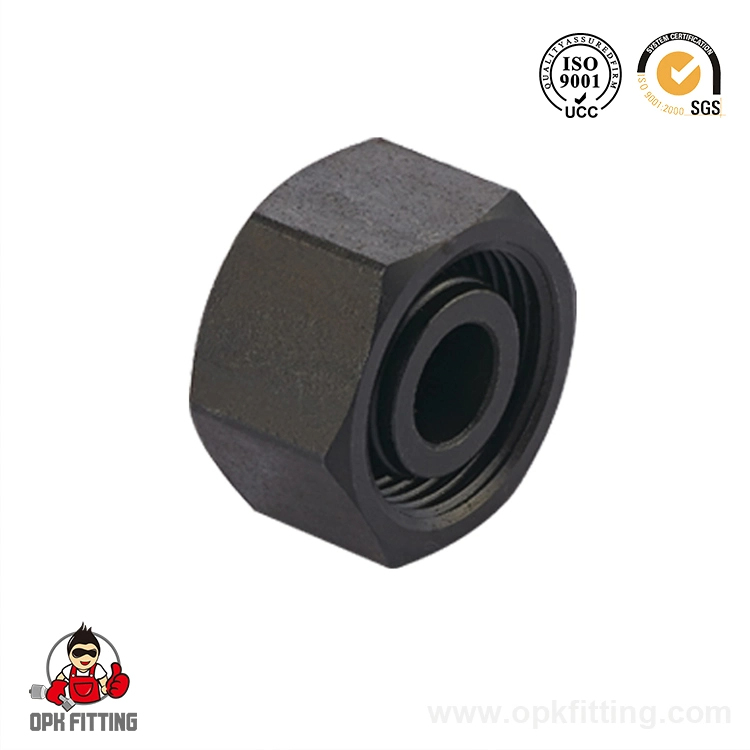
A hydraulic hose bursts on an excavator arm at mid-morning. The spare fitting in the toolbox looks exactly like the damaged one, but it will not thread on. Identifying hydraulic fittings correctly is what separates a 20-minute repair from a half-day hunt for the right adapter.
Most hydraulic fittings can be identified in four steps: check whether the thread is tapered or parallel, measure the diameter and pitch, inspect the sealing seat, and match the result to a standard such as JIC, NPT, BSP, ORFS or metric. This guide explains those steps, the measurement data behind them, and the ordering mistakes that cost the most.
Why Correct Identification Comes First
Start with the conclusion: a fitting that looks similar but has the wrong pitch or seat angle will not seal, and it can fail under pressure. If the threads are a close but incorrect match, assembly can cross-thread and gall the port, turning a small repair into a component replacement.
Fittings fail to match because several standards look alike at arm's length. A JIC 37-degree flare and a metric 74-degree cone share the same 37-degree half-angle. NPT and BSPT are both tapered pipe threads. The differences sit in the thread angle, pitch and diameter. Identifying hydraulic fittings means measuring those values instead of trusting visual similarity.
The Four-Step Identification Process
The method below is the same one used in hydraulic maintenance and assembly workshops. Keep a digital caliper, a thread pitch gauge and a known mating fitting nearby; those three tools answer most identification questions faster than any database.
1Determine whether the thread is tapered or parallel
Tapered threads narrow along their length and seal by the wedging action of the threads themselves. NPT and BSPT are tapered. Parallel threads keep a constant diameter and rely on a separate sealing surface: a flare, an O-ring, a cone or a washer. JIC, ORFS, BSPP and most metric fittings use parallel threads.
2Measure the outside diameter and thread pitch
Use a caliper to measure the outside diameter of a male thread, or the inside diameter of a female thread, in inches or millimetres. Then measure the pitch: threads per inch for inch-based standards, millimetres per thread for metric standards. A JIC -4 male measures 7/16-20, meaning 7/16 inch outside diameter and 20 threads per inch. An M18 x 1.5 fitting has an 18 mm diameter and a 1.5 mm pitch.
3Inspect the seat and sealing method
Look at the end face. A 37-degree flared cone indicates JIC. A flat face with an O-ring groove indicates ORFS. A 24-degree cone indicates DIN 2353 metric. A 60-degree cone seat appears on BSP and JIS fittings. If there is no separate seat and the threads themselves must seal, you are almost certainly looking at NPT or BSPT.
4Match the result to a standard and dash size
Combine the results and compare with a standards chart. Note the dash size: a -6 fitting means a nominal 6/16-inch (3/8-inch) size in the JIC numbering system. Dash sizes help you order the correct hose end even when the fitting label has worn off.
Fitting Standards at a Glance
The diagram below labels the three zones you need to inspect on any fitting: the thread, the hex nut used for tightening, and the sealing seat at the end.
Isometric view of a typical 37-degree flare fitting with the identification zones labelled.
The table below summarises the five standards most often found in hydraulic systems.
Thread and seat characteristics of common hydraulic fitting standards
Standard
Thread form
Seat or sealing method
Quick identification clues
JIC (SAE J514)
UNF parallel, 60-degree
37-degree flare, metal-to-metal
37-degree cone shown by the flared end; inch sizes such as 9/16-18
NPT / NPTF
Tapered pipe, 60-degree
Threads wedge to seal
Diameter narrows along the thread; pipe sizes such as 1/2 inch
BSPP / BSPT
Parallel or tapered, 55-degree
60-degree cone seat, bonded washer, or thread seal
55-degree thread angle; G (parallel) or R (tapered) marking
ORFS
UNF parallel, 60-degree
Flat face with O-ring
O-ring groove visible on the face
Metric (DIN 2353)
Metric parallel, 60-degree
24-degree cone; O-ring on heavy series
Metric pitch in millimetres; 24-degree cone angle
Dash size and thread diameter are the two numbers that matter most when ordering. In the JIC system, the male thread outside diameter increases with dash size, as shown below.
JIC male thread outside diameter by dash size (source: SAE J514 thread data).
For JIC systems, choose JIC male 74-degree cone fittings to match the 37-degree flare seat, and confirm the thread size against the chart above.
NPT works differently: the nominal size is a pipe size, not a thread diameter. A 1/2-inch NPT fitting, for example, has an actual thread outside diameter of about 0.840 inch. This distinction causes many first-time ordering errors.
Actual NPT male thread outside diameter for each nominal pipe size (source: ASME B1.20.1).
When the taper and thread pitch are confirmed, select NPT male fittings in the correct pipe size.
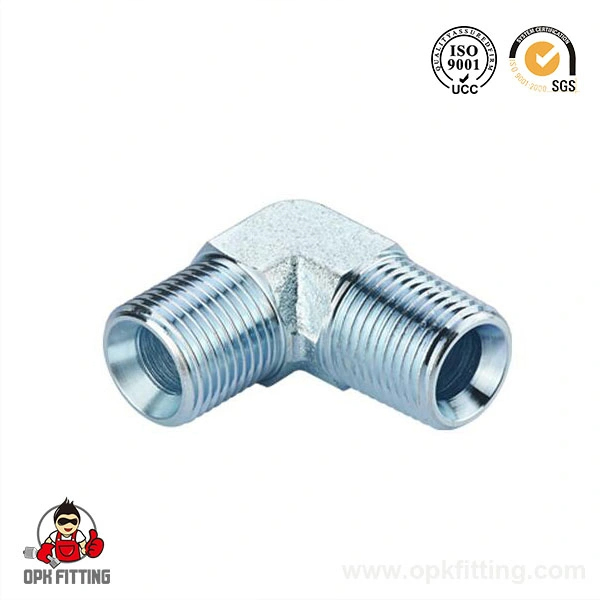
On European and Asian equipment, a 60-degree cone seat is common and is often combined with BSP threads. For this seat type, use BSP male 60-degree cone seat fittings, available as straight, 45-degree and 90-degree styles.
Four mistakes account for most misordered fittings we see from the sales side of the counter.
Confusing JIC 37-degree with metric 74-degree cone. Both use a 37-degree half-angle, so the cone can look identical. The threads are different: UNF inch threads versus metric threads. Never tighten a fitting that does not thread on smoothly.
Assuming NPT and BSP are interchangeable. NPT has 60-degree threads; BSP has 55-degree threads. Some diameters are close, but the thread forms differ, and forcing them together causes galling and leaks.
Measuring the hex instead of the thread. The hex flats are a wrench size, not a thread size. Measure the thread crests directly with a caliper.
Ignoring seat condition. A scratched 37-degree cone or a damaged O-ring groove will leak even if the threads match perfectly.
If the fitting is part of a push-on or field-attachable assembly, the identification logic changes. Our guide to socketless hose fittings explains how those ends differ from crimp-style threads.
Ordering Replacement Fittings Without the Guesswork
When you order a replacement, provide four pieces of information: thread standard, thread size, thread pitch (TPI or millimetres), and dash size. If the fitting has lost its label, measure it and take a photo next to a ruler so the helical angle and pitch are visible.
Mating against a known-good fitting is the most reliable check. Clean both parts, test the thread engagement by hand, and stop the moment you feel resistance. Hand-tight engagement without forcing is a strong sign that the standard and pitch are correct.
Still not sure? Photograph the fitting against a ruler, note the measurements, and contact our engineering team before placing the order. A two-minute check beats a return shipment.
Hydraulic Fitting Identification FAQ
Q1: Can JIC and metric 74-degree fittings be connected?
They share the same 37-degree half-angle, but JIC uses inch-based UNF threads while the metric 74-degree type uses metric threads. The cone may look like it fits, but the threads will not match. Do not force them together.
Q2: How do I measure the thread size on a hydraulic fitting?
Measure the outside diameter of the male thread with a caliper in inches or millimetres, then measure the pitch with a thread pitch gauge. Compare both values with a standards chart.
Q3: Is NPT the same as BSP?
No. NPT has 60-degree tapered threads, while BSP has 55-degree threads. They look similar but are not interchangeable; connecting them can cross-thread and damage the port.
Q4: What does dash size mean?
Dash size is expressed in sixteenths of an inch of nominal inside diameter. A -6 fitting equals 6/16 inch (3/8 inch) nominal size. It is used across JIC, NPT, BSP and metric families as a quick sizing reference.
Q5: What is an ORFS fitting used for?
O-ring Face Seal fittings seal on a flat face with an O-ring, providing strong leak resistance under high pressure and vibration. They are widely used in mobile and industrial hydraulics.
Q6: How can I tell if a fitting is metric or inch-based?
Check the pitch unit: metric threads are specified in millimetres (for example M18 x 1.5), while inch-based threads are specified in threads per inch (for example 9/16-18). A 55-degree thread form indicates BSP; 60 degrees indicates NPT, JIC or metric.
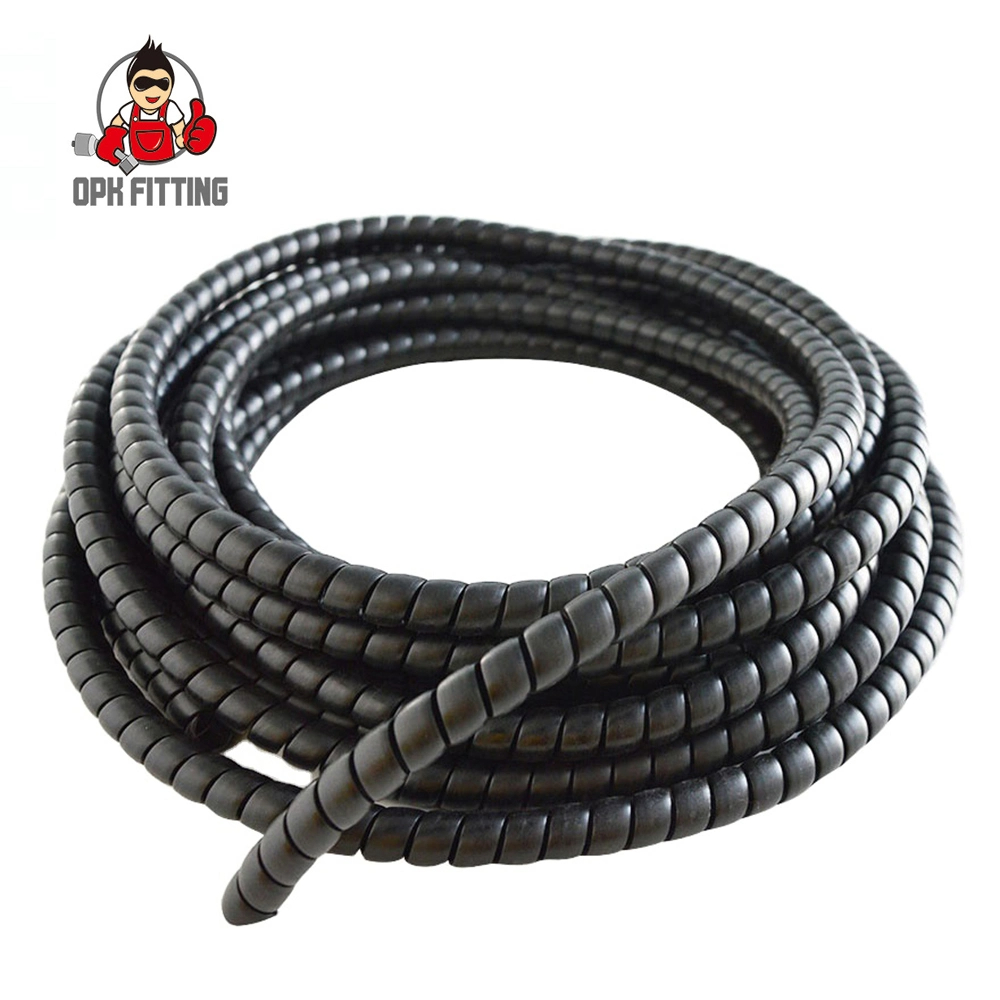
PRODUCT NAME: Spiral Protective Sleeve PP plastic hose guard for hydraulic hoseRecommended For: The use of Spiral Guard Wrap is an economical and conv...



.jpg)
(6).jpg)